 By Sofia Bennett, Home & Decor Editor
Reviewed & updated September 2026
A patio doesn't need to be big to feel like an extension of your home — even a 6×8 concrete slab or a narrow apartment balcony-turned-patio can become a genuine outdoor room with the right layout and a few intentional choices. Here's how to make a small patio feel decorated on purpose instead of just "furniture that happened to fit outside."
 Skip ahead toCurated by Sofia · 7 min read
- Start with a real layout, not leftover furniture
- Choose furniture scaled for small spaces
- Layer in lighting for ambiance
- Add greenery without overwhelming the space
- Define the space with a rug and layers
- Add a focal point
- Common mistakes on small patios
- Budget-friendly upgrades
- The takeaway
- Further reading & trusted sources
Start with a real layout, not leftover furniture
The biggest small-patio mistake is dragging out whatever chairs were sitting in the garage. Measure your space first, then decide what you actually want to do out there — dine, lounge, or both — and buy furniture sized for that footprint. A love seat and one accent chair around a small side table usually works better in a tight space than two bulky armchairs that block movement.
Leave at least 24-30 inches of walking clearance around any seating so the space feels usable, not cramped.
Choose furniture scaled for small spaces
- Bistro sets — a two-seat table and chairs are the classic small-patio solution for a reason; they fit almost anywhere and still feel like a proper dining spot
- Foldable or stackable chairs — great if you want flexibility to open the space up for other uses
- A single well-chosen loveseat over two separate chairs, which often eats more visual and physical space
- Slim console or bar-height tables along a railing if floor space is tight
Look for furniture with exposed, slim legs rather than boxy bases — it reads lighter and makes the whole patio feel less crowded, the same principle that works for making a small indoor room look bigger.
Layer in lighting for ambiance
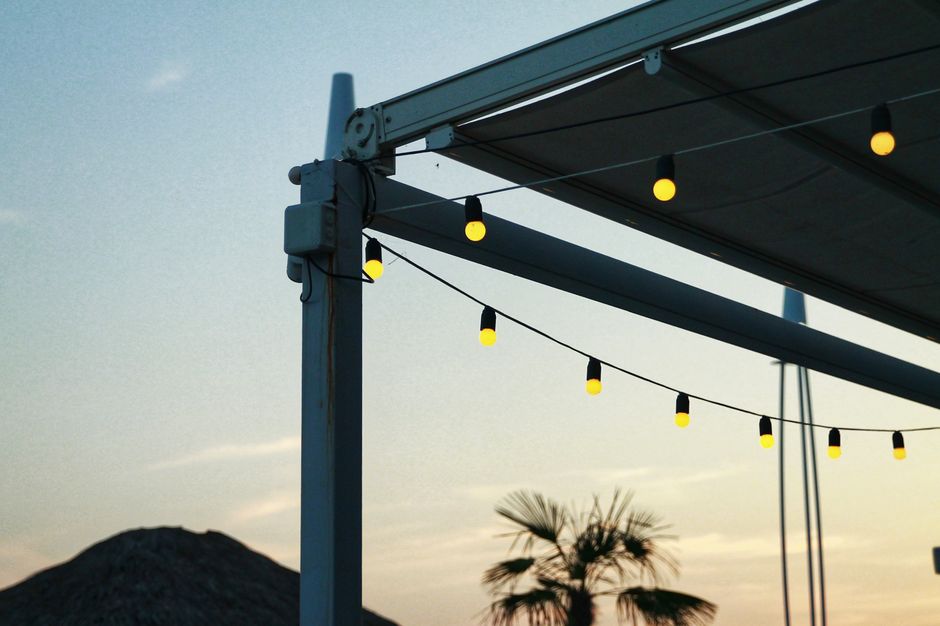
Lighting does more to make a small patio feel finished than almost anything else you can buy.
- String lights overhead or around a railing instantly add warmth after dark
- Solar lanterns or path lights along the edges for a soft glow without extra wiring
- A couple of flameless candles or a small lantern on the table for dinner-outside evenings
Layer at least two light sources — overhead and a lower, warmer accent — the same "layered lighting" rule that works for cozy living rooms.
Add greenery without overwhelming the space
Plants make a patio feel alive, but in a small footprint, a few well-placed pots beat a jungle of mismatched planters.
- Use 2-3 pots in varying heights rather than a dozen small ones scattered around
- A vertical planter or hanging baskets adds greenery without eating floor space
- Stick to 1-2 plant varieties repeated for a cohesive, intentional look rather than a random mix
- Low-maintenance options like succulents, herbs, or hardy perennials work well if you're not confident with plant care
Define the space with a rug and layers
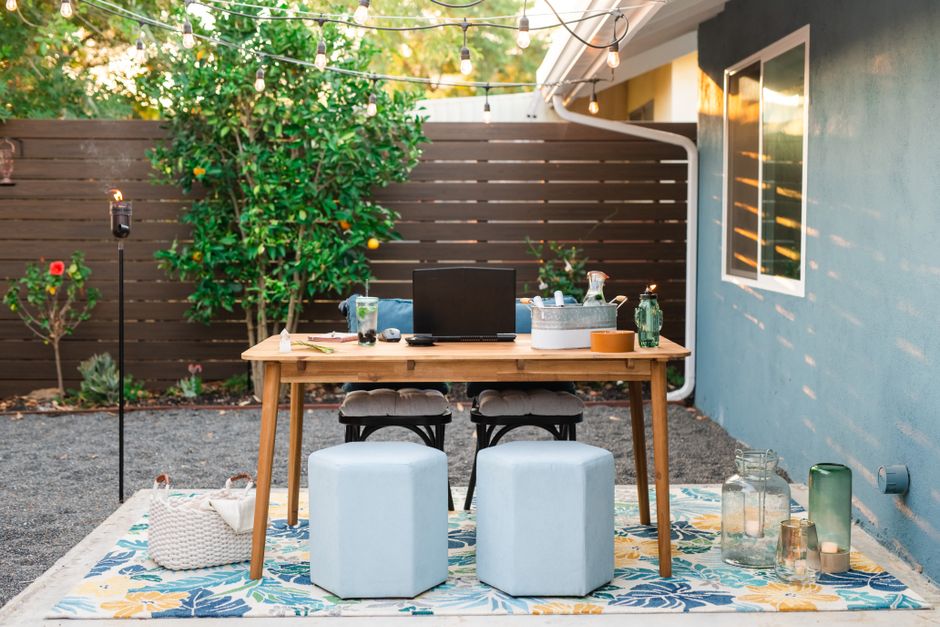
An outdoor rug is one of the easiest ways to visually "wall off" a patio from the yard or sidewalk and make it read as its own room. Choose a weather-resistant polypropylene rug, size it so furniture legs sit at least partially on it, and layer in a couple of weatherproof throw pillows and a folded outdoor blanket for texture and color.
Add a focal point
Every good small patio has one thing your eye lands on first — a piece of outdoor art, a striking planter, a small fire pit, or even a well-placed mirror to bounce light and make the space feel bigger. Pick one focal point rather than several competing ones; in a small space, restraint reads as intentional design rather than an afterthought.
Common mistakes on small patios
- Overcrowding with furniture. If you can't walk a full loop around the seating area, scale down.
- Skipping shade. An umbrella, shade sail, or even a hanging outdoor curtain makes a huge difference in how usable the space is during the day.
- Ignoring the vertical space. Railings, walls, and fences are prime real estate for planters, hooks, and art that don't take up floor space.
- Mismatched, weather-vulnerable decor. Indoor throw pillows and untreated wood furniture will fade and warp fast outside — always confirm items are rated for outdoor use.
Budget-friendly upgrades
You don't need a full furniture set to transform a small patio. A fresh outdoor rug, a set of string lights, two or three new planters, and a coat of paint on an old side table can completely change the feel of the space for well under $150 — and all of it is easy to pack up if you're renting.
The takeaway
A small patio becomes an outdoor room the moment you treat it like one: scaled furniture, layered lighting, a defining rug, a few intentional plants, and one clear focal point. Skip the instinct to fill every inch, and instead aim for a space that feels calm and usable — even six square feet of concrete can become somewhere you actually want to sit.
Frequently asked questions
How do I make a tiny apartment balcony feel like a patio?
Use the same principles at a smaller scale — a single bistro chair or two, a small outdoor rug, string lights, and one or two vertical planters. Folding or stackable furniture is especially useful on a balcony since you may need to reclaim the space occasionally.
What furniture is best for a small patio?
Look for pieces with slim, exposed legs and a smaller footprint, like bistro sets, loveseats instead of two separate chairs, and foldable options. Measure your space and leave at least 24-30 inches of walking room before buying anything.
Do I need an outdoor rug on a patio?
It's not required, but it makes a big visual difference by defining the seating area and adding warmth and color. Choose a weather-resistant material like polypropylene so it can handle rain and sun without fading or mildewing.
How can I add privacy to a small patio without a fence?
Tall potted plants, a folding privacy screen, or an outdoor curtain hung from a simple rod are all renter-friendly ways to add privacy without permanent construction. Vertical elements like trellises with climbing plants also work well and double as decor.
Read next

Further reading & trusted sources
Where most people go wrong
Furniture legs sitting only partway on an outdoor rug is a more common problem on small patios than indoors, since people size rugs for the visible floor space rather than for the furniture footprint, and the mismatch reads as unfinished even when every other element is right. Solar path lights lose noticeably more brightness in shaded or covered patio corners than their packaging implies, since their charge depends on direct sun exposure during the day, which is why a mixed lighting approach with at least one plug-in or battery source tends to hold up better after the first few weeks.
Sofia is happiest hunting down the high-end look for a fraction of the price; she’s convinced a beautiful room comes from restraint and clever styling far more than from budget. She shapes Dreamy Dwell’s room-by-room guides around ideas you can actually copy in a rental or on a tight budget — no staged ‘this is my mansion’ fantasy. AI tools help with the research and first drafts, and a human edits every piece before it goes live. We never fake reviews or pass off a styled photo as a real before-and-after.