 By Sofia Bennett, Home & Decor Editor
Reviewed & updated September 2026
Bare walls are the most common reason a room feels unfinished — and great wall art is the fastest way to fix it. The right pieces add color, personality, and a sense of intention that furniture alone can't provide. But art is also where people freeze: What do I buy? What size? How do I make it look expensive without spending a fortune? This guide demystifies all of it, from choosing pieces and sizing them correctly to framing and hanging them like a designer — on any budget.
As an Amazon Associate we may earn from qualifying purchases at no extra cost to you. We focus on principles and styles rather than specific prices, which change often.
 Jump to a sectionCurated by Sofia · 8 min read
Types of wall art to consider
There are far more options than expensive originals. Mixing a few types creates the collected look designers love.
- Art prints and posters — affordable, endlessly varied, and easy to swap. The backbone of most budget galleries.
- Framed photography — landscapes, black-and-white, or your own travel shots add a personal, gallery feel.
- Canvas prints — frameless and textural; great for a larger statement piece.
- Free printable art — download, print at home or a print shop, and frame. The cheapest route to a polished wall.
- Textiles and woven hangings — add softness and texture that flat prints can't.
- Mirrors — function as art, bounce light, and make rooms feel bigger.
- Three-dimensional objects — baskets, plates, hats, or sculptural pieces add depth to a wall.
- Original art — thrifted paintings, local artists, or your own creations bring genuine character.
How to choose art that works
Match the mood, not just the colors
Art sets the emotional tone of a room. Calm landscapes and soft abstracts soothe; bold graphics energize. Decide how you want the room to feel, then choose accordingly. You don't need art to "match" your sofa — it should harmonize with the room's overall mood and palette.
Pull a color from the room
For cohesion, choose art that echoes one or two colors already in the space — a cushion, a rug, the wood tones. This ties the art in without being matchy.
Buy what you genuinely love
Trends come and go, but you'll live with this every day. A piece that makes you happy will always look better on your wall than a "safe" choice you feel lukewarm about.
Consider the room
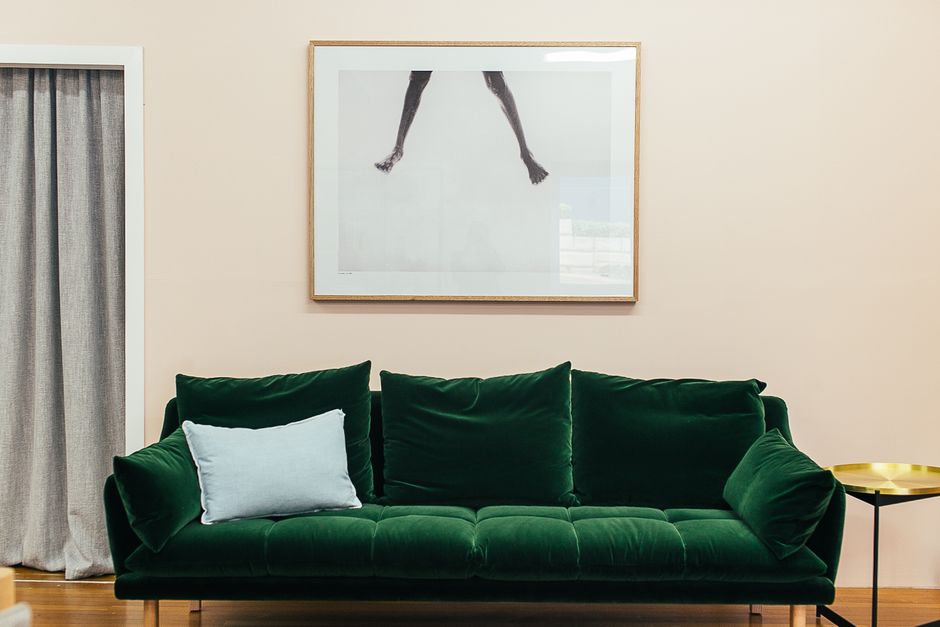
- Living room: a statement piece or gallery wall above the sofa.
- Bedroom: calm, restful pieces above the bed.
- Kitchen/dining: food, botanical, or playful prints.
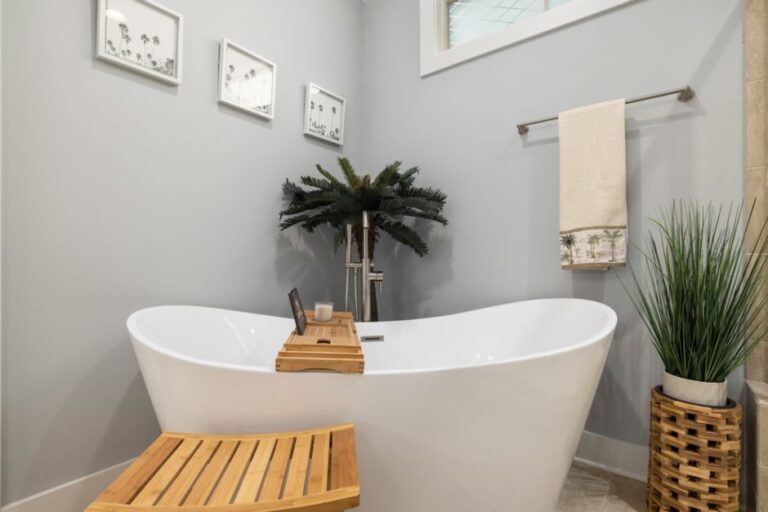
- Bathroom: small framed botanicals or typography (use prints that tolerate humidity, or frame under glass).
- Hallway/stairs: a gallery wall or a series that leads the eye along.
Get the size right (the #1 mistake)
Art that's too small is the most common decorating error — a postage-stamp print floating on a big wall looks lost. Scale generously.
- Above furniture (sofa, bed, console), your art or arrangement should span roughly two-thirds the width of the furniture below it.
- For a single statement piece, bigger is almost always better — fill the wall confidently.
- For a gallery wall, treat the whole grouping as one large piece that fills two-thirds of the wall.
- Hang at eye level: center the piece or arrangement about 57–60 inches from the floor to its middle. Above furniture, keep the bottom 6–10 inches above the piece below.
Framing makes cheap art look expensive
Cohesion in framing matters more than the cost of the art itself.
- Add a mat (the border inside the frame). A generous white mat instantly elevates an inexpensive print and gives it a gallery feel.
- Keep frames cohesive — either all matching, or limited to two finishes (like black and natural wood) for a collected-but-intentional look.
- Match the frame to the room: thin black or metal for modern, natural wood for warm and organic, ornate or gold for traditional and glam.
- Upgrade cheap frames by swapping in a thicker mat or a nicer frame — the art can stay the same.
Arrangement ideas
- Single statement piece: one large work centered over furniture — clean and impactful.
- Pair or triptych: two or three pieces evenly spaced for balance and rhythm.
- Grid gallery wall: matching frames in neat rows — crisp and calming.
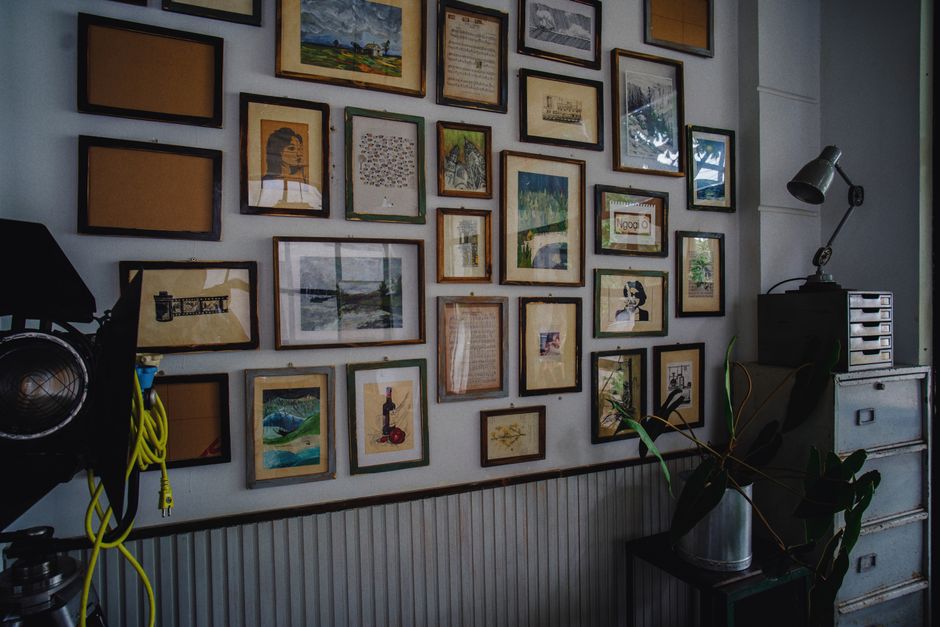
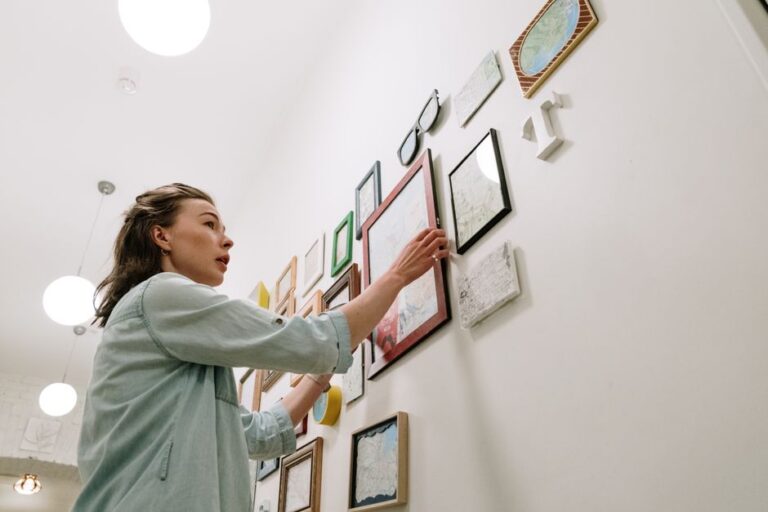
- Salon-style gallery wall: mixed sizes arranged organically around an anchor piece — lively and personal. Keep a consistent 2–3 inch gap between frames.
- Picture ledge: lean and layer framed pieces on a shelf — flexible, renter-friendly, and easy to restyle.
Budget-friendly sources and tricks
- Free printables downloaded and framed are the cheapest polished option.
- Thrift stores are gold mines for frames (and sometimes genuinely lovely art) — repaint dated frames a uniform color.
- Calendars, books, and maps can be trimmed and framed into beautiful series.
- Your own photos printed large and framed are free of license worries and deeply personal.
- Fabric, scarves, or wallpaper samples framed make striking, inexpensive abstract art.
The takeaway
Great wall art comes down to choosing pieces you genuinely love that suit the room's mood, sizing them generously (two-thirds the width of the furniture below, centered around eye level), and unifying them with cohesive, well-matted frames. Mix a few types — prints, photography, a mirror, a textile — for a collected look, and lean on free printables, thrifted frames, and your own photos to keep it affordable. Fill those bare walls thoughtfully and any room instantly feels finished.
Frequently asked questions
How big should wall art be above a sofa?
Aim for art or an arrangement that spans about two-thirds the width of the sofa, hung with the bottom roughly 6 to 10 inches above the back. Going too small is the most common mistake — err on the larger, bolder side to avoid a piece that looks lost on the wall.
How high should I hang wall art?
Center the piece or arrangement about 57 to 60 inches from the floor to its middle, which is standard gallery eye level. When hanging above furniture, relate the art to the piece below by keeping the bottom 6 to 10 inches above it rather than floating it too high.
How do I make cheap art look expensive?
Add a generous white mat inside a cohesive frame, keep all frames matching or limited to two finishes, and size the art generously for the wall. A well-matted, well-framed inexpensive print or free printable can look just as elevated as costly original art.
What kind of art should I buy for my home?
Buy pieces you genuinely love that suit each room's mood — calm and restful for bedrooms, statement pieces for living rooms, botanical or playful prints for kitchens. Echo one or two colors already in the room for cohesion, and mix types like prints, photography, mirrors, and textiles for a collected look.
Where can I find affordable wall art?
Free downloadable printables, thrift-store art and frames, your own printed photos, and framed calendars, maps, or fabric all make beautiful, affordable wall art. Repaint mismatched thrifted frames a single uniform color for an instant cohesive set.
Do my frames all need to match?
Not exactly — cohesion is what matters. Either use all matching frames for a clean, formal look, or mix frames while limiting yourself to two finishes (such as black and natural wood) so variety still feels intentional rather than random.
Read next
Related articles
- How to Create a Spa Bathroom on a Budget
- How to Set a Beautiful Dining Table (Everyday and Holiday)
- 30 Small Kitchen Storage and Organization Ideas
- How to Choose Bedding for a Hotel-Cozy Bedroom
- How to Create a Hotel-Cozy Bedroom at Home
- How to Arrange Living Room Furniture: A Complete Layout Guide
The part that actually matters
Most prints look cheap because they’re hung too high and too small. Art should sit with its centre around eye level (~57 inches), and on a large wall one oversized piece beats three little ones competing for attention.
Further reading & trusted sources
Sofia is happiest hunting down the high-end look for a fraction of the price; she’s convinced a beautiful room comes from restraint and clever styling far more than from budget. She shapes Dreamy Dwell’s room-by-room guides around ideas you can actually copy in a rental or on a tight budget — no staged ‘this is my mansion’ fantasy. AI tools help with the research and first drafts, and a human edits every piece before it goes live. We never fake reviews or pass off a styled photo as a real before-and-after.