 By Sofia Bennett, Home & Decor Editor
Reviewed & updated September 2026
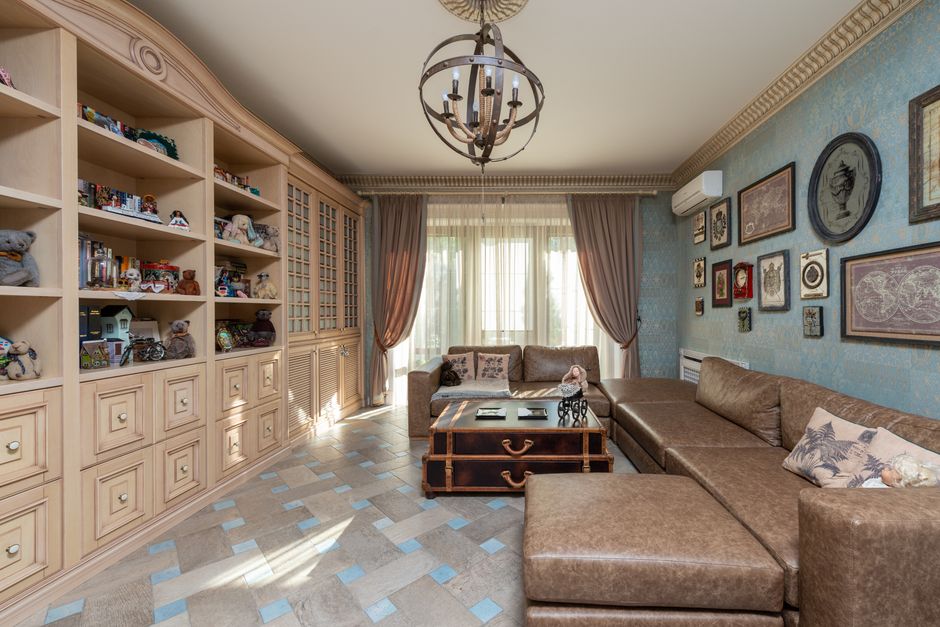
A man cave doesn't need a finished basement or a four-figure budget to feel like a real destination room instead of leftover space. Whether you're working with a full basement, a spare bedroom, a garage corner, or a single wall in a shared living room, the same handful of design moves — the right seating, smart storage, and a few personal touches — do most of the heavy lifting.
 Skip ahead toCurated by Sofia · 7 min read
- Start with the room’s actual purpose
- Seating that actually holds up
- Lighting sets the mood more than anything else
- Storage that keeps the room from looking cluttered
- Personal touches that make it feel like “your” room
- Budget-friendly wins if you’re starting from nothing
- Common mistakes to avoid
- The takeaway
- Further reading & trusted sources
Start with the room's actual purpose
Before buying anything, decide what the space is mainly for — watching sports, gaming, a home bar, a workshop hangout, or some mix of all four. A room trying to do everything at once usually ends up doing nothing well. Pick one primary use and let everything else support it. A sports-and-movie-focused room prioritizes the screen and seating sightlines; a gaming-focused room prioritizes desk setup and cable management; a bar-focused room prioritizes counter space and storage for glassware.
Seating that actually holds up
Seating is where it's worth spending the most, since it's used constantly and cheap options wear out fast. A few approaches that work at different budgets:
- Secondhand leather or leather-look sofas — facebook marketplace and estate sales regularly turn up solid leather couches at a fraction of retail, and leather ages better than fabric in a room that sees snacks and drinks.
- A sectional with a chaise — if the room doubles as a movie space, a chaise end gives you a stretch-out option without needing a separate recliner.
- Recliners as accent pieces — one or two good recliners flanking a sofa gives variety without committing the whole room to matching furniture.
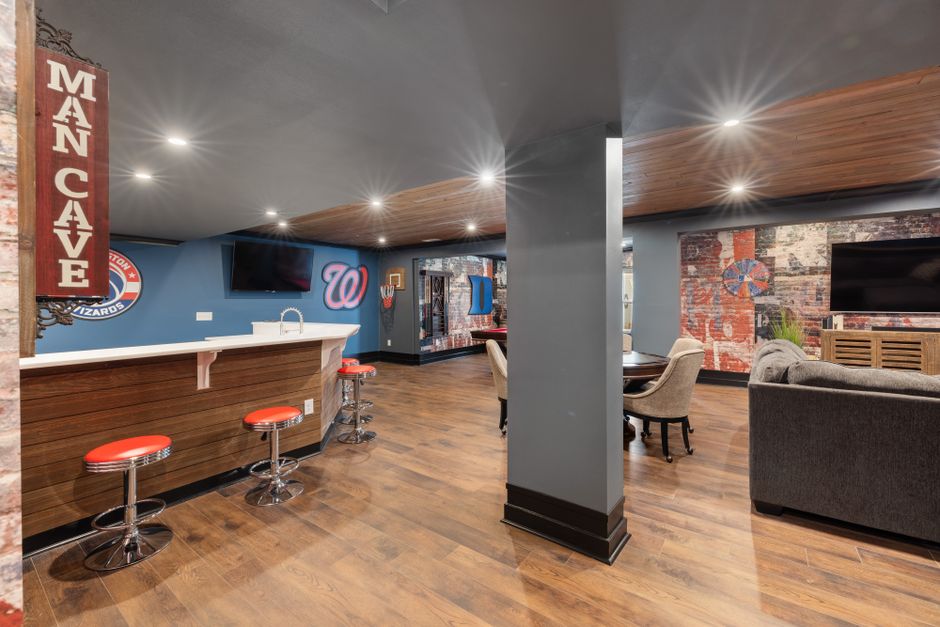
- Bar stools for counter or bar-height seating — useful if the space includes any kind of counter, pool table rail, or standing bar area.
Lighting sets the mood more than anything else
Overhead fluorescent or builder-grade lighting is the fastest way to make a man cave feel like an unfinished basement instead of a hangout space. A layered approach works better:
- Dimmable overhead lighting on a smart switch or dimmer so brightness can shift between "watching a movie" and "hosting people."
- Floor and table lamps in corners to add warmth without competing with a TV screen.
- LED strip lighting behind a TV or along shelving for a low-cost way to add color and depth, especially popular in gaming-focused setups.
- A statement fixture over a bar or game table — even one interesting pendant light changes how "designed" the whole room feels.
Storage that keeps the room from looking cluttered
Man caves accumulate stuff fast — game controllers, glassware, sports memorabilia, snacks. Built-in-feeling storage keeps that from turning into visual clutter:
- Closed cabinets below open shelving — display the things worth showing off, hide the things that aren't.
- A media console with cable management — tangled cords behind a TV undercut an otherwise well-decorated room instantly.
- Wall-mounted shelving for memorabilia — jerseys, signed items, and collectibles read as intentional decor when they're on a shelf or in a shadow box, and as clutter when they're just stacked on a surface.
- A bar cart or small cabinet for drinks and glassware if a full wet bar isn't in the budget.
Personal touches that make it feel like "your" room
The difference between a generic rec room and an actual man cave is usually the personal layer on top of the furniture basics:
- A gallery wall of team memorabilia, movie posters, or framed jerseys gives the room a clear identity at a glance.
- A neon or LED sign — team logo, a favorite quote, a bar-style sign — adds personality and doubles as a light source.
- A rug anchors the seating area and adds warmth, especially over concrete or laminate basement flooring.
- Display shelving for a collection — vinyl records, sneakers, model cars, whatever the room's owner is actually into — turns storage into decor.
Budget-friendly wins if you're starting from nothing
- Paint one accent wall in a dark, moody color (charcoal, deep green, navy) rather than repainting the whole room — it reads as intentional and costs a fraction of a full paint job.
- Shop secondhand for the big furniture pieces and spend new-item budget on lighting and accessories, which have a bigger visual impact per dollar.
- A large area rug over unfinished flooring instantly upgrades the room's feel for relatively little cost.
- Peel-and-stick wallpaper or wood paneling on one wall behind the TV or bar area adds texture without a full renovation.
Common mistakes to avoid
- Too much matching furniture. A room that looks like it came from one catalog page can feel sterile — mixing textures and a few secondhand or vintage pieces adds character.
- Ignoring the ceiling and walls. Bare drywall and popcorn ceilings undercut even great furniture choices. Paint, paneling, or simple trim work goes a long way.
- Skipping sound. A great screen with tinny built-in speakers undersells the whole setup — even an affordable soundbar makes a noticeable difference.
- No dedicated storage plan. Without a place for controllers, remotes, and glassware to live, the room drifts back toward clutter within weeks.
The takeaway
A man cave comes together through a handful of deliberate choices, not a huge renovation budget — durable seating, layered lighting instead of one overhead fixture, storage that hides the clutter and displays the good stuff, and a few personal touches that make the room unmistakably yours. Pick the room's main purpose first, and let every other decision support that.
Frequently asked questions
How much does it cost to build a man cave?
It depends heavily on scope — a corner refresh with secondhand furniture and lighting can cost a few hundred dollars, while a full basement buildout with a bar and home theater can run into the thousands. Prioritizing seating and lighting first gets the most visual impact per dollar.
What's the best flooring for a man cave?
Durable, low-maintenance options like luxury vinyl plank or a large area rug over existing flooring both work well, especially in basements where moisture and wear are bigger concerns than in upstairs rooms.
Do I need a TV to make it feel like a real man cave?
No — plenty of man caves are built around a bar, a game table, or a hobby display instead of a screen. The room just needs a clear central purpose, whatever that is.
How do I make a small space feel like a man cave?
Focus on one or two strong design moves — a bold accent wall, good lighting, and a single great seating piece — rather than trying to fit in every idea. A smaller room with a clear identity beats a larger room that feels unfinished.
Read next
Further reading & trusted sources
The part that actually matters
Tangled cables behind a media console undercut an otherwise well-decorated man cave faster than almost any other single detail, because it’s the one thing that reads as ‘unfinished’ even after real money has gone into furniture and lighting — a $10 cable sleeve solves a problem that a much more expensive TV stand can’t. Bare popcorn ceilings and unpainted drywall are the other quiet giveaway that a basement is being decorated around rather than actually finished, since even great secondhand furniture can’t fully offset a ceiling that still visually reads as unfinished construction space.
Sofia is happiest hunting down the high-end look for a fraction of the price; she’s convinced a beautiful room comes from restraint and clever styling far more than from budget. She shapes Dreamy Dwell’s room-by-room guides around ideas you can actually copy in a rental or on a tight budget — no staged ‘this is my mansion’ fantasy. AI tools help with the research and first drafts, and a human edits every piece before it goes live. We never fake reviews or pass off a styled photo as a real before-and-after.