 By Sofia Bennett, Home & Decor Editor
Reviewed & updated September 2026
A home bar doesn't require a dedicated room or a big budget — some of the most functional setups are a repurposed bar cart or a single reclaimed shelf. The goal is a spot that makes pouring a drink feel intentional, not a corner where bottles collect dust.
 Skip ahead toCurated by Sofia · 6 min read
Start with the footprint you actually have
Before picking furniture, look honestly at the space available. A rolling bar cart works in almost any room and can be tucked away or wheeled elsewhere when you need the floor space back. A floating shelf or two above a console table creates a bar zone without taking up any floor footprint at all. A closet or the bottom section of a hutch can become a "hidden" bar that closes away when not in use — a good option if you'd rather not have bottles on permanent display.
Bar cart setups
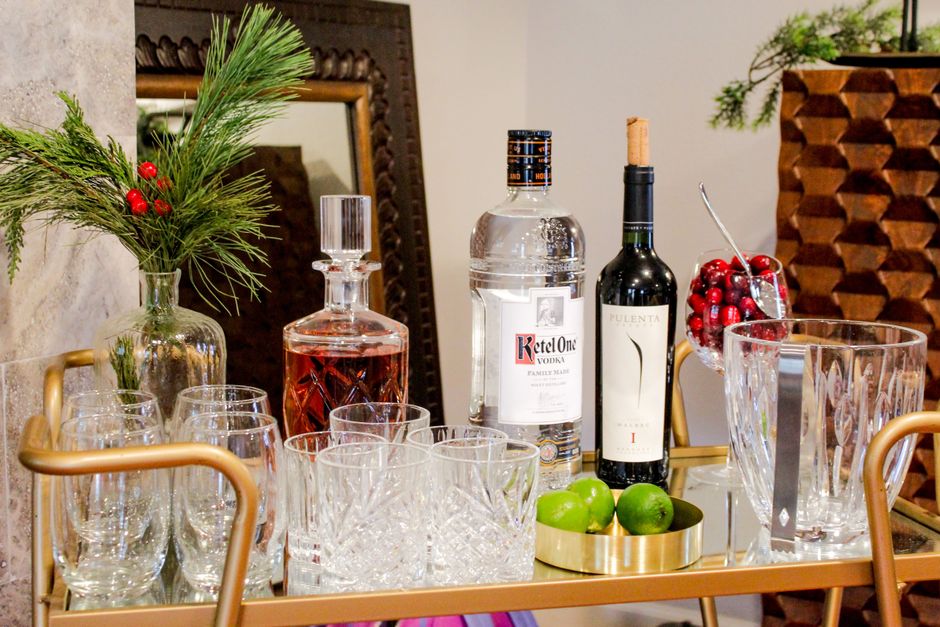
The bar cart remains the most popular small-space option because it's mobile, affordable, and doesn't require any installation. A two-tier cart typically holds bottles and a few glasses on the bottom shelf, with the top reserved for whatever you're actively using — a cutting board, a shaker, a small tray of garnishes. Keep the top shelf lighter and more curated than the bottom; an overloaded top shelf is what makes a bar cart look cluttered rather than styled. Casters with a locking mechanism are worth the small upgrade if the cart will live near a rug, since an unlocked cart can drift when bumped.
Shelf and wall-mounted setups
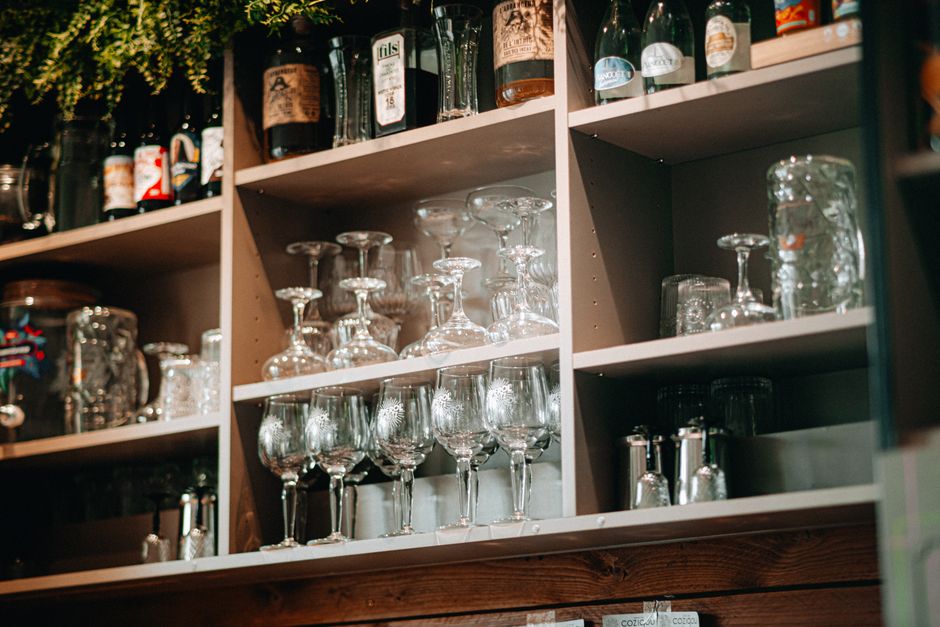
Open shelving above a console or credenza turns an existing piece of furniture into a bar zone without adding new floor furniture. Stagger bottle heights and mix in a few non-bottle objects — a small plant, a stack of coasters, a piece of art — so the shelf doesn't read as a straight row of liquor bottles. A single floating shelf with hanging stemware racks mounted underneath is a compact option that works well above a narrower console, since the glass storage happens vertically instead of taking up shelf depth.
Working with a cabinet or credenza
If you already have a sideboard, credenza, or hutch with closed storage, it can double as a bar without any new furniture purchase. Line the interior with a tray or a cut piece of cork or felt to protect the surface from drips and rings, and keep bottles you use most often toward the front so you're not digging for them. This setup is the best option if you'd rather keep the bar visually put-away most of the time and only "open" it when entertaining.
Essential tools worth having on display
- A shaker and jigger — functional and visually interesting enough to leave out rather than store away.
- A few good glasses — rocks glasses, coupes, or highball glasses depending on what you actually drink; four to six of one type is more useful than a large mismatched set.
- A small ice bucket or tray — keeping ice nearby means fewer trips back to the kitchen mid-conversation.
- A cutting board and small knife — for citrus garnishes, kept close enough to grab without leaving the bar area.
Lighting makes the difference
A home bar with good lighting reads as intentional; the same setup under flat overhead light reads as a shelf someone forgot to put away. A small plug-in sconce, a battery-powered puck light tucked under a shelf, or even a single warm-toned lamp placed nearby does more for the "bar" feeling than any amount of glassware. Warmer bulb temperatures (around 2700K) suit a bar area better than cool white, since warm light is what makes bottles and glass catch a flattering glow rather than looking clinical.
Keeping it from looking cluttered
The most common home bar mistake is treating it like general storage — tossing in extra mixers, random kitchen items, or bottles you don't actually use. Edit down to what you regularly reach for and store the rest elsewhere. A tray underneath the most-used bottles also does a surprising amount of visual organizing work, since it groups items into a defined zone instead of letting them spread across the whole surface.
The takeaway
A home bar works at almost any scale, from a full bar cart to a single styled shelf, as long as the setup matches the space you actually have and stays edited rather than overloaded. Good lighting and a curated set of tools and glassware do more for the finished look than the size of the setup itself.
Frequently asked questions
Do I need a bar cart, or can I use existing furniture?
Existing furniture works fine — a console table, sideboard, or even a single wall shelf can function as a home bar. A bar cart is popular mainly for its mobility and because it doesn't require repurposing another piece of furniture.
How many bottles do I actually need to start?
A small, functional bar can work with 4-6 bottles covering a base spirit or two, a mixer, and something for garnish — you don't need a fully stocked liquor store to make the space feel complete.
What's the best lighting for a home bar?
Warm-toned light (around 2700K) from a small lamp, sconce, or under-shelf puck light creates a more inviting look than standard overhead lighting.
How do I keep a small home bar from looking cluttered?
Keep only what you regularly use on display, group items with a tray, and stagger bottle heights rather than lining them up in a single flat row.
Read next
Further reading & trusted sources
A small thing that makes a big difference
An overloaded top shelf is the single most common reason a bar cart reads as cluttered instead of styled, since the top tier is the one surface guests actually see and interact with — the bottom shelf can hold more without hurting the look, but the top needs real editing. Locking casters are a small detail people skip when buying a cart, and it’s the one that matters most once the cart lives near a rug, since an unlocked cart drifting slightly every time it’s bumped is a surprisingly common source of spilled drinks.
Sofia is happiest hunting down the high-end look for a fraction of the price; she’s convinced a beautiful room comes from restraint and clever styling far more than from budget. She shapes Dreamy Dwell’s room-by-room guides around ideas you can actually copy in a rental or on a tight budget — no staged ‘this is my mansion’ fantasy. AI tools help with the research and first drafts, and a human edits every piece before it goes live. We never fake reviews or pass off a styled photo as a real before-and-after.