 By Sofia Bennett, Home & Decor Editor
Reviewed & updated September 2026
A sunroom should be the easiest room in the house to love — all that natural light practically decorates itself. But plenty of sunrooms end up as glorified storage for whatever furniture didn't fit anywhere else, wasting the one space in the home built specifically to feel bright and open. A few intentional choices turn that light-filled room into the spot everyone actually wants to sit in.
 On this pageCurated by Sofia · 6 min read
- Start with light-friendly furniture
- Choose a color palette that plays with the light
- Layer in plants generously
- Add window treatments that manage, not block, the light
- Define the space with a rug
- Pick a purpose and furnish around it
- Small sunroom tricks
- The takeaway
- Further reading & trusted sources
Start with light-friendly furniture
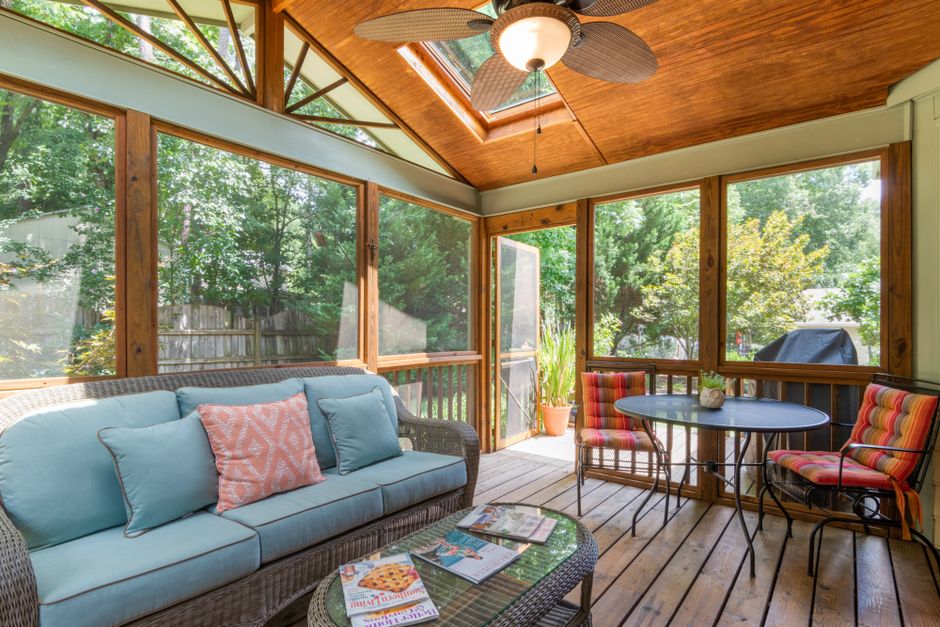
Sunrooms get more direct sun exposure than any other room, which means furniture choices matter more here than elsewhere in the house. Deep, dark upholstery fades unevenly and can feel heavy in a room meant to feel airy, while materials like wicker, rattan, and light-toned wood hold up better against sun exposure and naturally suit the room's bright character.
If you're furnishing on a budget, look for pieces labeled as sunroom or outdoor-rated — many are built with UV-resistant finishes specifically because manufacturers know these rooms take more sun than a typical living room.
Choose a color palette that plays with the light
Sunrooms are one of the few rooms where light itself is basically a design element, so the color palette should work with it rather than compete against it. Soft neutrals, warm whites, and pale greens let sunlight bounce around the space and keep it feeling open, while saturated colors can start to feel intense once they're hit with hours of direct sun.
That doesn't mean the room has to be all-white — a single accent color in pillows, a rug, or a piece of art adds personality without overwhelming the light-filled feel that makes a sunroom special in the first place.
Layer in plants generously
Few rooms in a home support plants better than a sunroom, and few design choices pay off as reliably. The abundant natural light means you can go beyond the usual low-light survivors and bring in sun-loving plants like citrus trees, succulents, and flowering varieties that would struggle anywhere else in the house.
Group plants in varying heights — a tall floor plant in a corner, mid-height plants on a console or shelf, trailing plants in a hanging planter — to create the layered, lush look that makes a sunroom feel like an extension of the outdoors.
Add window treatments that manage, not block, the light
The whole point of a sunroom is the light, so heavy curtains that block it out defeat the purpose. Sheer curtains, woven wood shades, or simple roller shades let you soften harsh midday glare or add privacy in the evening without sacrificing the brightness that makes the room work.
If your sunroom gets intense afternoon sun, look for shades with a light-filtering rather than blackout rating — you want to take the edge off strong light, not shut it out entirely.
Define the space with a rug
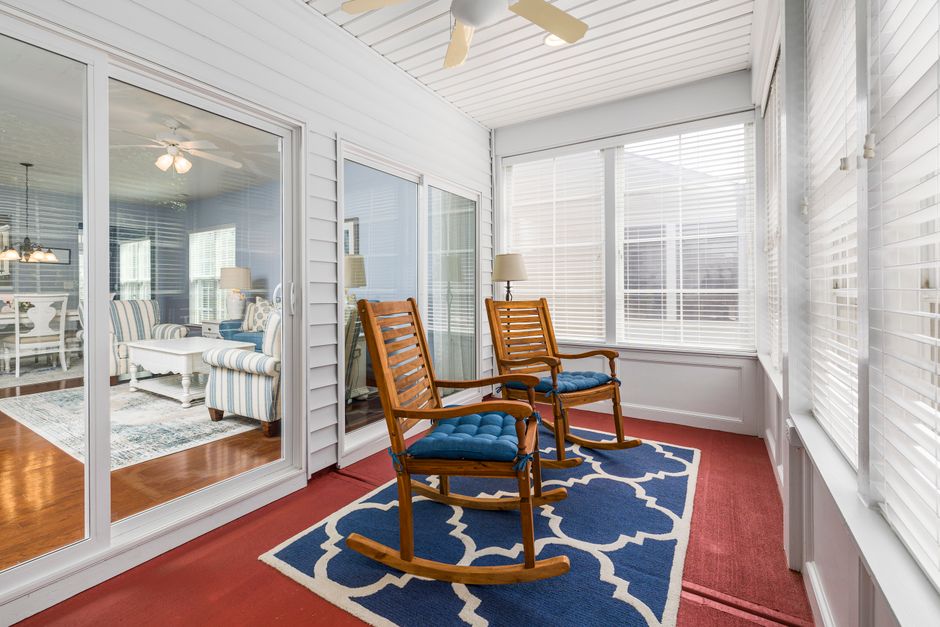
Sunrooms often have hard flooring — tile, wood, or polished concrete — that can feel cold or echo-y without something to soften it. A durable, sun-resistant rug (indoor-outdoor styles are usually a safer bet than delicate wool in a room with heavy sun exposure) grounds the furniture arrangement and adds warmth underfoot.
Choosing a pattern or texture that mimics natural materials — jute, sisal, or a woven look — reinforces the indoor-outdoor feel that most sunrooms are going for.
Pick a purpose and furnish around it
A sunroom that tries to do everything — reading nook, dining spot, plant nursery, home office — often ends up doing none of them well. Deciding on one or two primary uses before furnishing makes the space feel intentional instead of like an overflow room.
Reading and lounging. A single comfortable chair or a small loveseat with a side table and good task lighting for evening use.
Casual dining. A small bistro table and two chairs, ideal for morning coffee or a light lunch surrounded by natural light.
Plant-forward retreat. Minimal seating and maximum plant real estate, turning the room into a mini indoor garden with just enough space to sit and enjoy it.
Small sunroom tricks
If your sunroom is on the smaller side, a few adjustments help it feel open rather than cramped:
- Choose furniture with visible legs instead of skirted or boxy pieces, which lets light pass underneath and makes the floor space feel larger.
- Use a mirror angled to reflect the window view, which doubles the sense of light and space without adding any furniture bulk.
- Stick to one or two furniture pieces rather than trying to fit a full living room's worth of seating into a small footprint.
- Keep window treatments minimal — even sheer curtains, if bulky, can visually shrink a small sunroom when bunched at the sides.
The takeaway
A sunroom's natural light is the hardest part of the design to get wrong and the easiest part to waste with the wrong furniture, dark colors, or heavy window treatments. Lean into what the room already has going for it — light-friendly materials, a palette that plays well with sun, plenty of plants, and a clear sense of purpose — and the space does most of the decorating work on its own.
Frequently asked questions
What furniture material works best in a sunroom?
Wicker, rattan, and light-toned or UV-resistant woods hold up best against direct sun exposure and suit the room's naturally bright character better than dark, heavy upholstery.
Will sunlight fade my furniture and rugs?
Yes, direct sun exposure fades most materials over time. Choosing sun-resistant or outdoor-rated fabrics, and using light-filtering shades to soften the most intense midday hours, slows the fading significantly.
Can I use a sunroom as a home office?
Yes, though position your desk to avoid screen glare from direct sunlight — placing it perpendicular to the main window usually works better than facing it directly.
What plants do best in a sunroom?
Sun-loving varieties like citrus trees, succulents, herbs, and flowering plants tend to thrive in a sunroom's abundant light, often doing better here than anywhere else in the house.
Read next


Further reading & trusted sources
The part that actually matters
Furniture legs matter more in a sunroom than almost any other room, since the strong overhead and side light throws a visible shadow under skirted or boxy pieces that reads as clutter even when the floor is clean. Indoor-outdoor rugs consistently outlast delicate wool ones in a sunroom, not because of foot traffic but because sustained direct sun fades and dries out natural fibers faster than most people expect.
Sofia is happiest hunting down the high-end look for a fraction of the price; she’s convinced a beautiful room comes from restraint and clever styling far more than from budget. She shapes Dreamy Dwell’s room-by-room guides around ideas you can actually copy in a rental or on a tight budget — no staged ‘this is my mansion’ fantasy. AI tools help with the research and first drafts, and a human edits every piece before it goes live. We never fake reviews or pass off a styled photo as a real before-and-after.