 By Sofia Bennett, Home & Decor Editor
Reviewed & updated September 2026
"Cozy" doesn't have one look — a stripped-back minimalist bedroom and a layered, textile-heavy maximalist one can both feel equally warm and inviting if the right elements are in place. This roundup covers ideas across that whole spectrum, so you can pick the version of cozy that actually matches how you like to live, not just how it photographs.
 What you’ll find insideCurated by Sofia · 7 min read
What actually makes a bedroom feel cozy
Before the specific ideas, it helps to know the handful of elements that do most of the work: warm, layered lighting instead of one harsh overhead fixture; a mix of soft textures (knits, linen, sheepskin); a grounded color palette; and enough personal texture that the room doesn't feel like a hotel. Almost every idea below is a variation on one of these four levers.
Minimalist cozy ideas
- One warm wood tone, kept consistent. A single wood finish across your bed frame, nightstands, and any shelving reads calmer than mixing three different tones.
- A weighted or textured blanket instead of a busy duvet cover. A plain, chunky-knit throw over a simple duvet does more for coziness than a printed pattern.
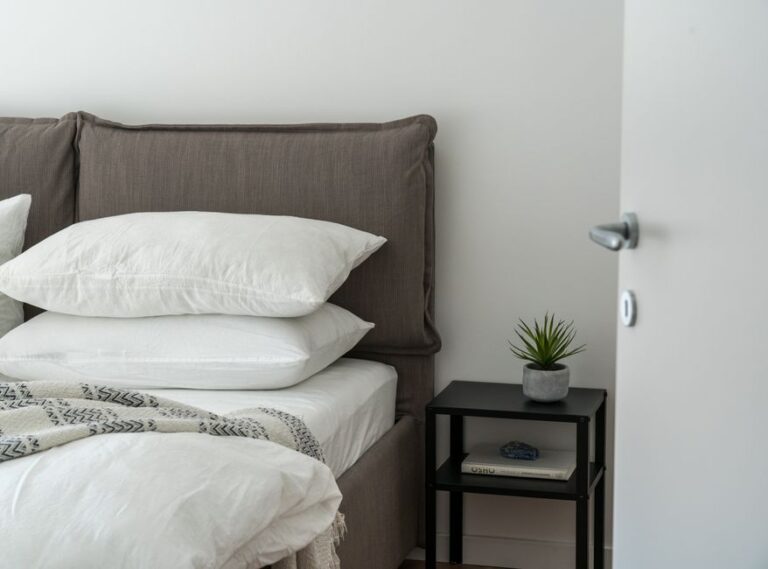
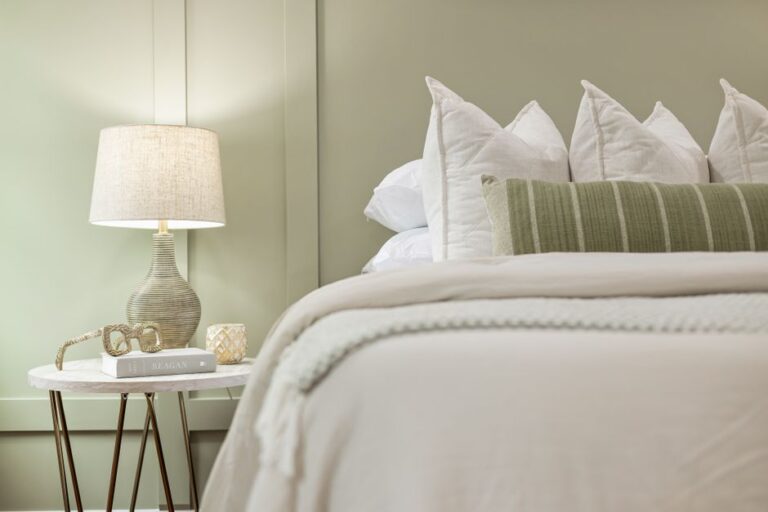
- Linen bedding in a warm neutral (oatmeal, clay, soft white) rather than stark white — linen's natural texture reads warm even in a stripped-down room.
- A single dimmable lamp instead of multiple light sources, so the room has one intentional warm glow rather than clutter.
- Negative space around the bed. Minimalist coziness relies on the few objects in the room feeling chosen, not sparse — leave breathing room rather than filling every surface.
- A round jute or wool rug underfoot, which softens a minimal room without adding visual noise.
Warm-neutral cozy ideas
- Layer three textures in the same color family — a linen duvet, a bouclé throw pillow, and a wool blanket all in shades of oatmeal or sand.
- Swap your ceiling light for a warm-toned bulb (2700K or lower) — this single change affects the feel of the whole room more than most decor purchases.
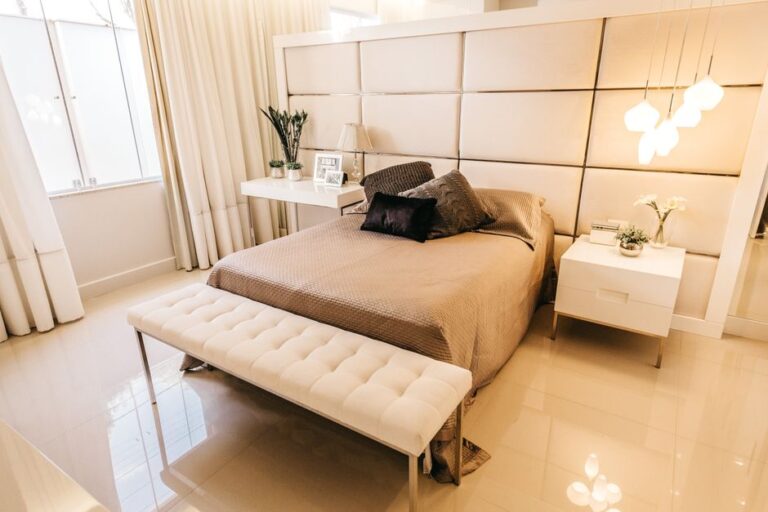
- Add a small bench or chair at the foot of the bed with a folded blanket draped over it, which reads as lived-in rather than staged.
- Use woven wall baskets or a textile wall hanging behind the headboard instead of framed art for a softer focal point.
- Choose curtains that pool slightly at the floor rather than hitting exactly at the sill — a little extra fabric reads more relaxed and layered.
Maximalist cozy ideas
- Mix patterns in the same color family — a floral duvet with a striped or checked throw pillow in overlapping tones feels intentional rather than chaotic.
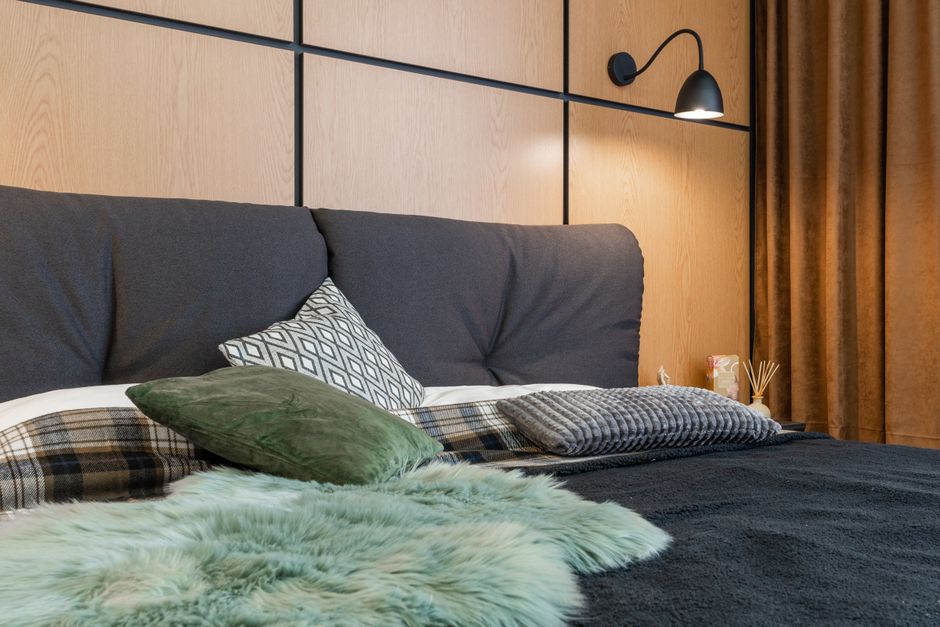
- Go heavy on the headboard. An upholstered, tufted, or richly textured headboard anchors a maximalist room and gives the eye somewhere to land.
- Layer rugs — a jute base rug with a smaller patterned rug on top adds warmth underfoot and visual depth.
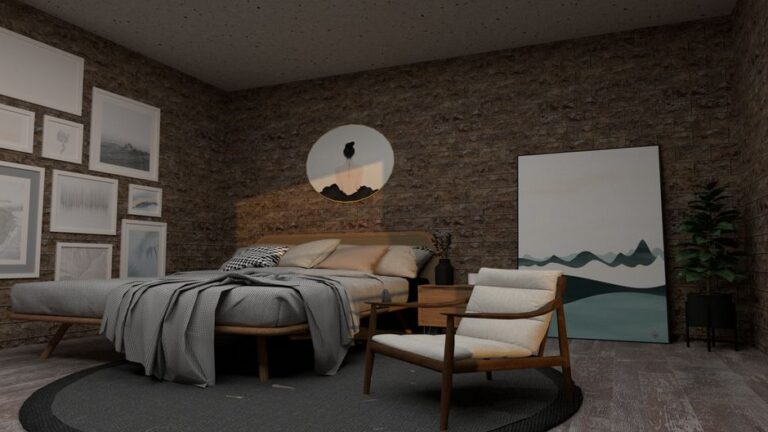
- Fill the walls with a gallery of mixed frames and art, rather than one large piece — this is a hallmark of maximalist coziness done well.
- Use a canopy or draped fabric above the bed for a sense of enclosure, which reads as deeply cozy in a way flat ceilings don't.
- Don't match your nightstands — two different but complementary pieces feel more collected and personal than a matching pair.
Lighting ideas that work across every style
- Add a plug-in wall sconce on either side of the bed if you don't want to run new wiring — instant warm, symmetrical light without an electrician.
- String lights along a headboard or shelf, kept simple (warm white, no color-changing) so they read as ambient light rather than a dorm-room accent.
- A salt lamp or amber-glass table lamp on the dresser adds a low, warm secondary light source for evenings.
- Battery-operated candles on a nightstand or windowsill give flicker and warmth without the fire risk, especially useful in a bedroom.
Texture and layering ideas
- A faux sheepskin draped over a reading chair or the foot of the bed — one of the fastest ways to add tactile warmth to any style.
- Curtains in a heavier fabric (velvet, brushed cotton) rather than sheer, which also helps with sound and light control.
- A woven pouf or ottoman at the foot of the bed adds both texture and a place to set a blanket.
- Layer at least three pillow sizes on the bed — one euro sham, one standard, and one lumbar or accent pillow reads far cozier than two matching pillows alone.
Small details that tie it together
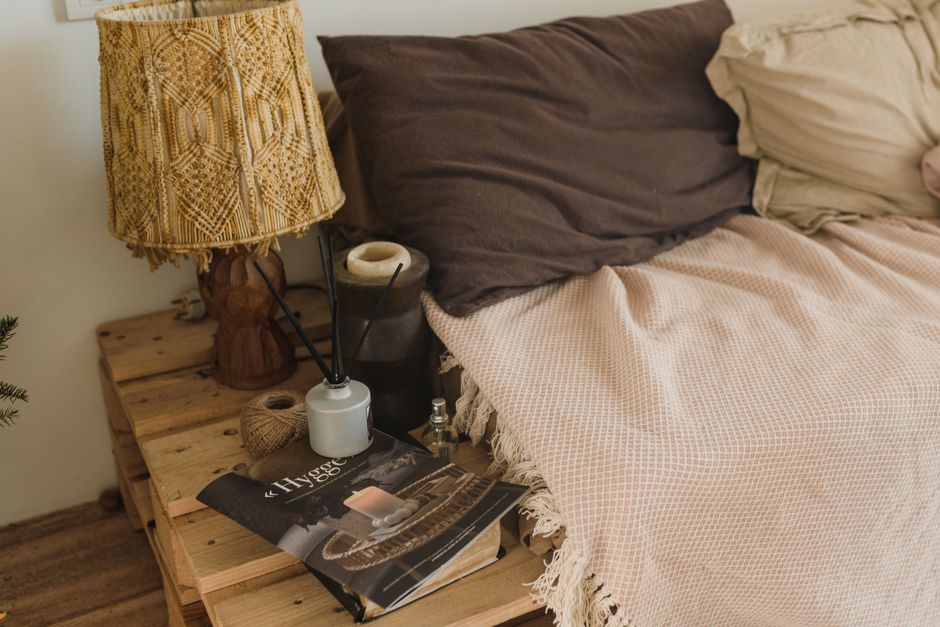
- Keep a stack of real books on the nightstand, not just for looks — a room that shows evidence of being used feels warmer than one styled purely for photos.
- Add a scent element — a candle, diffuser, or linen spray with a warm scent (sandalwood, vanilla, amber) reinforces the cozy feeling beyond what you can see.
The takeaway
Cozy isn't a single aesthetic — it's a set of sensory choices (warm light, layered texture, a grounded palette) that show up differently depending on whether your taste runs minimal or maximal. Pick a handful of ideas from whichever end of that spectrum matches you, rather than trying to force your space into a look that isn't actually how you want to live.
Frequently asked questions
What's the fastest way to make a bedroom feel cozier without buying much?
Swap your ceiling bulb for a warm-toned one (2700K or lower) and add one extra layer to the bed, like a folded throw blanket — both changes cost very little and have an outsized effect.
Do dark colors make a bedroom feel cozier than light colors?
Not necessarily — warmth comes more from the undertone and lighting than from how dark a color is. A warm off-white room with layered texture and soft lighting can feel just as cozy as a deep, dark one.
How many textures should a cozy bedroom have?
There's no fixed number, but mixing at least three — for example linen bedding, a knit throw, and a woven rug — tends to read as intentionally layered rather than sparse or overdone.
Can a small bedroom still feel cozy, or does it just feel cramped?
Small bedrooms are often easier to make feel cozy, since warm lighting and soft texture read more intensely in a compact space — the key is not overfilling it with furniture, which is what actually causes a cramped feeling.
Read next
Further reading & trusted sources
The detail most people miss
Warm-toned bulbs (2700K or lower) change the felt temperature of a room more than almost any single decor purchase, which is why swapping a bright white ceiling bulb is consistently the highest-return, lowest-cost move on this list — most people buy new textiles first and lighting last, when it works better reversed. A room styled with only two pillow sizes reads noticeably flatter and less finished than one layered with three, since the size variation itself is what the eye reads as ‘considered’ rather than the specific pillows chosen.
Sofia is happiest hunting down the high-end look for a fraction of the price; she’s convinced a beautiful room comes from restraint and clever styling far more than from budget. She shapes Dreamy Dwell’s room-by-room guides around ideas you can actually copy in a rental or on a tight budget — no staged ‘this is my mansion’ fantasy. AI tools help with the research and first drafts, and a human edits every piece before it goes live. We never fake reviews or pass off a styled photo as a real before-and-after.