 By Sofia Bennett, Home & Decor Editor
Reviewed & updated September 2026
A cluttered bedroom doesn't just look messy — it makes the one room that's supposed to help you unwind feel like another task on your list. These ideas work whether you've got a walk-in closet or a 10×10 box room, because good bedroom organization is about systems, not square footage.
 Skip ahead toCurated by Sofia · 8 min read
- Start with a 15-minute reset, not a full overhaul
- Closet organization
- Under-bed storage that actually works
- Dresser and drawer systems
- Nightstand and surface control
- Small-bedroom-specific ideas
- Systems that keep it organized long-term
- Decluttering before you organize
- The takeaway
- Further reading & trusted sources
Start with a 15-minute reset, not a full overhaul
Most bedroom organization projects stall because people try to reorganize everything in one exhausting weekend. Instead, start with a single surface — your nightstand, or the top of your dresser — and clear it completely. Put back only what you actually use there. This small win builds momentum and shows you, immediately, how much better a clear surface feels before you tackle the closet.
Closet organization
- Sort by category before you sort by anything else. Pull everything out and group by type (tops, bottoms, dresses) before deciding on a folding or hanging system — you can't organize what you haven't seen all at once.
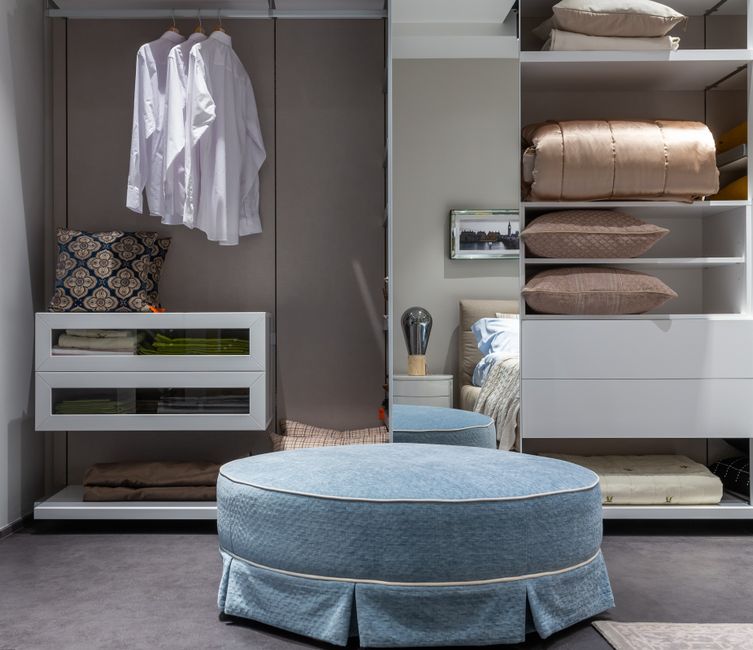
- Use uniform hangers. Mismatched wire and plastic hangers eat up visual space and slide clothes around. A matching set of slim velvet hangers instantly makes a closet look tidier and fits more in the same rod length.
- Hang by category and color. Group tops, then bottoms, then dresses, and within each group go light to dark. It sounds fussy, but it cuts "what do I own" scanning time dramatically.
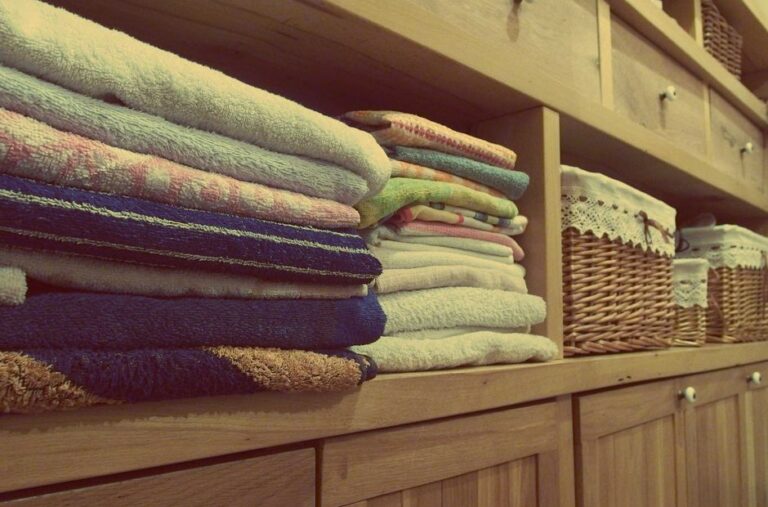
- Fold what doesn't need to hang. Knits, activewear, and jeans usually do better folded — hanging stretches them out over time.
- Use the top shelf for rotation, not daily items. Off-season clothing and rarely used bags belong up high; keep eye-level and reach-level space for what you actually wear weekly.
- Add a hanging shoe organizer or shelf. Shoes on the closet floor create visual chaos fast — even a simple canvas hanging organizer clears the floor instantly.
Under-bed storage that actually works
Under-bed space is some of the most wasted real estate in a bedroom. A few ways to use it well:
- Rolling storage bins for off-season clothing or extra bedding — clear ones let you see contents without opening them.
- A bed riser kit if your bed frame sits low — a few extra inches of clearance can turn unusable space into a full storage zone.
- Vacuum-seal bags for bulky items like comforters or winter coats, which compress down to a fraction of their size.
[TAKE] The under-bed space people forget: shoes. A shallow under-bed shoe organizer clears an entire closet shelf and keeps shoes dust-free, which matters more than it sounds for anything suede or fabric.
Dresser and drawer systems
- Drawer dividers change everything. Even simple cardboard or fabric dividers stop drawers from becoming a jumbled pile within a week of being organized.
- Try the file-folding method for t-shirts. Folding shirts to stand upright, like files in a cabinet, instead of stacking them means you see every shirt at once instead of digging through a pile.
- Dedicate one drawer to "off-duty" items — pajamas, loungewear, gym clothes — so your main drawers stay for daily-wear pieces only.
- Keep a small tray in your top drawer for jewelry, watches, or anything small that otherwise ends up loose and tangled.
Nightstand and surface control
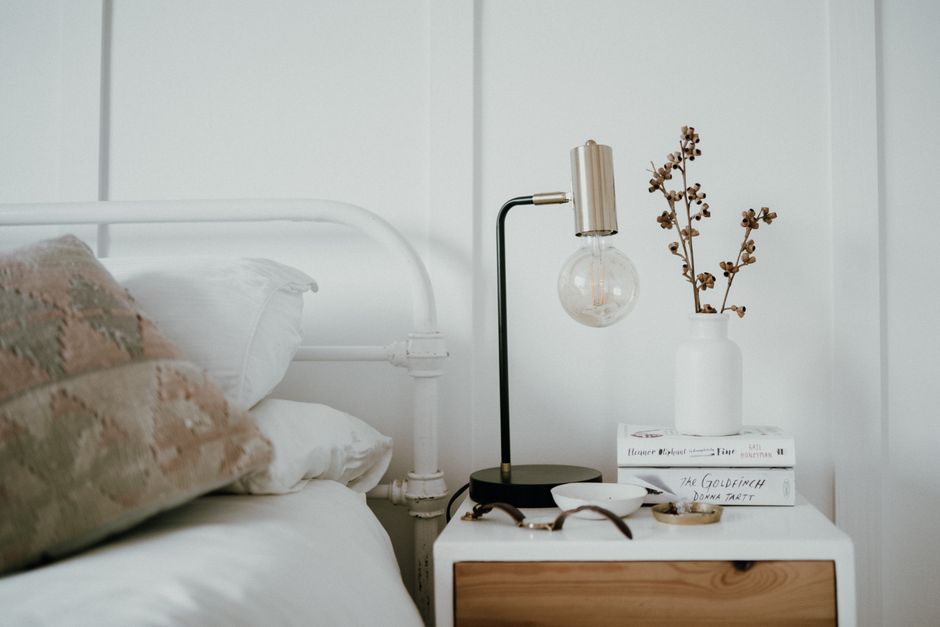
- One tray, one rule: everything on the nightstand lives on the tray. It sounds small, but a defined boundary stops random items from spreading across the surface.
- A closed drawer for chargers and clutter. If your nightstand has a drawer, that's where phone chargers, lip balm, and odds and ends belong — not scattered on top.
- Limit decor to 2–3 items per surface. More than that starts reading as clutter even if each individual item is tidy.
Small-bedroom-specific ideas
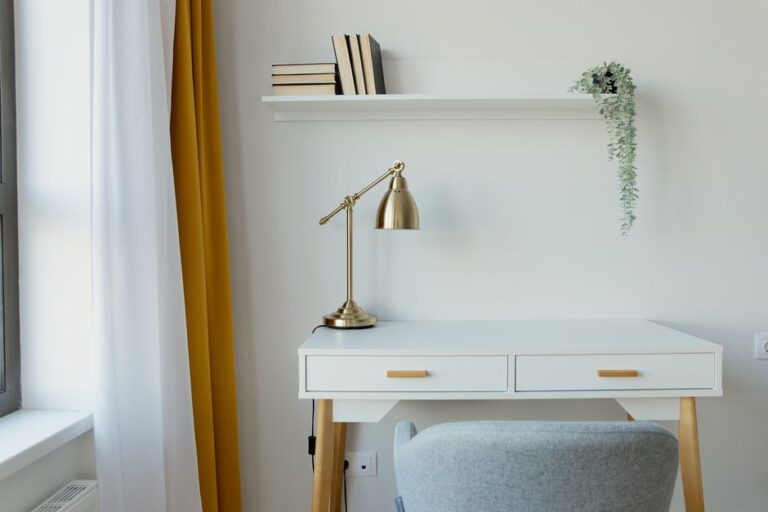
- Go vertical with wall-mounted shelving above the dresser or bed — floor space is often the real constraint in small rooms, not storage capacity.
- A slim over-the-door organizer on the closet or bedroom door adds storage without taking up any floor footprint.
- Multi-purpose furniture — an ottoman with storage inside, or a bed frame with built-in drawers — does double duty in rooms too small for a separate storage piece.
- Corner shelving units use dead corner space that's otherwise wasted in most bedroom layouts.
Systems that keep it organized long-term
Organizing once is easy. Staying organized is the actual challenge, and it comes down to a few habits more than any product:
- The "one in, one out" rule for clothes. When something new comes in, something leaves — this alone prevents closets from creeping back to overstuffed within months.
- A designated laundry basket location, not a chair. The "chair pile" is the single most common source of bedroom clutter, and it usually exists because there's no clear alternative spot for not-quite-dirty clothes.
- A weekly 5-minute reset — putting away the small stuff that accumulated that week — prevents the need for a big reorganization every few months.
- Label bins and baskets, especially shared or family bedrooms, so putting things away is as easy as finding them.
Decluttering before you organize
Buying more storage bins for stuff you don't need just organizes the clutter — it doesn't remove it. Before adding any new storage system, sort through what's already there:
- The one-year rule. If you haven't worn or used something in a year and it's not seasonal or sentimental, it's a strong candidate to donate.
- Duplicate check. Most people own more of one category (t-shirts, black leggings, phone chargers) than they realize — consolidating duplicates frees up real space fast.
- Sentimental items get a dedicated box, not scattered placement throughout the room — this keeps meaningful items intact without letting them clutter everyday storage.
- Donate same-day. Bag up donations and get them out of the house the same day you sort — items that "sit by the door" for donation have a way of migrating back into circulation.
The takeaway
Bedroom organization isn't about buying the perfect set of bins — it's picking a handful of systems (uniform hangers, drawer dividers, a nightstand tray, under-bed storage) and pairing them with simple habits like one-in-one-out and a weekly reset. Start with one surface, build momentum, and the rest of the room follows more easily than tackling it all at once.
Frequently asked questions
What's the best way to organize a small bedroom with no closet?
Lean on vertical storage — wall shelves, an over-the-door organizer, and a wardrobe rack — plus under-bed bins. A freestanding wardrobe or armoire can substitute for a built-in closet if floor space allows for one against a single wall.
How often should I reorganize my bedroom?
A full declutter twice a year (often tied to seasonal clothing swaps) is plenty for most people, paired with a quick 5-minute weekly reset to stop small clutter from building back up between those bigger sessions.
What's the biggest mistake people make when organizing a bedroom?
Buying storage bins and organizers before decluttering. Adding storage to a room full of things you don't actually need just hides the clutter instead of solving it — sort and donate first, then organize what's left.
Are matching hangers really worth it?
For most people, yes — beyond looking tidier, a slim, uniform hanger set takes up meaningfully less rod space than mismatched wire and plastic hangers, which means more of your wardrobe fits visibly and accessibly in the same closet.
Read next

Further reading & trusted sources
Where most people go wrong
Buying storage bins before decluttering is one of the most common bedroom-organization missteps, since new storage just gives clutter a tidier place to hide instead of actually reducing how much is in the room — sorting and donating first is what makes any storage system afterward actually hold up. A matched set of slim hangers isn’t just cosmetic; it measurably fits more of a wardrobe in the same rod length than mismatched wire and plastic hangers, which take up more lateral space per garment than their slim profile suggests.
Sofia is happiest hunting down the high-end look for a fraction of the price; she’s convinced a beautiful room comes from restraint and clever styling far more than from budget. She shapes Dreamy Dwell’s room-by-room guides around ideas you can actually copy in a rental or on a tight budget — no staged ‘this is my mansion’ fantasy. AI tools help with the research and first drafts, and a human edits every piece before it goes live. We never fake reviews or pass off a styled photo as a real before-and-after.