 By Sofia Bennett, Home & Decor Editor
Reviewed & updated September 2026
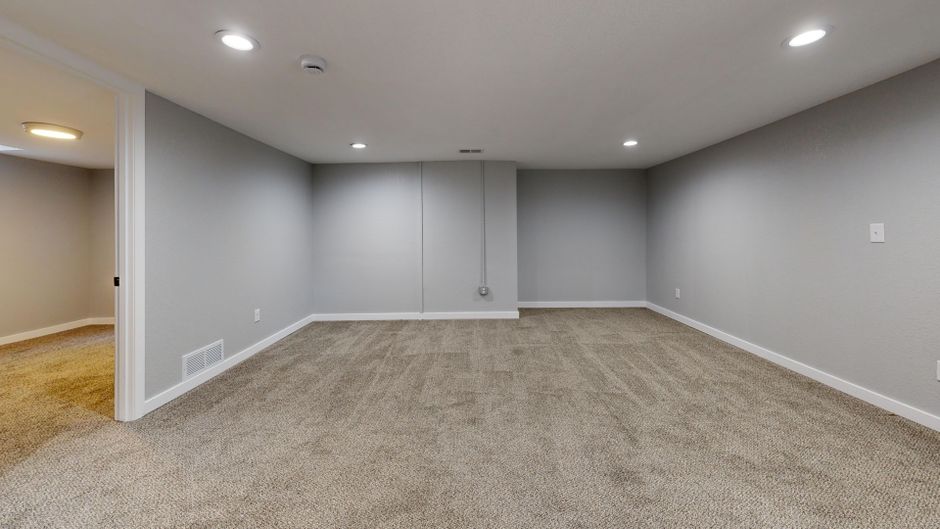
Basements get a bad reputation — low ceilings, little natural light, concrete underfoot. But with the right approach, a basement can become one of the coziest, most-used rooms in the house instead of the space everyone forgets about. Here's how to decorate around basement quirks instead of fighting them.
 Quick navigationCurated by Sofia · 7 min read
- Work with the ceiling height, not against it
- Solve the lighting problem in layers
- Choose flooring that fights the cold, damp feeling
- Address the “no windows” feeling directly
- Define zones without walls
- Bring in texture and warmth deliberately
- Don’t skip odd structural features
- The takeaway
- Further reading & trusted sources
Work with the ceiling height, not against it
Low ceilings are the most common basement complaint, and the instinct is often to add tall furniture or bold ceiling treatments to "distract" from the height — but that usually backfires. Instead, keep furniture lower-profile: low-back sofas, streamlined coffee tables, and floor lamps instead of tall arc lamps. A lower furniture line leaves more visible wall and ceiling space, which reads as more headroom even though the actual measurement hasn't changed.
Paint the ceiling the same color as the walls, or a shade lighter, rather than leaving it stark white or exposed. A ceiling that blends with the walls instead of contrasting against them disappears visually, making the whole room feel taller than a hard white-ceiling-meets-colored-wall line does.
Solve the lighting problem in layers
Basements rarely have enough natural light, and a single overhead fixture makes that worse by creating flat, uneven lighting with harsh shadows in the corners. Layer your lighting instead:
- Ambient light from recessed ceiling fixtures or a flush-mount, spaced evenly rather than centered in one spot.
- Task lighting from floor and table lamps positioned where you'll actually read, work, or relax.
- Accent lighting from LED strips along shelving, behind a TV, or under cabinetry to add warmth and depth without brightening the whole room.
Choose warm-white bulbs (2700K-3000K) throughout. Basements already tend to feel cooler and dimmer than upstairs rooms, and cool-white bulbs (4000K+) exaggerate that clinical, unfinished feeling rather than softening it.
Choose flooring that fights the cold, damp feeling
Concrete subfloors mean basements run colder underfoot than the rest of the house, which subtly makes the whole room feel less inviting even before you consider decor. A few flooring options handle this well:
Area rugs, layered generously. A basement is one of the few rooms where you can go slightly oversized and layered with rugs — a large base rug plus a smaller accent rug adds warmth and softens footsteps.
Luxury vinyl plank (LVP). Water-resistant, warmer underfoot than tile, and durable against the occasional basement humidity, LVP is one of the most practical basement flooring choices for both function and looks.
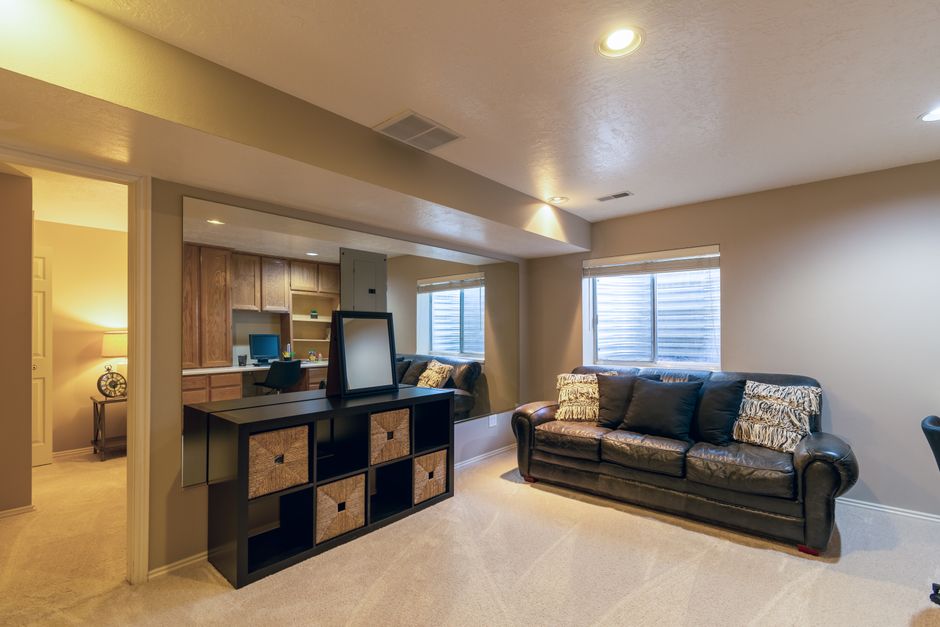
Carpet tiles. Easy to replace individually if a section gets water damage, and noticeably warmer and quieter than hard flooring — a strong option for basement bedrooms or media rooms.
Avoid solid hardwood in a true below-grade basement unless it's specifically rated for below-grade installation, since humidity and moisture swings can warp it over time.
Address the "no windows" feeling directly
Many basements have small, high, or absent windows, which affects both light and the sense of connection to the outdoors. A few fixes help meaningfully:
Mirrors placed opposite any light source (windows, lamps, or even bright artwork) bounce available light further into the room and add a sense of depth.
Faux windows or lightboxes — framed LED panels printed with a sky or landscape scene — are a surprisingly effective way to add the visual cue of a window where there isn't one.
Light, reflective wall colors in soft whites, warm greiges, or pale blues bounce more available light around the room than deep, saturated colors do, even though darker basement walls can look dramatic in photos.
Define zones without walls
Basements are often one large open room, which can feel either wonderfully flexible or aimless depending on how it's decorated. Use rugs, furniture placement, and lighting to define distinct zones — a media area, a play or hobby corner, a small home gym — rather than letting one sectional and a TV try to fill the entire footprint.
A rug under each zone's furniture grouping is the single most effective, lowest-cost way to visually separate an open basement into rooms-within-a-room without any construction.
Bring in texture and warmth deliberately
Because basements start from a cooler, harder-surfaced baseline (concrete, drywall, minimal natural light), they need more deliberate texture than an upstairs room to avoid feeling sterile:
- Chunky knit throws and textured pillows on seating
- Woven baskets for storage that double as decor
- Wood tones in furniture or shelving to warm up cool wall colors
- Curtains on any windows present, even small ones, to soften hard lines
Don't skip odd structural features
Support poles, low ductwork, and exposed pipes are common basement realities. Rather than trying to hide them entirely, work them into the design: paint a support pole to match the wall so it recedes, or wrap it in wood paneling to turn it into an intentional-looking column. Exposed ductwork, painted a matte black or the ceiling color, reads as an industrial design choice rather than an unfinished one.
The takeaway
A basement's limitations — low ceilings, little natural light, a cooler feel — aren't obstacles to decorate around apologetically. Each one has a specific, practical fix: layered warm lighting instead of a single overhead fixture, ceiling-matching paint to gain visual height, textured layers to counter the concrete-and-drywall starting point. Address them directly and a basement becomes one of the most functional, cozy rooms in the house rather than the one everyone avoids.
Frequently asked questions
What's the best paint color for a basement with little natural light?
Warm whites, soft greiges, and pale warm tones tend to work best, since they reflect available light without looking cold. Deep, saturated colors can look striking but will make an already dim room feel darker and smaller.
Is carpet or vinyl flooring better for a basement?
Both work well. Carpet tiles offer more warmth and sound absorption, while luxury vinyl plank offers better water resistance and durability. The right choice depends on how damp-prone your specific basement is and how the space will be used.
How do I make a basement feel less like a basement?
Layered warm lighting, a ceiling color that matches or nearly matches the walls, generous area rugs, and mirrors placed to bounce available light all help. Defining separate zones with rugs and furniture also makes an open basement feel more like an intentional room.
Do I need to hide support poles and ductwork?
Not necessarily. Painting a pole to match the wall or wrapping it in wood paneling, and painting exposed ductwork a matte dark color, both work better than trying to fully conceal structural features — and often look more intentional than hiding them would.
Read next
Further reading & trusted sources
What we’d do first
Painting a basement ceiling to match the walls consistently reads as taller in person than the actual measured height would suggest, since it removes the hard contrast line the eye uses to judge where the room stops. A single rug under a whole open basement rarely defines the space the way separate rugs under each furniture grouping do — one big rug just extends the open feeling instead of breaking it into rooms.
Sofia is happiest hunting down the high-end look for a fraction of the price; she’s convinced a beautiful room comes from restraint and clever styling far more than from budget. She shapes Dreamy Dwell’s room-by-room guides around ideas you can actually copy in a rental or on a tight budget — no staged ‘this is my mansion’ fantasy. AI tools help with the research and first drafts, and a human edits every piece before it goes live. We never fake reviews or pass off a styled photo as a real before-and-after.