 By Sofia Bennett, Home & Decor Editor
Reviewed & updated September 2026
Hallways are the most overlooked rooms in a home — narrow, often windowless, and easy to treat as pure pass-through space rather than a place worth decorating. But a hallway is prime real estate: it's the first and last thing you see every day, and a few intentional touches can turn a dead zone into one of the most character-filled parts of the house.
 Quick navigationCurated by Sofia · 7 min read
Start with a runner rug
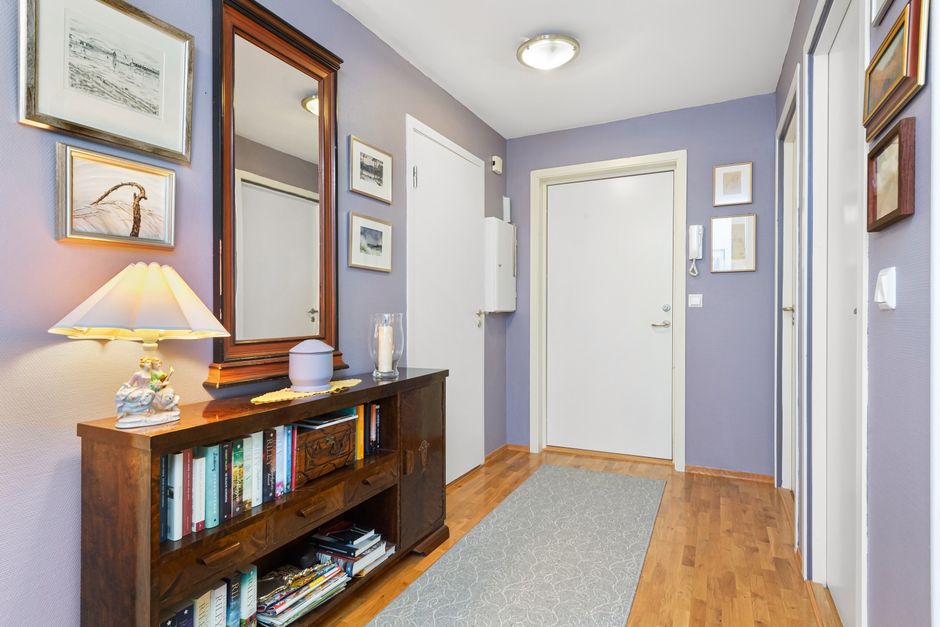
A runner rug is the single highest-impact change you can make to a hallway. It anchors the space, adds warmth underfoot, protects flooring from heavy foot traffic, and instantly makes a bare hallway feel finished. Measure your hallway's width and leave 3-4 inches of flooring visible on each side for the most balanced look.
Choose a durable, low-pile material like flatweave wool or a synthetic blend that can handle daily traffic without showing wear quickly. Patterned runners are especially forgiving in high-traffic zones since they hide dirt and scuffs better than solid colors.
Layer in lighting
Many hallways rely on a single overhead fixture, which tends to create flat, uninviting light. Adding a secondary light source — wall sconces spaced evenly along the length of the hall, or a plug-in table lamp on a console table — creates depth and makes the space feel intentional rather than purely functional.
If your hallway has no natural light at all, warm-toned bulbs (2700-3000K) go a long way toward making the space feel cozy instead of clinical. Cool white bulbs tend to make windowless hallways feel more like an office corridor than part of a home.
Build a gallery wall
Hallways are one of the best spots in a home for a gallery wall, since the long, uninterrupted stretch of wall space gives you room to tell a visual story — family photos, art prints, travel snapshots, or a mix of all three. Lay the frames out on the floor first to test the arrangement before committing to nail holes.
For a narrow hallway, keep frames relatively slim and avoid anything that projects too far off the wall, since deep frames or shelving can make an already tight space feel narrower.
Add a console table (if you have the width)
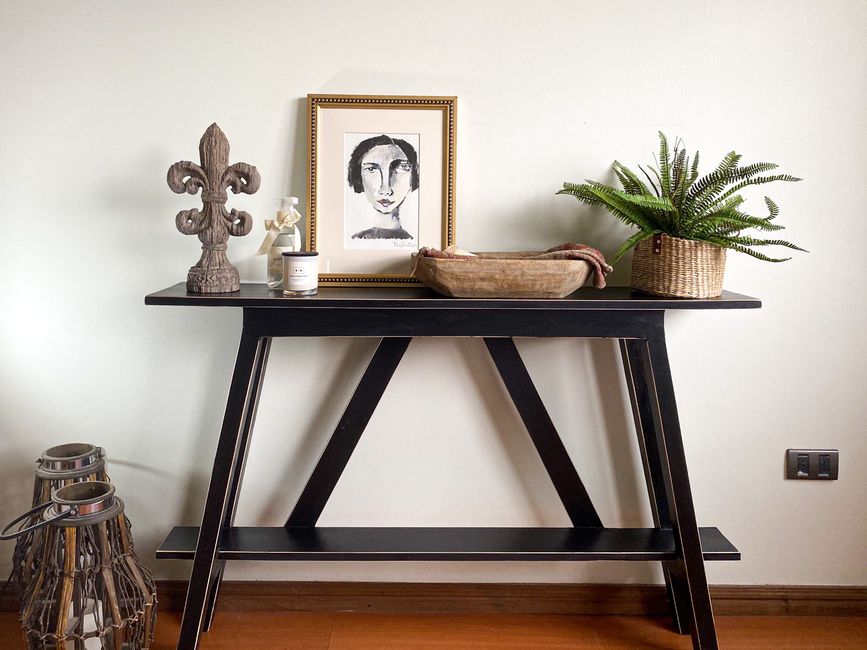
If your hallway is wide enough to spare 12-15 inches, a slim console table instantly upgrades the space — a spot to drop keys and mail, display a lamp or small vase, and break up a long stretch of blank wall. Choose a console with a narrow depth (under 14 inches is typical) so it doesn't eat into the walking path.
If the hallway is too narrow for furniture, a row of wall-mounted hooks or a slim floating shelf accomplishes a similar function without taking up any floor space.
Use mirrors to open up the space
A well-placed mirror does double duty in a hallway: it bounces available light around the space, and it visually widens a narrow corridor by creating the illusion of depth. Hang a mirror perpendicular to a light source (a window, if you have one, or a wall sconce) rather than directly across from it, so it reflects light into the hallway instead of just back at the source.
A single statement mirror near the entrance to the hallway or at the far end (so it's visible as you walk toward it) tends to have more visual impact than several small mirrors scattered along the walls.
Paint strategy for narrow or dark hallways
Painting a hallway a slightly darker or richer color than the adjoining rooms can actually make it feel more intentional rather than cramped, especially when the hallway has no natural light to lose. Deep, saturated colors read as a deliberate design choice, while pale, washed-out colors in a dim hallway often just look under-lit.
If you'd rather brighten the space, stick to warm off-whites rather than stark cool white, which can feel sterile without natural light to balance it. Either direction works — the key is committing to one instead of leaving a hallway in a default builder-beige that reads as unfinished.
Don't skip the ceiling and trim
Because hallways are often narrow, your eye naturally travels along their full length, including up toward the ceiling. Crown molding, a painted ceiling in a complementary tone, or even simple picture-rail trim can elevate a plain hallway more than people expect, since there's rarely furniture competing for attention.
The takeaway
A hallway doesn't need to be treated as leftover space. A runner rug, layered lighting, a gallery wall or console table, and a well-placed mirror can turn a narrow pass-through into one of the more memorable parts of a home. Start with the runner and lighting — those two changes alone solve most of what makes hallways feel unfinished — then build up with art, furniture, and paint as budget and space allow.
Frequently asked questions
How do I decorate a hallway with no windows?
Focus on layered artificial lighting with warm-toned bulbs, a mirror to bounce light around, and a rug or wall color that adds warmth since you can't rely on daylight to do that work for you.
What's the best rug size for a hallway?
Leave 3-4 inches of visible flooring on each side of the rug, and if the hallway is long, it's fine to use a single long runner or two shorter rugs end to end rather than trying to find one oversized piece.
Is it okay to paint a hallway a dark color?
Yes — darker, saturated colors often read as more intentional in a hallway than pale colors, especially if there's no natural light to wash the space out. Just make sure lighting is strong enough that the space doesn't feel like a cave.
How do I make a narrow hallway feel wider?
A mirror placed to reflect available light, a rug that draws the eye down the length of the hall rather than across it, and keeping furniture (if any) slim and low-profile all help a narrow hallway feel less cramped.
Read next
Further reading & trusted sources
Worth knowing before you start
A runner rug placed with equal margins on both sides looks intentional from a glance, but most hallways aren’t perfectly symmetrical — walls bow slightly or door swings eat into one side — so measuring at three points along the length rather than just the ends catches the gap that would otherwise make an expensive rug look slightly crooked once it’s down. Mirrors hung directly across from a light source mostly just bounce glare back at the source instead of spreading it, which is the opposite of the effect people are usually going for when they add one to brighten a dim hallway.
Sofia is happiest hunting down the high-end look for a fraction of the price; she’s convinced a beautiful room comes from restraint and clever styling far more than from budget. She shapes Dreamy Dwell’s room-by-room guides around ideas you can actually copy in a rental or on a tight budget — no staged ‘this is my mansion’ fantasy. AI tools help with the research and first drafts, and a human edits every piece before it goes live. We never fake reviews or pass off a styled photo as a real before-and-after.