 By Sofia Bennett, Home & Decor Editor
Reviewed & updated September 2026
A small dining room doesn't have to feel like a leftover corner of the house. With the right table proportions, smart storage, and a few visual tricks, even a tight footprint can feel like a real, intentional dining space — the kind you actually want to sit in for a while.
 What you’ll find insideCurated by Sofia · 6 min read
- Choose a round or drop-leaf table
- Use the walls, not the floor
- Pick chairs that “disappear”
- Go big with the light fixture
- Mirror the wall opposite the window
- Keep the color palette light but not sterile
- Define the space without walls
- Common mistakes to avoid
- The takeaway
- Further reading & trusted sources
Choose a round or drop-leaf table
Rectangular tables eat corners and force awkward walking paths in a small room. A round or oval table softens the edges and often fits more comfortably in a tight footprint — there's no sharp corner to bump into on your way past. A drop-leaf or extendable table is even better if you host occasionally: keep it small for daily use and expand it only when guests come over.
Use the walls, not the floor
The single biggest space-saver in a small dining room is getting storage off the floor:
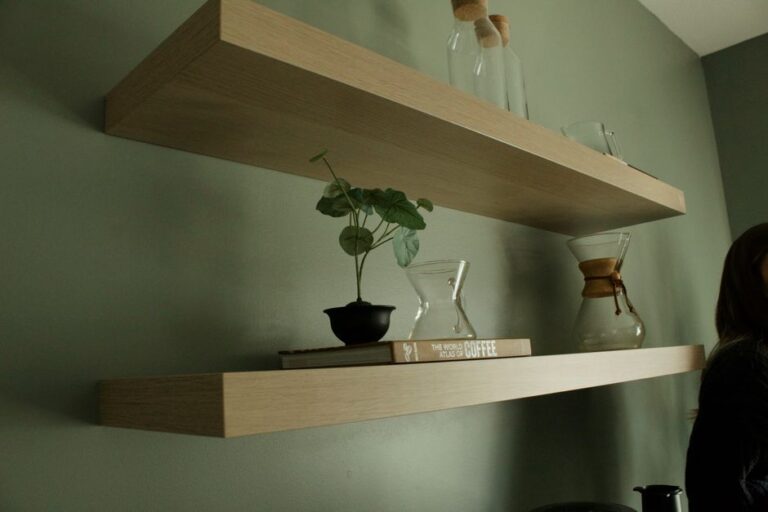
- A wall-mounted shelf or plate rack replaces a bulky sideboard while displaying dishware as decor
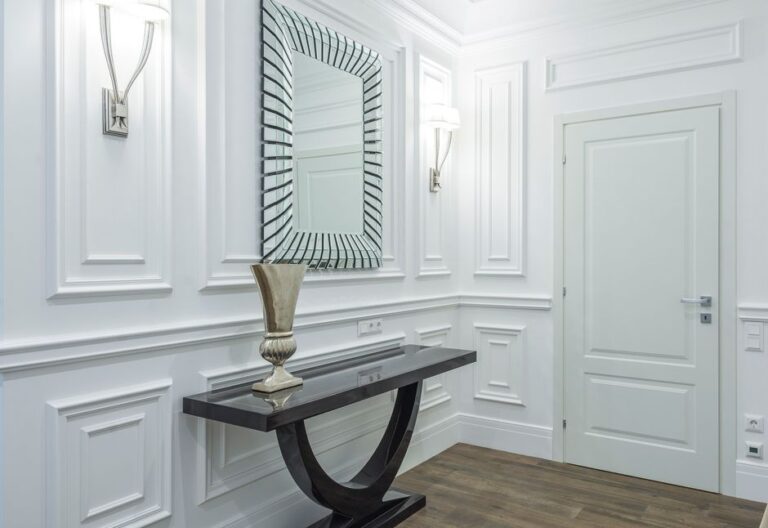
- A narrow console table against the wall (12-16 inches deep) holds serving pieces without eating floor space
- Hooks or a slim rail for everyday items like napkins or a fruit bowl keeps the table itself clearer
Anything you can hang instead of set on the floor gives the room more visual breathing room.
Pick chairs that "disappear"
Bulky upholstered dining chairs can visually crowd a small room even when they're not in the way physically. Look for:
- Ghost chairs (clear acrylic) — they add seating without adding visual weight
- Slim wood or metal frame chairs instead of thick upholstered ones
- Bench seating on one side — a bench slides under the table when not in use and seats more people per linear foot than individual chairs
Mixing chair styles (a bench on one side, two chairs on the other) also makes a small space feel curated rather than cramped.
Go big with the light fixture
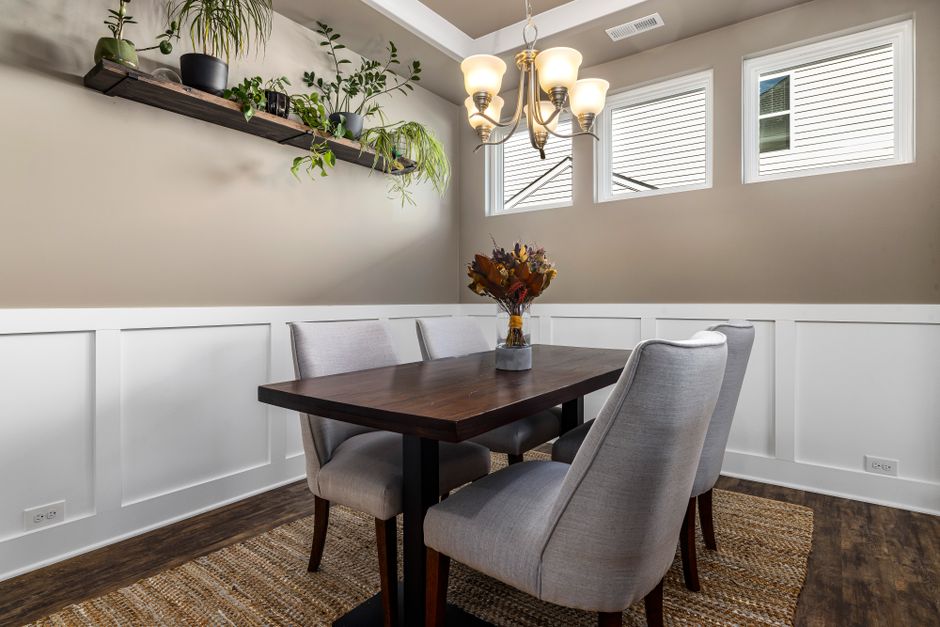
It sounds counterintuitive, but a small room benefits from one confident, appropriately-scaled light fixture rather than several small ones. A single well-proportioned pendant centered over the table anchors the whole space and draws the eye up and in, making the room feel more designed and less like an afterthought corner.
Mirror the wall opposite the window
A large mirror on the wall facing (or near) a window bounces natural light around the room and visually doubles the sense of space. In a small dining room this is one of the highest-impact, lowest-cost changes you can make — it works even better here than in most other rooms because dining rooms are often used at meal times when natural light matters most.
Keep the color palette light but not sterile
Light walls make a small room feel larger, but all-white can feel cold for a space meant to be lived in and lingered over. Try:
- A warm off-white or soft greige on the walls
- One or two colorful elements — a patterned rug, a bold light fixture, or art — to keep it from feeling flat
- A rug under the table that's large enough that chairs stay on it even when pulled out, which visually anchors the whole setup
Define the space without walls
If your dining area is part of an open floor plan, a rug, a different light fixture, or even just a change in wall color can visually separate it from the surrounding space without needing an actual wall — important in small homes where every enclosed room feels smaller.
Common mistakes to avoid
- Buying a table too big "for guests" — a table you can barely walk around daily isn't worth the occasional extra seat; get an extendable one instead.
- Skipping a rug because the room is small — the right-sized rug actually makes a room read as more intentional, not smaller.
- Overcrowding with a sideboard AND a bar cart AND extra chairs — pick one storage piece and let the walls do the rest.
- Under-lighting — a small, dim fixture makes a small room feel even more like an afterthought.
The takeaway
A small dining room reads as intentional, not cramped, when you get the table shape right, move storage onto the walls, choose visually light seating, and commit to one confident light fixture and a well-placed mirror. None of these changes require more square footage — they just use the footage you have more deliberately.
Frequently asked questions
What shape table is best for a small dining room?
Round or oval tables generally work best in small spaces because they eliminate sharp corners and awkward walking paths. A drop-leaf or extendable table is a great option if you need extra capacity only occasionally.
How do I make a small dining room feel bigger?
A large mirror opposite or near a window, a light (but not stark white) color palette, wall-mounted storage instead of floor pieces, and a properly sized rug under the table all help a small dining room feel more spacious.
Should a small dining room have a chandelier?
Yes, generally — one well-proportioned pendant or small chandelier centered over the table adds presence and makes the room feel finished, rather than several smaller lights that can clutter a compact ceiling.
What kind of chairs work best in a small dining space?
Slim-framed wood or metal chairs, clear acrylic "ghost" chairs, or a bench on one side of the table all take up less visual space than bulky upholstered chairs and make the room feel more open.
Read next

Further reading & trusted sources
Where most people go wrong
A round table often fits a tight dining nook better than a smaller rectangular one, because the missing corners are what actually free up walking space, not the table’s overall footprint. Centering one properly-scaled pendant over the table does more to make a small dining room feel finished than adding a second or third light source.
Sofia is happiest hunting down the high-end look for a fraction of the price; she’s convinced a beautiful room comes from restraint and clever styling far more than from budget. She shapes Dreamy Dwell’s room-by-room guides around ideas you can actually copy in a rental or on a tight budget — no staged ‘this is my mansion’ fantasy. AI tools help with the research and first drafts, and a human edits every piece before it goes live. We never fake reviews or pass off a styled photo as a real before-and-after.