 By Sofia Bennett, Home & Decor Editor
Reviewed & updated September 2026
A console table is one of the easiest pieces of furniture to buy and one of the hardest to style well — it's long, narrow, and visible from multiple angles, so clutter or empty awkwardness both show immediately. These five layouts give you a repeatable formula for making any console table (entryway, living room, or behind a sofa) look intentional instead of accidental.
 Quick navigationCurated by Sofia · 6 min read
- The Rule of Three (and Odd Numbers)
- Layout 1: The Classic Symmetrical Anchor
- Layout 2: The Asymmetrical Cluster
- Layout 3: The Mirror-and-Lamp Combo
- Layout 4: The Functional Entryway Setup
- Layout 5: The Minimalist Statement
- Choosing the Right Height and Scale
- Common Mistakes to Avoid
- The Takeaway
- Related articles
- Further reading & trusted sources
The Rule of Three (and Odd Numbers)
Before getting into specific layouts, one principle applies to almost all of them: group objects in odd numbers, usually three, and vary their height. Two items of similar height read as a matched pair and can look stiff; three items of different heights (tall, medium, short) create visual rhythm that feels curated rather than staged. This single rule fixes more awkward console tables than any specific object choice.
Layout 1: The Classic Symmetrical Anchor
Best for formal entryways or a console centered under a mirror. Place a lamp on each end for balance, then a low, wide item in the center — a tray, a bowl, or a shallow basket. This layout is the most forgiving for beginners because symmetry does a lot of the visual work automatically. Add a stack of books or a small plant on one side of the tray to break up perfect uniformity slightly, which keeps it from feeling too rigid.
Layout 2: The Asymmetrical Cluster
Best for a more collected, lived-in look. Instead of matching both ends, place a taller item (a vase, a piece of art leaning against the wall, or a lamp) at one end, then build a smaller cluster of three objects — a stack of books topped with a small object, a candle, and a small plant — at the other end or slightly off-center. Leave the remaining third of the table empty; negative space is what keeps a cluster from reading as clutter.
Layout 3: The Mirror-and-Lamp Combo
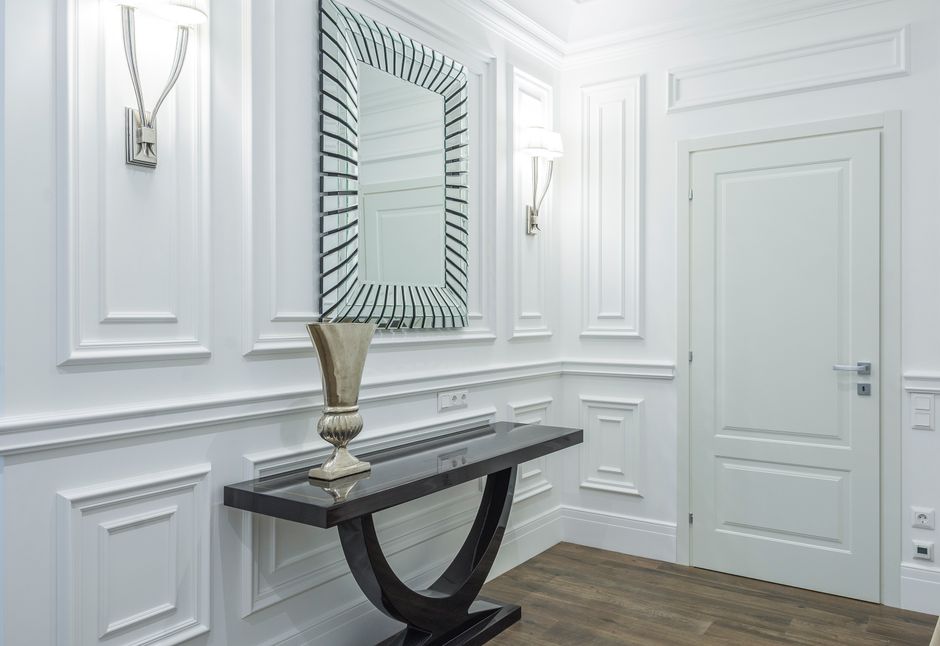
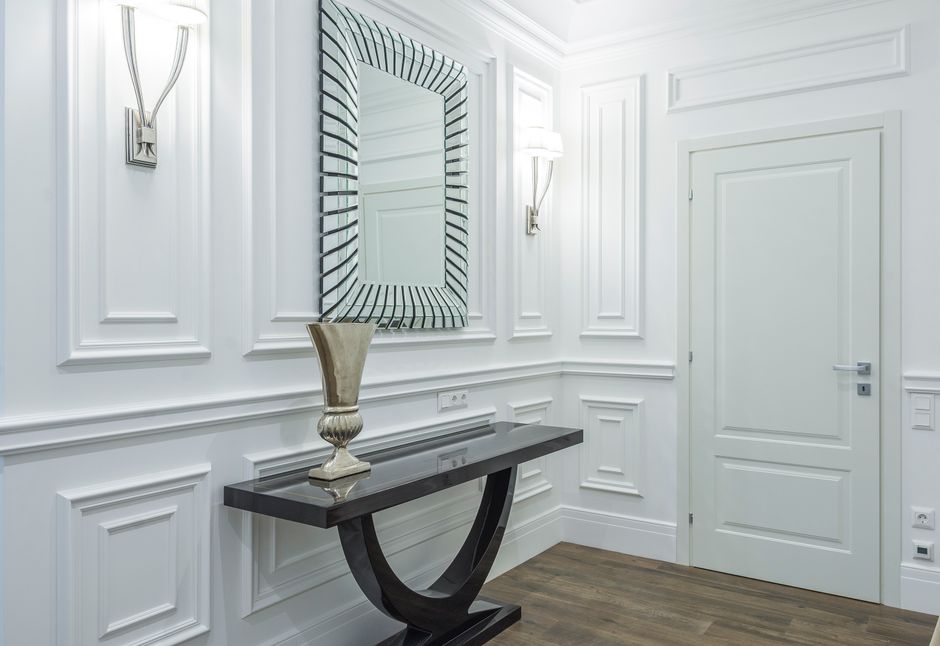
If your console sits against a wall with space above it, lean a large mirror behind the table rather than mounting it — this adds height and makes the whole vignette feel more finished without any wall damage. Flank it with one lamp (not two, for an asymmetrical feel) and a low stack of books or a small sculptural object on the other side.
Layout 4: The Functional Entryway Setup
Best for a true entry console that needs to earn its keep. Include a catch-all tray for keys and mail, a small lidded box for less attractive essentials (like spare masks or sunglasses), and one decorative element — a candle, small plant, or framed photo — so the practical items don't make the whole surface look purely utilitarian. A small chair or stool tucked underneath adds function without visually crowding the top.
Layout 5: The Minimalist Statement
Best for modern or minimalist spaces. Use just one or two objects total: a single oversized vase with dried branches, or one sculptural bowl and nothing else. This layout relies entirely on the quality and shape of the object chosen, since there's nothing else to distract from it — a cheap-looking single item will stand out more here than it would buried in a fuller arrangement.
Choosing the Right Height and Scale
A general rule: your tallest styled object shouldn't exceed about two-thirds the height of anything hanging above it (a mirror or art), so the eye reads them as a connected grouping rather than competing for attention. Items on the table itself generally look best kept low enough that they don't block a mirror's reflection if one is mounted above.
Common Mistakes to Avoid
Pushing everything to dead center. A perfectly centered single object on a long table often looks lonely rather than tidy — asymmetry (or grouped odd numbers) generally reads as more intentional.
Matching heights across every item. If everything on the table is roughly the same height, the eye has nowhere interesting to land. Vary tall, medium, and short.
Overcrowding the surface. A console table styled with six or more small objects usually reads as cluttered rather than curated — edit down to what you'd actually keep if forced to choose only three items.
Ignoring scale relative to the table. A tiny 6-inch object on a 6-foot console table will look lost; scale your largest piece to roughly a third of the table's length for visual balance.
[TAKE] Group decor in odd numbers with varied heights — it's the single fastest fix for a console table that feels randomly placed rather than styled.
The Takeaway
Styling a console table well comes down to a few repeatable choices: odd-numbered groupings, varied heights, and enough negative space to keep it from feeling crowded. Pick whichever layout matches your space's formality — symmetrical for a classic entryway, asymmetrical for a collected look, or minimalist for modern rooms — and the table will read as finished rather than an afterthought.
Frequently asked questions
How tall should a lamp be on a console table?
A lamp roughly 24-30 inches tall generally works well on a standard 30-34 inch console, keeping its shade at a comfortable eye level without overwhelming the surface.
What goes well in the center of a console table under a mirror?
A low, wide tray or bowl works best in the center, since taller centered objects tend to block the mirror's reflection when viewed straight on.
Is it okay to leave a console table mostly empty?
Yes — a minimalist layout with just one or two well-chosen objects can look more intentional than an overfilled table, especially in modern or streamlined spaces.
How do I style a console table behind a sofa?
Keep items low enough that they don't obstruct sightlines across the room, and consider adding a small stack of books or a low bowl alongside a single taller accent like a vase or small lamp.
Read next
Related articles
- How to Choose the Right Curtains for Any Room
- Small Entryway Decorating Ideas That Still Feel Welcoming
- Living Room Lighting Ideas for a Cozy, Inviting Glow
- “Small Living Room Layout Ideas That Actually Maximize Space”
- Renter-Friendly Apartment Decorating Ideas
- How to Make a Small Room Look Bigger
The part that actually matters
The detail that predicts whether a console table looks styled versus staged is negative space, not object count — tables filled edge-to-edge with decor almost always read as cluttered no matter how nice each individual piece is. Leaning a large mirror against the wall instead of mounting it holds up surprisingly well in daily use, since the table surface itself keeps most of the weight from ever resting on the wall anchor.
Further reading & trusted sources
Sofia is happiest hunting down the high-end look for a fraction of the price; she’s convinced a beautiful room comes from restraint and clever styling far more than from budget. She shapes Dreamy Dwell’s room-by-room guides around ideas you can actually copy in a rental or on a tight budget — no staged ‘this is my mansion’ fantasy. AI tools help with the research and first drafts, and a human edits every piece before it goes live. We never fake reviews or pass off a styled photo as a real before-and-after.