 By Sofia Bennett, Home & Decor Editor
Reviewed & updated September 2026
Lighting is the single most powerful tool for changing how a room feels — and the one most people never think about until they're squinting under a too-bright overhead fixture or sitting in a room that feels oddly flat no matter how nice the furniture is. The secret to a living room that feels genuinely cozy isn't a new sofa or a gallery wall. It's layers of warm, intentional light. Here's how to build them.
 Quick navigationCurated by Sofia · 9 min read
- The Lighting Problem Most Living Rooms Have
- Layer 1: Warm Ambient Light (Replace Your Overhead)
- Layer 2: Floor Lamps (The Workhorse of Cozy Lighting)
- Layer 3: Table Lamps and Shelf Lighting
- Layer 4: Accent Lighting for Depth and Warmth
- Choosing the Right Bulbs for Every Fixture
- Lighting for Small Living Rooms
- The Renter’s Lighting Strategy (No Electrician Required)
- The Takeaway
- Related articles
- Further reading & trusted sources
The Lighting Problem Most Living Rooms Have
Most living rooms rely on a single overhead light — a flush-mount ceiling fixture or a basic fan with a light kit. The result is flat, shadowless illumination that feels clinical or harsh regardless of the bulb color temperature you choose.
Good lighting design uses three layers: ambient (general fill), task (focused light for reading or working), and accent (decorative highlights that create depth and visual interest). Most living rooms have ambient light and nothing else.
The fix isn't complicated or expensive. It's about adding multiple lower light sources that work at eye level and below — where cozy light actually lives.
Layer 1: Warm Ambient Light (Replace Your Overhead)
Before adding anything else, fix the overhead. A single bare bulb or cool-white LED in a ceiling fixture is the fastest way to ruin a cozy atmosphere.
What to do:
- Switch to warm white bulbs: 2700K–3000K color temperature (labeled "soft white" or "warm white"). Avoid anything above 3000K in a living room.
- If your ceiling fixture allows it, use a dimmer. The ability to drop ambient light to 30–40% in the evenings transforms a room.
- Consider swapping a basic flush mount for a globe pendant, rattan shade, or linen drum pendant — something that diffuses light rather than broadcasting it directly downward.
If your living room has a ceiling fan with a light kit and no dimmer, that's worth upgrading — fan-rated dimmers are inexpensive and the difference in ambiance is significant.
Layer 2: Floor Lamps (The Workhorse of Cozy Lighting)
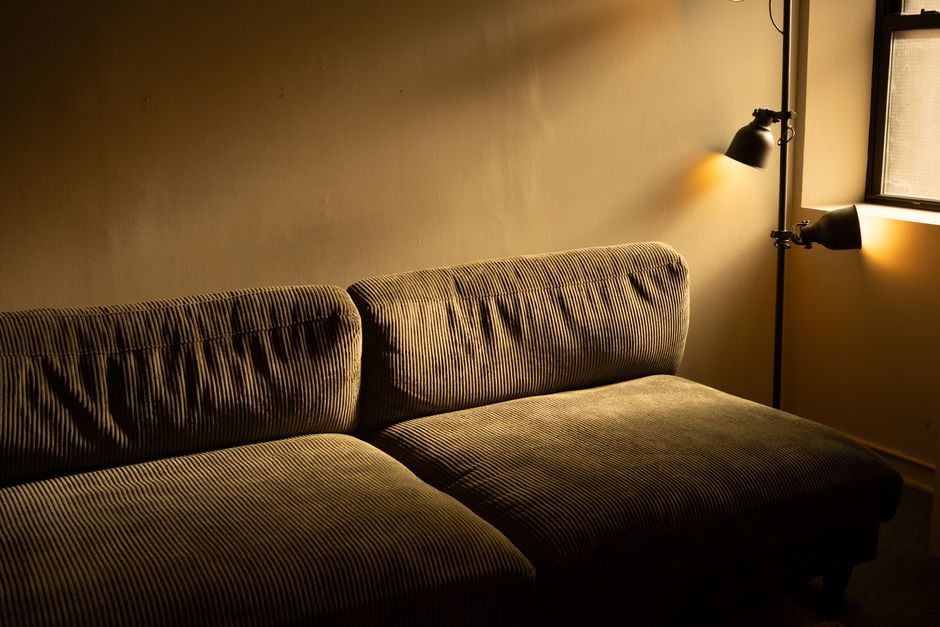
A well-placed floor lamp does more for a living room's atmosphere than almost any other single purchase. The light comes from mid-height, casts warm pools on the ceiling and walls, and creates the kind of "tucked in" feeling that overhead lights can't replicate.
The classic arc floor lamp: the arc sweeps over a sofa or chair and provides warm, ambient-style light without taking up surface space. Great for apartments and smaller rooms. Look for one with a linen or fabric shade — it diffuses light beautifully.
The torchière floor lamp: directs light upward to bounce off the ceiling, creating soft, indirect fill. Excellent for living rooms with high ceilings or rooms that feel too dark.
The tripod floor lamp: more sculptural, sits in a corner, provides directional light. Pairs well with a reading chair.
Placement tip: never put a floor lamp in the center of a room. Place it in corners or behind furniture — behind the sofa, beside a reading chair, in the corner adjacent to the TV — to create depth rather than a spotlight effect.
Layer 3: Table Lamps and Shelf Lighting
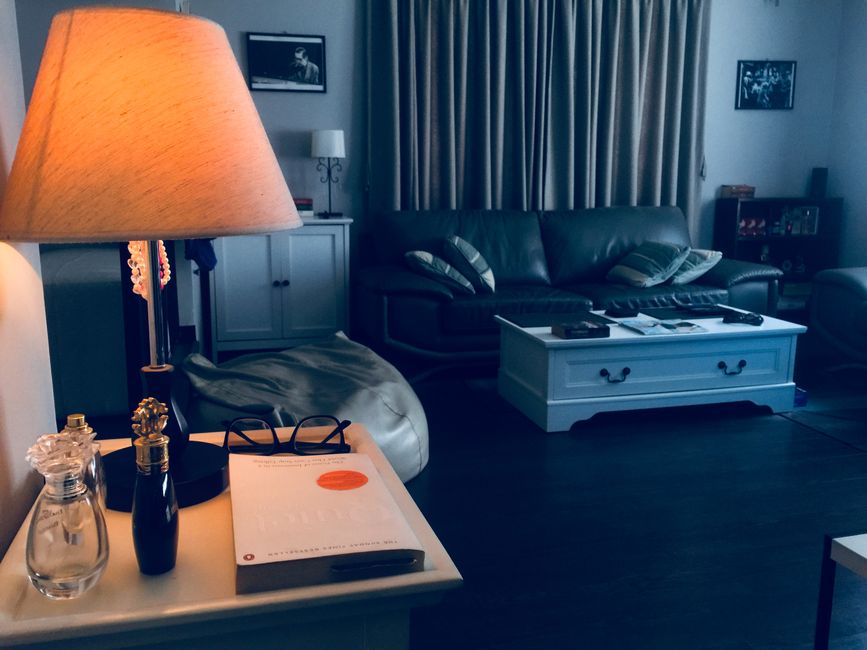
Table lamps at sofa height add the warmest, most intimate layer of light in a living room. A pair of matching lamps flanking a sofa on end tables creates balance and a "finished" look; a single lamp on a side table does the same at smaller scale.
Key considerations:
- Match bulb color temperature across all lamps in the room (2700K throughout).
- Lamp shade material matters: white linen or off-white fabric shades diffuse warm golden light; dark shades create dramatic downlighting; opaque white or drum shades spread light more evenly.
- Lamp height: when seated, the bottom of the shade should be roughly at eye level. This keeps light from shining directly into your eyes and creates a more flattering, ambient effect.
Shelf and bookcase lighting: LED strip lights or small clip-on spotlights on bookshelves add a layer of accent light that makes shelves feel intentional and glows beautifully in low light. Warm white (2700K) LED strips behind the back panel of shelves work particularly well.
Layer 4: Accent Lighting for Depth and Warmth
Accent lighting is the difference between a room that looks finished and one that looks designed. It's not about bright light — it's about creating small pockets of glow that draw the eye and add visual texture.
Candles and flameless LED candles: nothing creates atmosphere faster. Real candles in clusters on a coffee table or tray (in hurricanes for safety) add warmth that no electric fixture can fully replicate. Flameless LED candles with a timer are a practical everyday alternative.
Picture lights: a small directional light mounted above a large piece of art or a gallery wall highlights artwork and creates a sophisticated accent layer. Battery-operated picture lights require no wiring and work well in rented spaces.
String lights and Edison bulb strands: when used purposefully (draped along a window frame, laced through open shelving, or arranged in a large glass vase), they add a distinctly cozy "firelight" quality. The key is restraint — one well-placed strand looks curated; multiple strands draped randomly look like a dorm room.
Fireplace (or faux fireplace): even a non-working decorative fireplace with candles inside it, or an electric fireplace insert, provides the flicker effect that makes a living room feel the most "alive" of any light source.
Choosing the Right Bulbs for Every Fixture
The single biggest free upgrade most living rooms can make is switching bulbs. Here's a quick cheat sheet:
| Use | Color Temp | Brightness |
|---|---|---|
| Main overhead light | 2700K | 800–1100 lm |
| Floor lamp ambient | 2700K | 450–800 lm |
| Table lamps | 2700K | 400–600 lm |
| Accent/shelf lights | 2200–2700K | 200–400 lm |
| Reading task light | 2700–3000K | 600–800 lm |
Note: all of the above should be dimmable if you use dimmers (check bulb packaging for dimmable compatibility).
Lighting for Small Living Rooms
In a small living room, the temptation is to max out overhead light to make the space feel bigger. This almost always backfires — bright, flat light emphasizes the room's size by eliminating shadows and depth.
Instead:
- Use lower, warmer light to make the space feel intentional rather than cramped.
- A large arc floor lamp over a small sofa makes the seating area feel like a destination.
- Vertical light (a slim floor lamp, a wall sconce) draws the eye upward and makes ceilings feel higher.
- Mirror placement near a lamp doubles the perceived light in the room without adding a fixture.
The Renter's Lighting Strategy (No Electrician Required)
If you can't install new fixtures or run wiring, your toolkit is: floor lamps, table lamps, battery-operated LED fixtures, plug-in wall sconces, and smart bulbs with app-controlled dimming. Plug-in sconces in particular are a game-changer for rented spaces — they look hardwired but require only an outlet and a wall hook to hang the cord.
Smart bulbs (from brands like Philips Hue or LIFX) let you set scenes and dim via phone without any wiring changes. A "cozy evening" scene at 20% warm white can be triggered with one tap.
The Takeaway
Cozy living room lighting isn't about buying expensive fixtures — it's about layering warm, low-level light sources at different heights throughout the room. Start by fixing your overhead to 2700K on a dimmer, add a floor lamp in a corner, and place a table lamp at sofa height. Then build in accent pieces: candles, shelf lights, or a string light vignette. The result is a room that feels genuinely inviting at any time of day, at a cost you can build toward gradually.
Frequently Asked Questions
What's the most important single lighting change I can make to my living room?
Switch every bulb to 2700K warm white and add a dimmer to your overhead — those two changes cost under $30 and transform the atmosphere more than any new fixture.
How many light sources should a living room have?
As a guideline: one overhead, one to two floor lamps, one to two table lamps, and at least one accent light source. A 300-square-foot room typically needs five to seven light sources to feel properly layered.
Can I use LED bulbs in old lamp fixtures?
Yes — LED bulbs fit standard E26 sockets used in most floor and table lamps. Just check that your fixture is rated for the wattage-equivalent, and buy dimmable LEDs if you use a dimmer switch.
How do I make a dark living room feel brighter without making it feel harsh?
The answer is more light sources, not brighter individual bulbs. Three 400-lumen lamps at different heights create a more inviting space than one 1200-lumen overhead blast. Use mirrors to bounce light and choose lighter lampshades to spread rather than focus it.
Read next

Related articles
- How to Make Any Room Feel Cozy: 25 Designer Tricks
- How to Style a Coffee Table (Step by Step)
- 20 Cozy Living Room Ideas on a Budget
- How to Style a Console Table (5 Easy Layouts)
- How to Choose the Right Curtains for Any Room
- Small Entryway Decorating Ideas That Still Feel Welcoming
Further reading & trusted sources
What we’d do first
Warm bulb color temperature (2700K) does more for the perceived coziness of a living room than any fixture or shade upgrade — and a pack of soft-white LED bulbs costs under $15. Most living rooms that feel ‘cold’ or ‘flat’ are using cool-white or daylight-spectrum bulbs (4000K+), and the change is immediately visible the first time you switch on the lamps.
Sofia is happiest hunting down the high-end look for a fraction of the price; she’s convinced a beautiful room comes from restraint and clever styling far more than from budget. She shapes Dreamy Dwell’s room-by-room guides around ideas you can actually copy in a rental or on a tight budget — no staged ‘this is my mansion’ fantasy. AI tools help with the research and first drafts, and a human edits every piece before it goes live. We never fake reviews or pass off a styled photo as a real before-and-after.