 By Sofia Bennett, Home & Decor Editor
Reviewed & updated September 2026
A rug that's too small is the single most common decorating mistake — and it can make an entire room feel cheap and disjointed, no matter how nice your furniture is. The right rug, sized correctly, grounds your furniture, defines the space, and pulls everything together. This guide gives you the exact rug-size rules for every room so you never guess (or end up with the dreaded "postage stamp" rug) again.
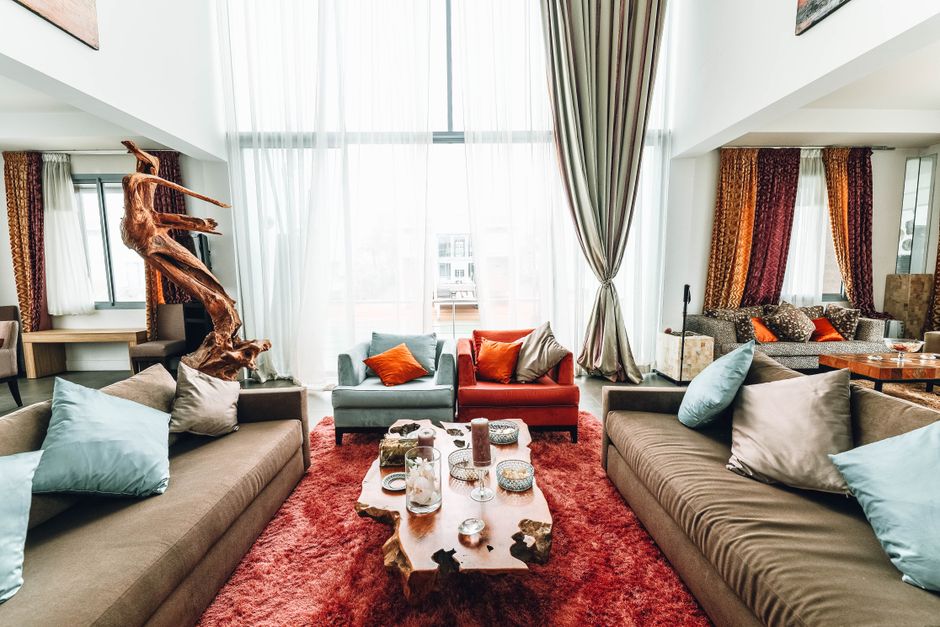 What this guide coversCurated by Sofia · 6 min read
The golden rule: bigger than you think
If you remember one thing: go bigger than your instinct tells you. Most people buy a rug too small because it looks fine rolled up in the store. In a room, a small rug floats and makes the space feel chopped up. A properly large rug visually expands the room and anchors the furniture into one cohesive "zone." When in doubt, size up.
A good baseline: leave roughly 8–24 inches of bare floor between the edge of the rug and the walls, so the rug frames the space without crowding it.
Living room rug sizes
There are three acceptable layouts, from best to budget:
- All legs on (best): the rug is large enough that every piece of furniture sits fully on it. Creates the most luxurious, intentional look. Usually needs an 8×10 or 9×12.
- Front legs on (most common): the front legs of the sofa and chairs rest on the rug while the back legs sit on the floor. This still ties the grouping together and works in most rooms.
- Floating (last resort): the rug sits in the center with no furniture on it — acceptable only in very small spaces, but it tends to look disconnected. Avoid if you can.
Whatever you choose, the rug should at least span the width of your sofa, ideally extending a bit beyond it on each side.
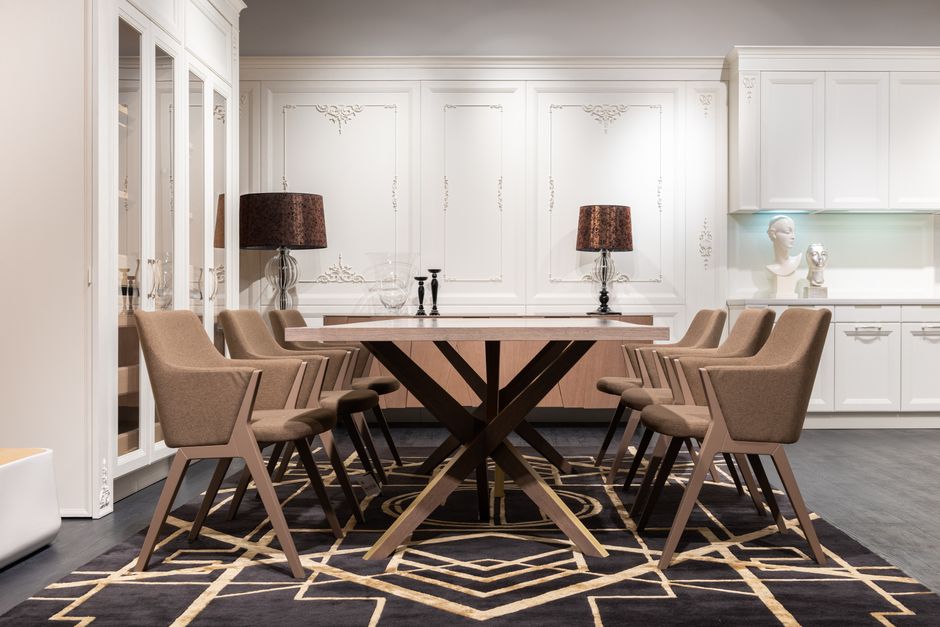
Dining room rug sizes
The rule here is about the chairs: the rug must be large enough that the chairs stay on it even when pulled out. Add about 24–30 inches on every side of the table to the table's dimensions. If a chair's back legs drop off the rug edge when someone sits down, the rug is too small (and the chairs will catch and wobble). Match the rug shape to the table — rectangular rug for a rectangular table, round for round.
Bedroom rug sizes
You've got options depending on the look:
- Large rug under the bed (best): an 8×10 or 9×12 placed so it extends about 18–24 inches beyond the sides and foot of the bed, giving you a soft landing when you step out. The rug usually starts under the nightstands or just below them.
- Runners on each side: two runners flanking the bed — a good budget approach for larger or simpler beds.
- Rug across the foot of the bed: a smaller rug or runner placed horizontally at the foot, for visual interest without covering the whole floor.
Standard rug sizes to know
Common sizes you'll shop: 3×5 and 4×6 (entryways, accents), 5×8 (small living rooms, under a coffee table), 8×10 (most living and dining rooms), and 9×12 (large rooms). Runners (about 2.5×8) suit hallways, kitchens, and bedsides.
Quick tips before you buy
- Tape it out. Mark your chosen size on the floor with painter's tape and live with it for a day — it's the easiest way to picture the real footprint.
- Mind the proportions. The rug should relate to the room and the furniture grouping, not just the open floor.
- Layer if a rug's too small. Place a smaller patterned rug over a large, inexpensive neutral one to fake a bigger size and add texture.
- Use a rug pad. It keeps the rug from slipping, adds cushion, and helps it last longer.
The takeaway
Choosing the right rug size comes down to sizing up and grounding your furniture. In the living room, aim for all (or at least the front) legs of your furniture on the rug; in the dining room, add 24–30 inches around the table so chairs stay on even when pulled out; in the bedroom, extend the rug well beyond the sides and foot of the bed. Leave a frame of bare floor around the edges, tape out the size before you buy, and remember the rule that saves most rooms: when in doubt, go bigger.
Frequently asked questions
What size rug do I need for my living room?
Pick a rug large enough that at least the front legs of your sofa and chairs rest on it — ideally all legs. For most living rooms that means an 8×10 or 9×12, and the rug should span at least the width of your sofa. Leave roughly 8–24 inches of bare floor around the edges.
How big should a dining room rug be?
Add about 24–30 inches to each side of your table's dimensions, so the chairs stay fully on the rug even when pulled out to sit down. Match the rug's shape to the table — rectangular for rectangular, round for round.
Should a bedroom rug go under the bed?
For the best look, yes — use a large rug that extends about 18–24 inches beyond the sides and foot of the bed, typically starting under or just below the nightstands. Alternatively, place runners on each side of the bed or a single rug across the foot.
Is it better to have a rug too big or too small?
Too big, almost always. A small rug makes a room feel chopped up and cheap, while a generously sized rug visually expands the space and anchors the furniture. When choosing between two sizes, go with the larger one.
Read next

Related articles
- How to Style a Bookshelf Like a Designer
- How to Arrange Living Room Furniture: A Complete Layout Guide
- How to Make Any Room Feel Cozy: 25 Designer Tricks
- How to Style a Coffee Table (Step by Step)
- 20 Cozy Living Room Ideas on a Budget
- How to Style a Console Table (5 Easy Layouts)
Further reading & trusted sources
What we’d do first
When in doubt, size up — it’s the mistake made in nearly every room. The rug should define the seating zone with at least the front legs of each piece resting on it; a too-small rug makes good furniture look like it’s floating.
Sofia is happiest hunting down the high-end look for a fraction of the price; she’s convinced a beautiful room comes from restraint and clever styling far more than from budget. She shapes Dreamy Dwell’s room-by-room guides around ideas you can actually copy in a rental or on a tight budget — no staged ‘this is my mansion’ fantasy. AI tools help with the research and first drafts, and a human edits every piece before it goes live. We never fake reviews or pass off a styled photo as a real before-and-after.