 By Sofia Bennett, Home & Decor Editor
Reviewed & updated September 2026
A dedicated home gym room doesn't need to be a spare bedroom or a finished basement — even a corner of a garage, a closet-sized nook, or a slice of a bedroom can become a space that actually makes you want to work out. These ideas focus on layout, flooring, and storage that make a home gym feel intentional rather than like leftover space with a dumbbell in it.
 Quick navigationCurated by Sofia · 7 min read
- Start with flooring, not equipment
- Choose a layout that matches your training style
- Small-space home gym ideas
- Making a shared or multi-purpose room work
- Motivating design touches that actually help
- Ventilation and temperature matter more than you’d think
- The takeaway
- Further reading & trusted sources
Start with flooring, not equipment
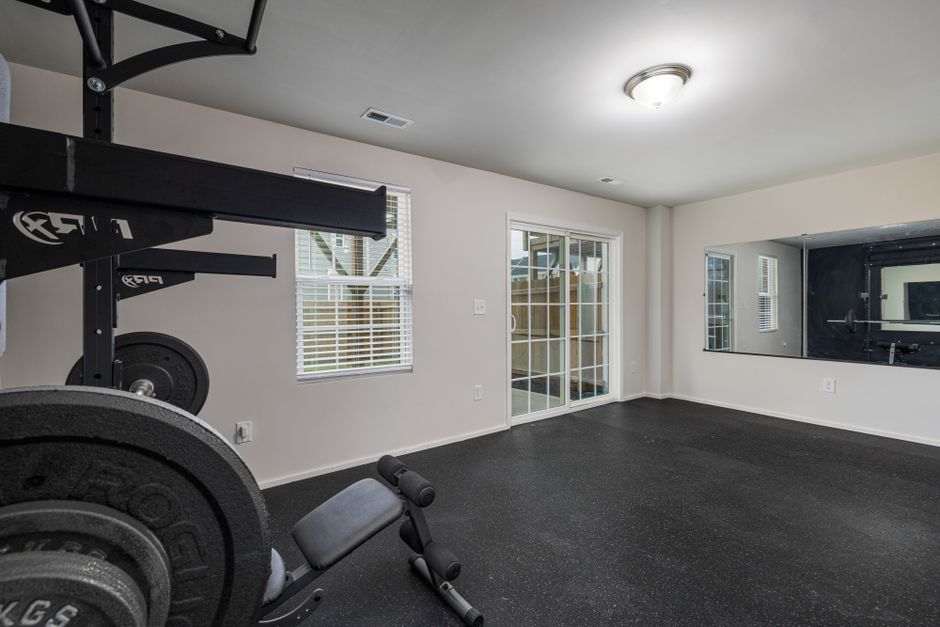
Flooring is the single upgrade that makes a home gym feel like a real room instead of a garage corner with a mat thrown down. Interlocking rubber tiles are the standard choice — they protect the subfloor from dropped weights, dampen noise (a real concern if you're above a neighbor or a sleeping household), and give the space a defined visual boundary. For carpeted rooms, a plywood platform topped with rubber matting under any area where you'll drop weights solves both the noise and dent problem. Budget rubber floor rolls run cheaper per square foot than interlocking tiles if you're covering a larger area and don't need to move it later.
Choose a layout that matches your training style
Strength-focused layout: if your workouts center on a rack, bench, and barbell, anchor the room around that single footprint and keep everything else — dumbbells, bands, a foam roller — on wall-mounted storage so the floor stays clear for lifting and racking plates.
Cardio-and-mobility layout: if you're doing bodyweight circuits, yoga, or light cardio equipment, prioritize open floor space over storage. A wall-mounted mirror and a single piece of equipment (a bike, rower, or jump rope hook) usually covers it.
Hybrid layout: most home gyms end up somewhere in between. The trick is zoning — a defined lifting zone with flooring and racked weights on one side, and clear floor space on the other for floor work, stretching, or a mat.

Small-space home gym ideas
If you're working with a closet, a garage corner, or a 6×8-foot slice of a room, these moves matter most:
- Go vertical with storage. Wall-mounted dumbbell racks, pegboards for bands and jump ropes, and slat-wall systems for kettlebells all free up floor space that a floor rack would eat.
- Pick multi-use equipment. An adjustable bench that folds flat, adjustable dumbbells instead of a full rack, and a doorway pull-up bar all pack more training options into less permanent footprint.
- Use a full-length mirror to create visual depth. Beyond checking your form, a mirror makes a small room read as larger and brighter.
- Anchor a foldable option. Foldable squat racks and wall-mounted fold-away benches exist specifically for garages and small rooms — worth the extra cost if space is your real constraint.
- Light it properly. A single overhead bulb makes any room feel like storage. Add a bright, cool-white LED fixture or a floor lamp — good lighting is what separates a "gym room" from "the room with weights in it."
Making a shared or multi-purpose room work
Not everyone has a room to dedicate entirely to fitness, and that's fine — the fix is containment, not compromise. A large storage ottoman or a closed cabinet can hide mats, bands, and smaller equipment when the room needs to look like an office or guest room again. A rolling equipment cart keeps dumbbells and accessories mobile so they can be tucked against a wall between sessions. If the room doubles as a guest bedroom, a fold-up Murphy-style bench or a daybed that also serves as a bench seat can do double duty without looking like gym equipment when guests are over.

Motivating design touches that actually help
A home gym you enjoy being in is one you'll actually use. A few low-cost additions make a real difference: a motivational or minimalist accent wall in a color that energizes you (deep green, charcoal, or a bold accent color work well against neutral flooring), a small speaker or dedicated workout playlist setup, a wall clock or interval timer mounted where you can see it mid-set, and a whiteboard or chalkboard for tracking workouts or PRs. None of these are expensive, but together they turn a utility space into a room that feels designed on purpose.
Ventilation and temperature matter more than you'd think
Garages and basements — the two most common home gym locations — are also the two most likely to have temperature and airflow problems. A portable fan or a small window AC unit makes a huge difference in whether you actually use the space in summer. If the room lacks windows, a standing fan positioned to circulate air across the whole room, paired with a door left cracked or a vent fan, keeps the space usable instead of becoming a room you avoid once it gets warm.
The takeaway
A home gym room works best when the layout matches how you actually train, the flooring is durable enough to handle dropped weights and daily use, and storage keeps the floor clear rather than cluttered. Even a small corner can feel like a real gym with the right rubber flooring, vertical storage, and lighting — you don't need a dedicated room the size of a commercial gym to make the space work.
Frequently asked questions
How much space do I need for a home gym?
A functional home gym can fit in as little as 6×8 feet for bodyweight and dumbbell training. If you want a squat rack and bench, aim for at least 8×10 feet to have room to move safely around the equipment.
What flooring is best for a home gym?
Interlocking rubber tiles (3/4-inch or thicker for heavy lifting) are the most popular choice — they protect floors, reduce noise, and are easy to install without tools. Rubber rolls are a cheaper option for larger areas.
Can I put a home gym in a bedroom?
Yes, especially with multi-use and foldable equipment (adjustable dumbbells, a fold-flat bench, resistance bands stored in a drawer or ottoman). Keep the equipment contained to one zone or a storage piece so the room still functions as a bedroom.
How do I stop equipment noise from bothering neighbors or family?
Rubber flooring at least 3/4-inch thick is the biggest factor, since it absorbs impact from dropped weights. Placing the gym over a garage or on a ground floor (rather than above a bedroom) and avoiding dropping weights from overhead also help significantly.
Read next



Further reading & trusted sources
Where most people go wrong
Rubber flooring thickness matters far more than people expect when noise is the actual concern — a 3/4-inch tile absorbs dropped-weight impact noticeably better than the thinner 3/8-inch mats sold for yoga and light cardio, and mixing them up is the most common reason a ‘quiet’ home gym still rattles the ceiling below. A single bright, cool-white light fixture does more to make a converted garage or basement corner feel like an intentional room than any amount of equipment or flooring upgrade, since dim, warm lighting is what reads as ‘storage space’ at a glance.
Sofia is happiest hunting down the high-end look for a fraction of the price; she’s convinced a beautiful room comes from restraint and clever styling far more than from budget. She shapes Dreamy Dwell’s room-by-room guides around ideas you can actually copy in a rental or on a tight budget — no staged ‘this is my mansion’ fantasy. AI tools help with the research and first drafts, and a human edits every piece before it goes live. We never fake reviews or pass off a styled photo as a real before-and-after.