 By Sofia Bennett, Home & Decor Editor
Reviewed & updated September 2026
A garage tends to become the room where everything without an obvious home ends up — sports gear, tools, holiday decorations, the bike nobody rides. Left unchecked, it stops functioning as anything except a place to shove boxes past the front door. These ideas work whether you've got a full two-car garage or a single-car space doing triple duty as storage, workshop, and parking.
 Skip ahead toCurated by Sofia · 7 min read
- Start with a full sort, not a shuffle
- Zone the garage by activity
- Smart storage ideas that actually fit small garages
- Managing tools, cords, and the small stuff
- Labeling that actually helps
- Making a single-car or shared-use garage work
- Common mistakes to avoid
- The takeaway
- Further reading & trusted sources
Start with a full sort, not a shuffle
Before adding a single shelf, pull everything out onto the driveway and sort it into four piles: keep, donate, sell, and toss. Garages accumulate faster than almost any other room because items land there specifically to be dealt with "later," and later rarely comes without a forced sort. Anything that hasn't been touched in over a year — old paint cans, broken tools, decorations for holidays you no longer celebrate the same way — is a strong candidate for the toss or donate pile. This step alone typically clears more space than any storage system that follows.
Zone the garage by activity
A garage works better once it's mentally divided into zones rather than treated as one undifferentiated storage pile:
- Parking zone: the actual footprint your car needs, kept clear of anything that migrates into it over time
- Tool and workbench zone: a dedicated wall or corner for tools, ideally near an outlet if power tools are involved
- Sports and outdoor gear zone: bikes, balls, and seasonal equipment that gets used regularly
- Seasonal storage zone: holiday decorations and off-season items, stored higher up since they're accessed only occasionally
- Household overflow zone: anything that genuinely belongs in the garage long-term, kept separate from items that should really live elsewhere in the house
Zoning doesn't require a bigger garage, just deciding in advance where each category of item lives so things stop drifting into random open spots.
Smart storage ideas that actually fit small garages
- Go vertical first. Wall space is a garage's most underused resource. Slat wall panels, pegboards, or simple wall-mounted shelving can hold the bulk of what's currently on the floor.
- Get things off the floor entirely. Floor space in a garage is almost always the most valuable and the most contested, since it's what determines whether a car actually fits. Bikes on wall hooks, bins on shelving, and ladders on hangers reclaim square footage fast.
- Use the ceiling for rarely used items. Overhead storage racks are ideal for genuinely seasonal items — holiday decorations, camping gear used twice a year — that don't need to be within easy reach.
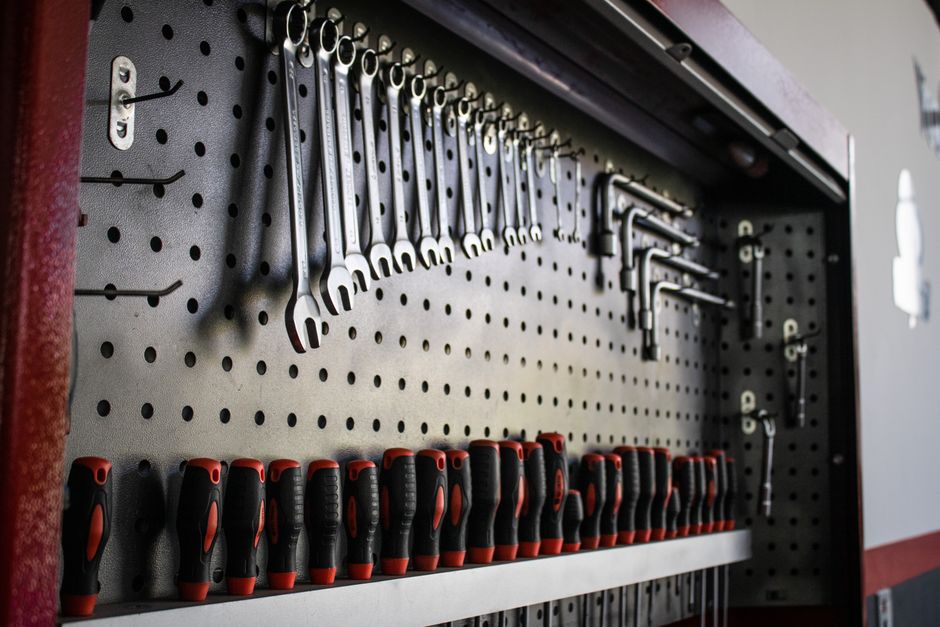
- Add a pegboard for tools. A pegboard keeps frequently used tools visible and instantly accessible, which also makes it obvious when something hasn't been put back.
- Use clear or labeled bins, not open boxes. Uniform, labeled bins stack more efficiently than mismatched boxes and make contents identifiable without opening every container.
- Install a slim rolling cart for small parts. A cart with drawers works well for screws, fasteners, and small hardware that would otherwise end up loose in a junk drawer or coffee can.
Managing tools, cords, and the small stuff
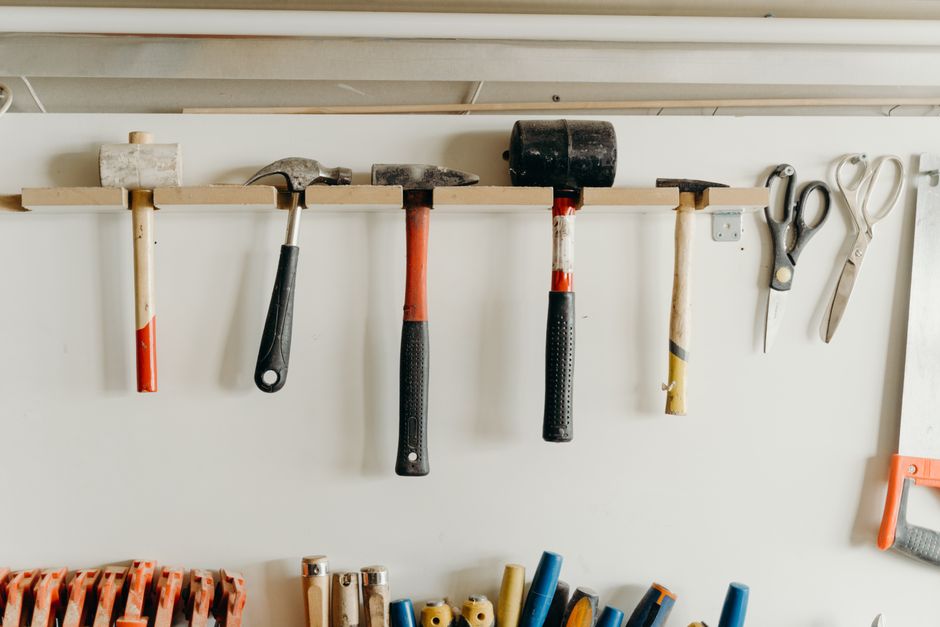
Small items are usually what makes a garage feel chaotic even after the big stuff is organized. A magnetic strip mounted near the workbench keeps loose metal tools visible and off the counter. Cord and hose reels, whether wall-mounted or freestanding, stop extension cords and hoses from turning into a tangled pile on the floor. A shallow drawer organizer with individual compartments for screws, nails, and small hardware saves the repeated frustration of dumping out a whole bin to find one bolt.
Labeling that actually helps
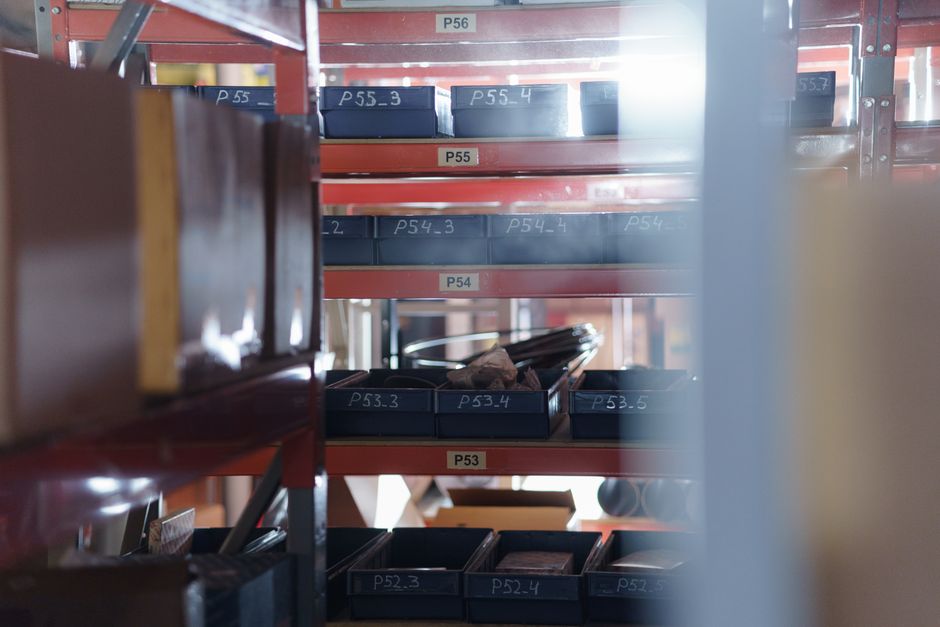
Labels matter more in a garage than in almost any other storage space, because bins often get accessed only a few times a year, which means memory of what's inside fades fast. Clear labels on bins — by category ("holiday lights," "camping gear," "car supplies") rather than vague terms like "misc" — mean anyone in the household can find and return items to the right spot, which is often the real reason a garage organization system holds up over time instead of sliding back into clutter.
Making a single-car or shared-use garage work
If your garage doubles as a workshop, storage room, and parking spot all at once, the same principles still apply, just compressed:
- Wall-mounted, foldable workbenches that tuck away when not in use
- Overhead racks reserved strictly for the least-accessed seasonal items
- A clearly marked "car zone" on the floor, even just with tape, so storage doesn't slowly creep into the parking space
- Slim, stackable bins over bulky boxes to maximize what fits along the walls
The goal in a shared-use garage isn't fitting in more, it's making sure the car still fits every single day without a repositioning project.
Common mistakes to avoid
The biggest one is buying storage bins before sorting — bins just organize the clutter instead of removing it, and a garage full of neatly labeled boxes you don't need is still a full garage. The second is ignoring vertical and overhead space, which is usually the single biggest source of unused square footage in any garage. And the third is skipping a "car zone" boundary, which lets storage creep gradually inward until parking inside stops being realistic.
The takeaway
A garage doesn't need to be large to actually function — it needs a real sort, clear zones, and storage that uses walls and ceiling instead of only the floor. Start by removing what doesn't belong, then build storage around how the space actually gets used, and even a single-car garage can hold tools, gear, and seasonal items while still fitting the car.
Frequently asked questions
What's the best way to organize a garage with no built-in storage?
Lean on wall-mounted slat wall or pegboard systems, freestanding shelving units, and overhead racks. None require permanent built-ins, and together they can replace most of what a custom storage system would provide.
How do I stop my garage from becoming cluttered again?
Keep bins labeled clearly, do a quick seasonal check-in (spring and fall work well) to catch new clutter early, and enforce a "one in, one out" habit for bulky items like sports gear or tools.
Where should I store hazardous materials like paint or chemicals?
Keep them in their original, sealed containers on a dedicated shelf away from heat sources and out of reach of children and pets. Many paints and chemicals also have expiration windows worth checking before storing them long-term.
Is overhead garage storage worth installing?
For genuinely seasonal items accessed only a few times a year, yes — it reclaims wall and floor space for things used more regularly. It's less useful for anything you need frequent access to, since climbing up for it repeatedly gets old fast.
Read next


Worth knowing before you start
A garage sort tends to surface far more genuine trash than other rooms in the house, since items land there specifically to be dealt with later and half-empty paint cans or dead batteries accumulate without anyone noticing until everything gets pulled out at once. Marking the car’s actual footprint on the floor, even with basic tape, is a more effective boundary against storage creep than any shelving system, since it’s a visual cue that’s impossible to rationalize around the way a vague sense of ‘leave room for the car’ isn’t.
Further reading & trusted sources
Sofia is happiest hunting down the high-end look for a fraction of the price; she’s convinced a beautiful room comes from restraint and clever styling far more than from budget. She shapes Dreamy Dwell’s room-by-room guides around ideas you can actually copy in a rental or on a tight budget — no staged ‘this is my mansion’ fantasy. AI tools help with the research and first drafts, and a human edits every piece before it goes live. We never fake reviews or pass off a styled photo as a real before-and-after.