 By Sofia Bennett, Home & Decor Editor
Reviewed & updated September 2026
Whether you've got a full laundry room or a stacked washer-dryer tucked in a closet, the same problem shows up everywhere: detergent bottles multiply, socks vanish, and the space turns into a catch-all. These ideas work at any size, from a real utility room down to a single closet.
 Skip ahead toCurated by Sofia · 7 min read
Start with a real inventory
Before buying a single bin, pull everything out of the space and sort it into three piles: things that belong in the laundry room, things that don't, and things you haven't used in the last year. It's common for laundry rooms to accumulate cleaning supplies, out-of-season items, and random overflow from other rooms simply because the door closes and no one looks too closely. Relocating the "doesn't belong here" pile immediately frees up more space than any organizer you could buy.
Zone the space by task
Even a small laundry area works better when it's mentally divided into zones instead of one big jumble:
- Washing zone: detergent, stain treatment, dryer sheets or wool balls, within arm's reach of the machines
- Sorting zone: a hamper system or floor space for separating darks, lights, and delicates before a load
- Folding zone: a flat surface — even a countertop over the machines or a fold-down shelf — for folding straight out of the dryer
- Storage zone: shelving or cabinets for less frequently used items like an iron, extra hangers, or seasonal linens
Zoning doesn't require more square footage, just intentional placement of what's already there.
Smart storage ideas that actually fit small spaces
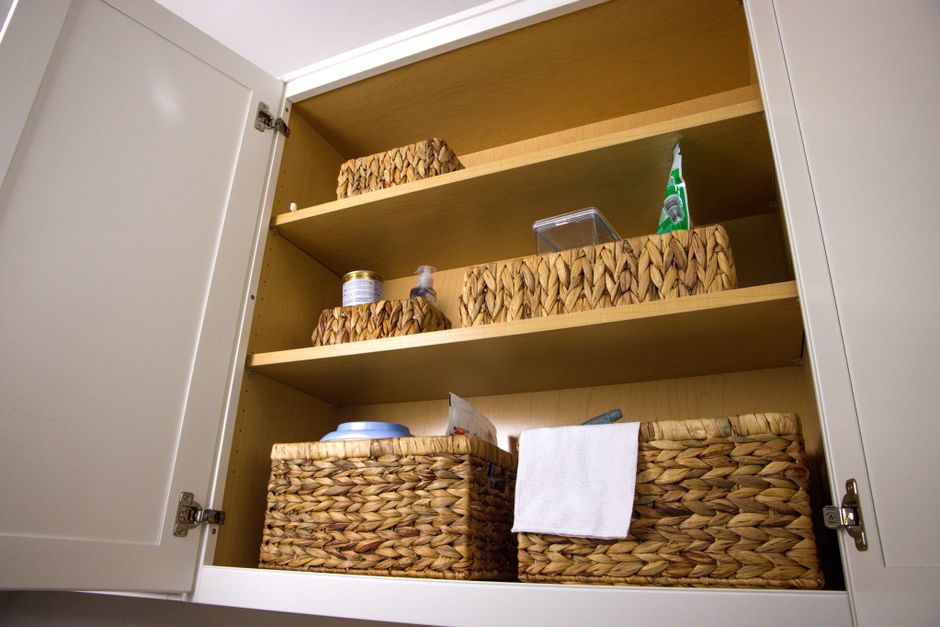
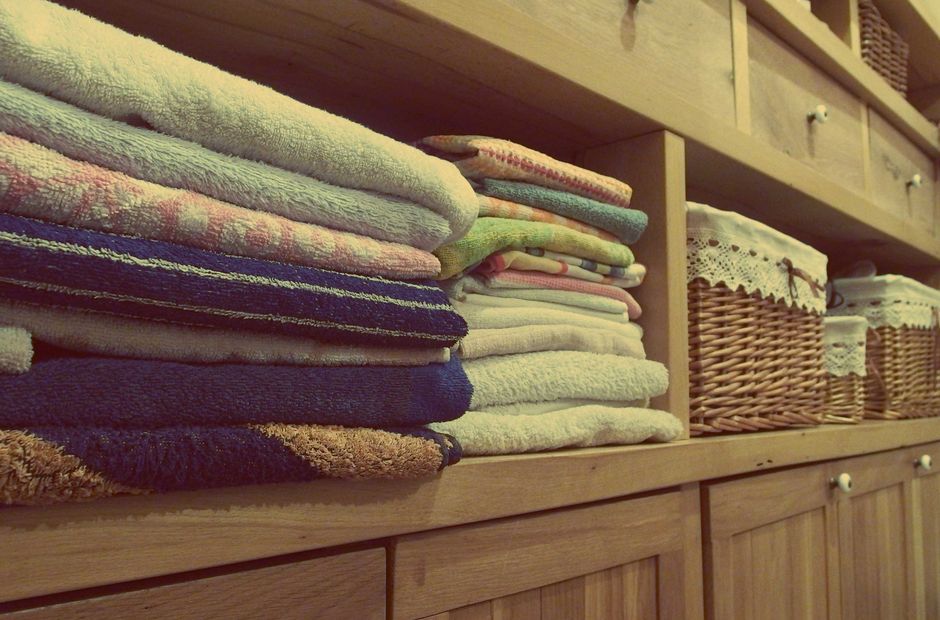
- Go vertical. Wall-mounted shelves above the washer and dryer use space that's otherwise completely wasted. A single 30-inch shelf can hold a month's worth of detergent, several baskets, and a stack of towels.
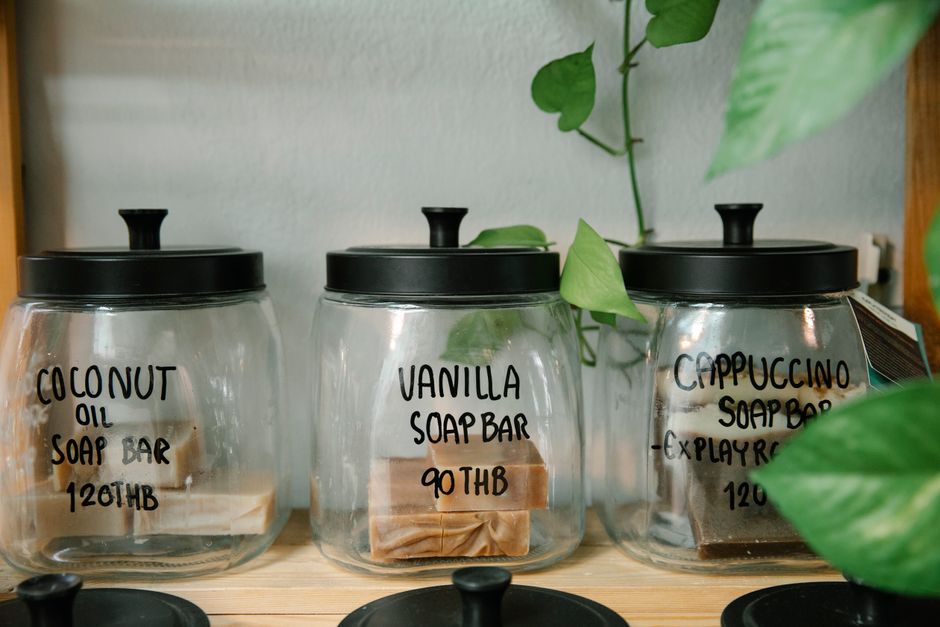
- Decant into matching containers. Pouring detergent, fabric softener, and pods into clear or labeled containers instantly makes shelves look calmer, and it's easier to see at a glance when you're running low.
- Use the door. An over-the-door organizer or a couple of adhesive hooks on the inside of the laundry room door can hold spray bottles, lint rollers, or a small ironing board — all without using any floor space.
- Add a tension rod. A simple tension rod mounted below a shelf gives you instant hanging space for shirts straight out of the dryer, cutting down on wrinkles and a second folding step.
- Roll out a slim cart. A narrow rolling cart that fits in the gap beside the washer holds supplies and can be pulled out for full access, then tucked away again.
- Stack, don't spread. If you have a top-load washer, a slim over-machine shelf reclaims that entire surface. If you're doing a stacked washer-dryer in a closet, a shallow shelf above head height is often the only "extra" storage available.
Managing socks, lint, and the small stuff
Small items are usually what makes a laundry room feel chaotic even when the big stuff is organized. A mesh bag clipped near the machine for stray socks (matched up on laundry day, not immediately) solves the sock-vanishing problem without a dedicated system. A small dish or magnetic cup near the dryer catches loose change and lint-roller sheets before they end up on the floor. Keeping a mini trash bin nearby for dryer lint and empty pod wrappers means less gets tracked to a kitchen trash can two rooms away.
Labeling that actually helps
Labels matter more in a laundry room than almost anywhere else in the house, because most supplies look nearly identical once decanted — detergent, softener, and stain remover can all be similar-colored liquids in similar bottles. Simple adhesive labels or a label maker on jars and bins means anyone in the household can find (and put back) items correctly, which is often the real reason organization systems fall apart within a month.
Making a stacked or closet laundry setup work
If your "laundry room" is really a closet with a stacked unit, the same principles still apply, just compressed:
- A single narrow shelf above the unit for detergent and a small basket
- A hook on the inside of the closet door for a hanging drying rack or garment bag
- A slim over-the-door hamper instead of a floor bin
- A magnetic strip just inside the door for scissors or a small lint brush
The goal in a tight space isn't fitting in more, it's making sure everything that IS there has one clear, obvious spot.
Common mistakes to avoid
The biggest one is buying storage before decluttering — bins and baskets just organize the clutter instead of removing it. The second is choosing opaque, unlabeled bins for everything, which turns "storage" into "mystery boxes" you have to open one by one to find what you need. And the third is ignoring vertical space; most laundry rooms have several unused feet of wall above the machines that could hold an entire shelf's worth of supplies.
The takeaway
A laundry room doesn't need to be large to function well — it needs zones, vertical storage, and containers that make what's inside obvious at a glance. Start by removing what doesn't belong, then build storage around how you actually use the space, and even a closet-sized setup can feel calm and functional.
Frequently asked questions
How do I organize a laundry room with no cabinets?
Lean on wall-mounted open shelving, an over-the-door organizer, and a slim rolling cart. None of these require built-in cabinetry, and together they can replace most of what cabinets would provide.
What's the best way to store detergent pods?
Keep them in their original sealed container or a labeled, lidded jar out of reach of children and pets — loose pods in an open bin are a safety hazard, especially in households with young kids.
How can I make a tiny laundry closet feel less cluttered?
Decant supplies into matching containers, add one slim shelf above the machines, and use door-mounted storage instead of floor space. Visual consistency does a lot of the work even when square footage doesn't change.
Should I keep an iron and ironing board in the laundry room?
If space allows, yes — it keeps the whole laundry process in one place. In tighter spaces, a wall-mounted fold-down ironing board or a slim board that hangs on a hook behind the door saves floor space while keeping it nearby.
Read next


Further reading & trusted sources
The part that actually matters
Decanting supplies into matching containers only makes a laundry room calmer if the labels are just as clear as the containers are pretty, since detergent, softener, and stain remover often look nearly identical once poured into similar bottles — the calm look and the actual usability are two separate problems that need two separate fixes. Vertical wall space above the machines is consistently the most underused storage in a laundry room, since most people default to floor-level bins and never measure how much a single 30-inch shelf overhead could hold.
Sofia is happiest hunting down the high-end look for a fraction of the price; she’s convinced a beautiful room comes from restraint and clever styling far more than from budget. She shapes Dreamy Dwell’s room-by-room guides around ideas you can actually copy in a rental or on a tight budget — no staged ‘this is my mansion’ fantasy. AI tools help with the research and first drafts, and a human edits every piece before it goes live. We never fake reviews or pass off a styled photo as a real before-and-after.