 By Sofia Bennett, Home & Decor Editor
Reviewed & updated September 2026
A tiny entryway doesn't have to feel like an afterthought — with the right layout choices, even a two-foot-wide landing strip by the front door can feel intentional, organized, and genuinely welcoming. This guide walks through the layout tricks, storage solutions, and styling touches that make small entryways work hard without feeling cramped.
 On this pageCurated by Sofia · 7 min read
- Start With Function, Then Add Style
- Use Vertical Space When Floor Space Is Gone
- The Mirror Trick That Actually Works
- Bench Seating Without Sacrificing Space
- Rugs That Make a Narrow Entry Feel Wider
- Lighting Changes Everything in a Windowless Entry
- Color and Pattern Strategies for Tiny Entries
- Keeping It From Feeling Cluttered
- The Takeaway
- Related articles
- Further reading & trusted sources
Start With Function, Then Add Style
The entryways that feel chaotic are almost always missing a clear "landing zone" for the things people carry in every day — keys, mail, shoes, bags. Before choosing any decor, map out four functions your entryway needs to handle:
- A spot to put shoes down (even if it's just a small tray or mat)
- A place for keys and mail so they don't end up on every other surface in the house
- Somewhere to hang or drape a coat or bag
- A moment to check yourself before you leave (a mirror does double duty here, visually and functionally)
Once those four things have a home, the space feels organized by default — decor becomes the finishing layer, not the fix.
Use Vertical Space When Floor Space Is Gone
In a truly narrow entryway, the floor is the scarcest resource, so the walls need to do more work:
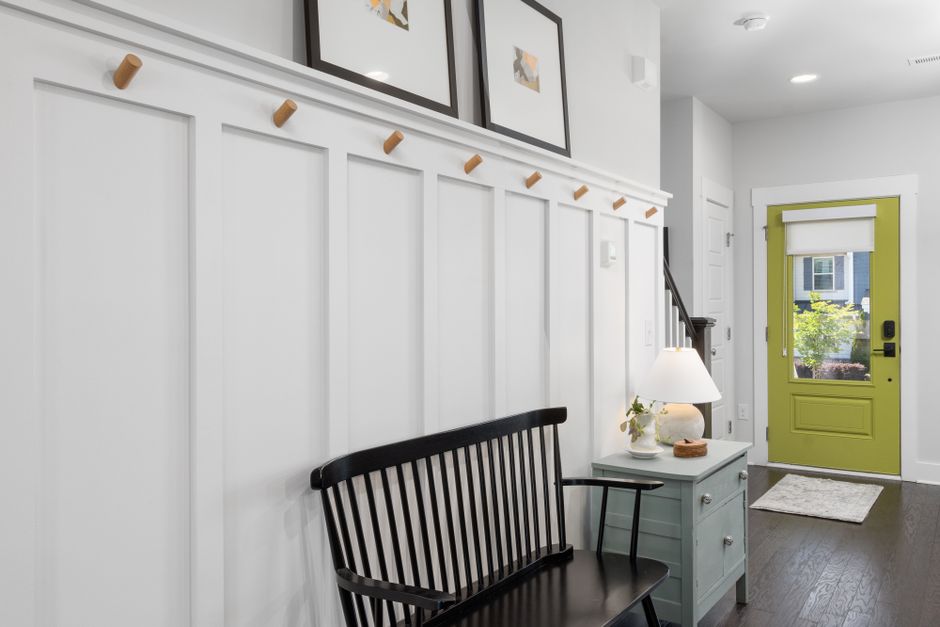
- Wall-mounted hooks at two heights (one for adults, a lower row for kids) hold coats and bags without needing a closet or bulky rack.
- A slim floating shelf above the hook row holds a catch-all tray, a small plant, or seasonal decor without eating floor space.
- A narrow console table (8-12 inches deep) fits against almost any wall and provides a surface for keys and mail without blocking the walkway.
If you're deciding between a shelf and a table, measure your actual walkway width first — anything under 30 inches after furniture placement will feel like a squeeze every time someone passes through.
The Mirror Trick That Actually Works
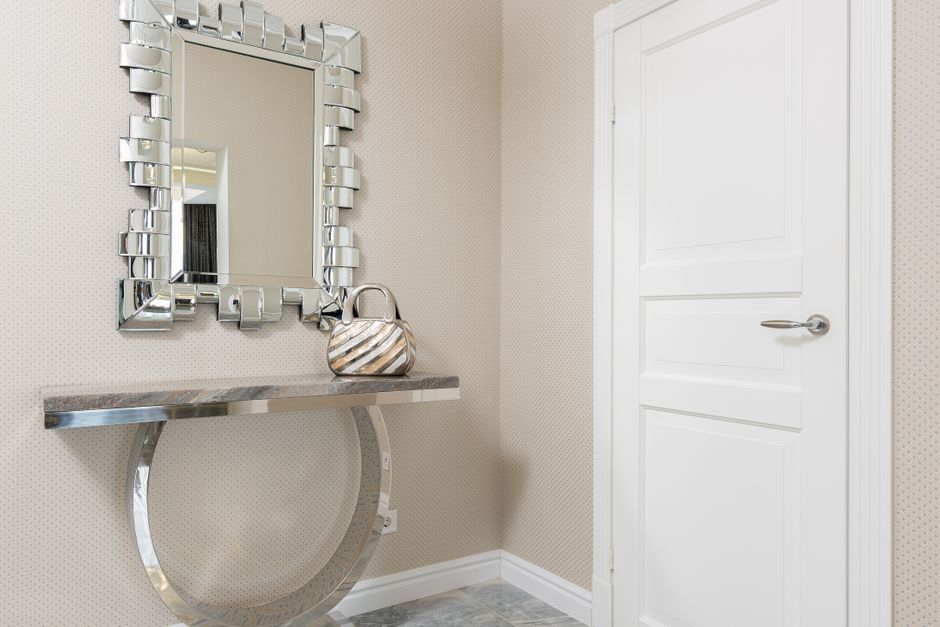
A mirror near the entry does more than let you check your outfit — placed opposite (or near) a window or light source, it visually doubles the perceived depth of a tight space. A tall, narrow mirror leaning against the wall or mounted vertically reads as more spacious than a small round mirror, because it draws the eye up and along the wall's full height rather than stopping at a small circle.
Skip heavily framed or ornate mirrors in the tightest entryways — thin frames or frameless designs keep the visual weight light, which matters more in a small footprint than in a larger room.
Bench Seating Without Sacrificing Space
A bench solves the "where do I sit to put my shoes on" problem that most small entryways struggle with, but a bulky bench can backfire fast. Look for:
- Backless benches that can tuck fully under a shelf or console when not in use
- Storage benches with a lift-top or cubby underneath, which absorb shoes or seasonal items without a separate shoe rack
- A slim stool as a compromise when even a small bench won't fit — it provides the same seating function in roughly a third of the footprint
If literally no floor space allows for seating, a fold-down wall-mounted seat is a legitimate (if less common) option worth considering for very tight hallways.
Rugs That Make a Narrow Entry Feel Wider
A runner rug placed lengthwise down a narrow entry visually extends the space rather than interrupting it. The common mistake is choosing a rug that's too short, which reads as an afterthought — a runner should span most of the visible floor length, stopping a few inches short of walls on either end.
Busy, high-contrast patterns can actually help disguise scuffs and dirt in a high-traffic entry better than solid colors, which is a practical bonus in a spot that takes constant foot and weather exposure.
Lighting Changes Everything in a Windowless Entry
Many small entryways have no natural light at all, which makes them feel like a dark pass-through rather than a welcoming first impression. A few fixes:
- A wall sconce at eye level adds warm, flattering light without taking counter or floor space.
- A small lamp on a console table works if there's an outlet nearby, and softens the harsh overhead light many entries default to.
- Warm-white bulbs (2700-3000K) make a small space feel cozier than the cool-white bulbs often used in hallways by default.
Color and Pattern Strategies for Tiny Entries
Contrary to the instinct to keep small spaces all-white, a small entryway is actually one of the best places in a home to use a bold color or wallpaper, because you pass through it quickly rather than living in it for hours. A dramatic wallpaper or a deep, saturated paint color on just the entry can create a striking "reveal" moment as guests walk in, without the risk of the color feeling overwhelming in a room you spend a lot of time in.
If bold color feels risky, painting just the door itself (front-facing or the interior side) is a lower-commitment way to add personality.
Keeping It From Feeling Cluttered
Small entryways collect clutter fast because everything that enters the house passes through first. A few habits keep the space feeling curated rather than chaotic:
- Limit the "catch-all tray" to one small dish — if it overflows weekly, it's a sign to declutter, not to add a bigger tray.
- Rotate seasonal decor (a wreath, a runner) rather than layering every season's items at once.
- Keep the shoe count visible in the entry to 2-3 pairs max; a closet or bench cubby holds the rest.
The Takeaway
A small entryway earns its "welcoming" reputation through function first — a clear spot for shoes, keys, and coats — and style second: vertical storage, a well-placed mirror, warm lighting, and a rug or bold color choice that makes the space feel intentional rather than squeezed. None of these fixes require a renovation; most can be done with a shelf, a few hooks, and an afternoon.
Frequently asked questions
What's the minimum width needed for entryway furniture?
A console table or narrow shelf can work in as little as 8-10 inches of depth. For a walkway to still feel comfortable, aim to keep at least 30 inches of clear walking space after furniture is placed.
Should I use a rug in a small entryway if it gets a lot of dirt and weather?
Yes — a durable, low-pile or indoor-outdoor rug in a busy pattern handles high traffic well and actually hides scuffs better than a solid light color would.
Is a bold wallpaper too much for a tiny entryway?
Small entryways are one of the best places to experiment with bold wallpaper or paint precisely because you pass through quickly rather than spending hours there, so the intensity that might overwhelm a living room often works beautifully here.
What if my entryway has no closet at all?
Wall-mounted hooks, a slim console or shelf, and a storage bench substitute for a closet in most small entries — the goal is giving shoes, coats, and keys a designated spot, not replicating actual closet storage.
Read next
Related articles
- Living Room Lighting Ideas for a Cozy, Inviting Glow
- “Small Living Room Layout Ideas That Actually Maximize Space”
- Renter-Friendly Apartment Decorating Ideas
- How to Make a Small Room Look Bigger
- Cozy Reading Nook Ideas You’ll Want to Curl Up In Right Now
- How to Choose the Right Rug Size for Any Room
Further reading & trusted sources
Worth knowing before you start
The layout detail that predicts whether a small entryway stays tidy isn’t storage capacity, it’s whether shoes, keys, and coats each have one obvious spot within a few seconds of the door — extra baskets and trays just move the clutter rather than solving it. A runner rug that’s slightly too short is the most common sizing mistake, since it visually shrinks the hallway instead of extending it.
Sofia is happiest hunting down the high-end look for a fraction of the price; she’s convinced a beautiful room comes from restraint and clever styling far more than from budget. She shapes Dreamy Dwell’s room-by-room guides around ideas you can actually copy in a rental or on a tight budget — no staged ‘this is my mansion’ fantasy. AI tools help with the research and first drafts, and a human edits every piece before it goes live. We never fake reviews or pass off a styled photo as a real before-and-after.