 By Sofia Bennett, Home & Decor Editor
Reviewed & updated September 2026
A small room doesn't have to feel cramped. With the right combination of color, light, furniture scale, and visual tricks, you can make a modest-sized space feel open, airy, and genuinely liveable — without knocking down a single wall.
 In this guideCurated by Sofia · 8 min read
- Start With Color: The Light-Reflects-Light Rule
- Furniture Scale: Bigger Pieces, Fewer of Them
- Use Mirrors Strategically
- Lighting: Layers, Not Just Overhead
- Window Treatments: Hang High, Hang Wide
- Declutter the Floor Plane
- Cohesion Over Variety
- The Takeaway
- Related articles
- Further reading & trusted sources
Start With Color: The Light-Reflects-Light Rule
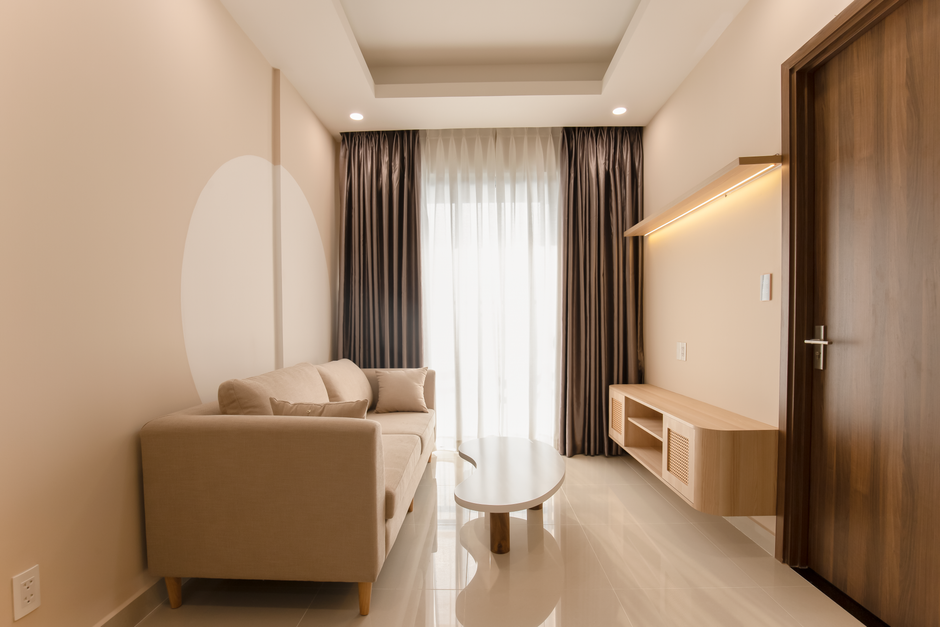
Paint is the fastest, cheapest transformation available. The goal is to maximize how much light bounces around the room:
Choose light, warm whites or pale neutrals. Cool whites (stark, blue-tinted) can feel clinical in small spaces; warm whites with a hint of beige or cream feel more expansive while staying soft. Paint manufacturer fan decks label these as "soft white," "linen," "antique white," or similar.
Paint the ceiling the same color as the walls. This is the single most underused trick in small-room design. When the ceiling is a contrasting color (usually white), it creates a visual "lid" that makes the room feel lower and boxier. When walls and ceiling flow together in the same tone, the eye doesn't register where one ends and the other begins — and the room feels taller and larger.
If you love color: opt for a single-wall accent rather than all four walls, and choose a muted or dusty version of the color rather than a saturated one. Muted sage, dusty blue, or warm terracotta on one wall reads as intentional design without visually shrinking the space.
Furniture Scale: Bigger Pieces, Fewer of Them
The counterintuitive truth: stuffing a small room with small furniture makes it look more crowded, not less. One well-proportioned sofa reads as intentional. Five mismatched small pieces read as chaos.
Choose furniture with legs. Sofas, chairs, and sideboards raised on legs allow light to pass underneath, making the floor plane feel continuous. Pieces that sit flat on the floor act as visual blockers.
Limit the number of pieces. In a small living room: one sofa, one or two accent chairs, one coffee table, one side table, and one storage unit is usually the limit before the room starts to feel crowded. Resist the urge to fill every corner.
Scale the sofa correctly. Measure the wall the sofa will sit against; the sofa should be no more than 2/3 the length of that wall. A sofa that's too big will make the room feel like it's being swallowed. A sofa that's too small will make the room feel like an afterthought.
Avoid matching sets. A full matching bedroom set or living room suite creates a visual mass that reads as heavy. Mixing pieces (same tone, different shapes) keeps the eye moving.
Use Mirrors Strategically
A well-placed mirror can appear to double the size of a room. The key is placement:
- Opposite a window: the mirror reflects the outdoor view and natural light, creating the illusion of a second window or opening
- Leaning against a wall rather than hung flat: a large leaning mirror creates depth because the angled reflection shows more of the room
- At eye level: mirrors placed too low or too high don't reflect the right portion of the room to create the illusion of depth
A single large mirror works better than several small ones, which can feel cluttered.
Lighting: Layers, Not Just Overhead
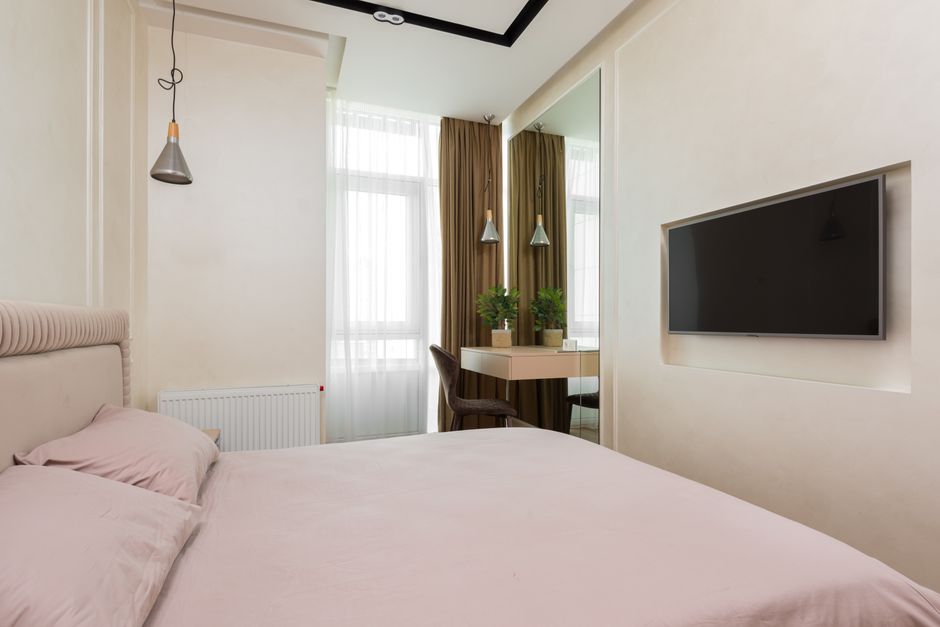
A single overhead light fixture flattens a room — it eliminates the shadows and depth that make a space feel three-dimensional.
Layer three types of light:
- Ambient (overhead or ceiling fixture) — general illumination
- Task (floor lamp, table lamp, or desk lamp) — pools of light at specific spots
- Accent (picture light, shelf light, under-cabinet strip) — highlights architectural features or art
When you have multiple light sources at different heights, the eye reads the room as having more dimension. Floor lamps placed in corners are especially effective — they pull the eye into the corner and make the corner feel inhabited rather than dead.
Warm bulbs (2700–3000K) in smaller spaces. Cool, bright white LEDs mimic the harsh feel of fluorescent office lighting. Warm tones make a room feel cozy regardless of size.
Window Treatments: Hang High, Hang Wide
The way you hang curtains dramatically affects how tall and wide the room feels:
- Hang the rod at ceiling height (or as close as possible), not just above the window frame. This draws the eye upward and makes ceilings feel higher.
- Hang curtains wider than the window — at least 6 inches on each side, ideally 12. When the curtains are open, they frame only the wall, not the glass, making the window look wider.
- Use floor-length panels even on short windows. Curtains that stop at the windowsill make the room feel squat.
Light-filtering linen or sheer curtains let in diffused natural light while maintaining privacy — this keeps the room feeling open even when they're drawn.
Declutter the Floor Plane
In a small space, the amount of visible floor is a primary indicator of how spacious the room feels. More visible floor = larger feeling room.
- Use vertical storage (tall shelves, over-door organizers, wall-mounted units) instead of wide, low furniture that eats floor space
- Keep pathways clear — even an 18-inch clear path between pieces reads as intentional space
- One rug, correctly sized — a rug that's too small makes the room feel smaller; ideally all four furniture legs should sit on the rug, or at least the front legs of the sofa and chairs
Cohesion Over Variety
A small room with a clear, cohesive color palette reads as larger than a small room with many competing colors and patterns. Limit yourself to:
- 2–3 main colors (usually a neutral base, a soft secondary, and one accent)
- 1–2 patterns (and keep them at different scales — one large, one small)
- A single dominant material in furniture (all wood-toned, or all metal, or mixed but in the same finish family)
Visual noise makes a room feel busier and smaller. Restraint in pattern and color lets the architecture breathe.
The Takeaway
Making a small room look bigger comes down to a handful of principles: light colors that bounce light, furniture with legs and appropriate scale, strategic mirror placement, layered lighting, ceiling-height curtains, and a clear floor plane. You don't need to renovate — most of these changes cost nothing or very little. Apply two or three together and the difference is immediate.
Frequently Asked Questions
Does dark paint always make a room look smaller?
Not necessarily. A very dark, matte paint (deep navy, charcoal, moody green) used on all walls — including ceiling — can create the illusion of a cozy "infinity" room where the walls disappear. It's a different design move than making a room feel expansive, but done well it works. The key is consistency — mixed dark walls with a light ceiling is the worst of both approaches.
What's the biggest mistake people make in small rooms?
Too much furniture that's too small. It seems intuitive to scale down, but five small chairs and three small tables creates visual clutter that makes a room feel cramped. One well-scaled sofa and one good accent chair with clear floor space around them will always make a room feel more open.
Do open shelves make a room look bigger or smaller?
Open shelves look bigger when they're tidy and styled with restraint — roughly 70% filled, with groupings of similar colors. When overstuffed or filled with mismatched items, they read as visual clutter that shrinks the space. If you can't commit to keeping open shelving curated, closed cabinets are the safer choice.
What rug size works best for a small living room?
The most common mistake is going too small. In a living room, opt for a rug that either fits all four legs of the sofa and chairs on it, or at minimum the two front legs. A rug that floats in the center with no furniture touching it looks like an island in the wrong way — it shrinks rather than grounds the space.
Read next
Related articles
- Cozy Reading Nook Ideas You’ll Want to Curl Up In Right Now
- How to Choose the Right Rug Size for Any Room
- How to Style a Bookshelf Like a Designer
- How to Arrange Living Room Furniture: A Complete Layout Guide
- How to Make Any Room Feel Cozy: 25 Designer Tricks
- How to Style a Coffee Table (Step by Step)
Further reading & trusted sources
Worth knowing before you start
The single highest-impact change in a small room is almost always curtain rod placement, not paint or furniture — hanging the rod at ceiling height instead of just above the window frame can add the visual impression of a foot or more of height. Most people never move the rod and wonder why the room still feels low.
Sofia is happiest hunting down the high-end look for a fraction of the price; she’s convinced a beautiful room comes from restraint and clever styling far more than from budget. She shapes Dreamy Dwell’s room-by-room guides around ideas you can actually copy in a rental or on a tight budget — no staged ‘this is my mansion’ fantasy. AI tools help with the research and first drafts, and a human edits every piece before it goes live. We never fake reviews or pass off a styled photo as a real before-and-after.