 By Sofia Bennett, Home & Decor Editor
Reviewed & updated September 2026
You can own the most beautiful sofa in the world, but if it's shoved against the wall facing a TV across an ocean of empty floor, the room will still feel awkward. Furniture arrangement is the invisible skeleton of a living room — get it right and everything else (the cushions, the rug, the art) suddenly works. Get it wrong and no amount of decorating can fix the unease.
The good news: arranging furniture is a skill, not a talent. There are clear principles professional designers use every time, and once you know them you can lay out any living room — large or small, open-plan or boxy, with a fireplace or a giant TV — so it feels balanced, inviting, and easy to live in. Here's the complete guide.
 Skip ahead toCurated by Sofia · 10 min read
Start with the focal point
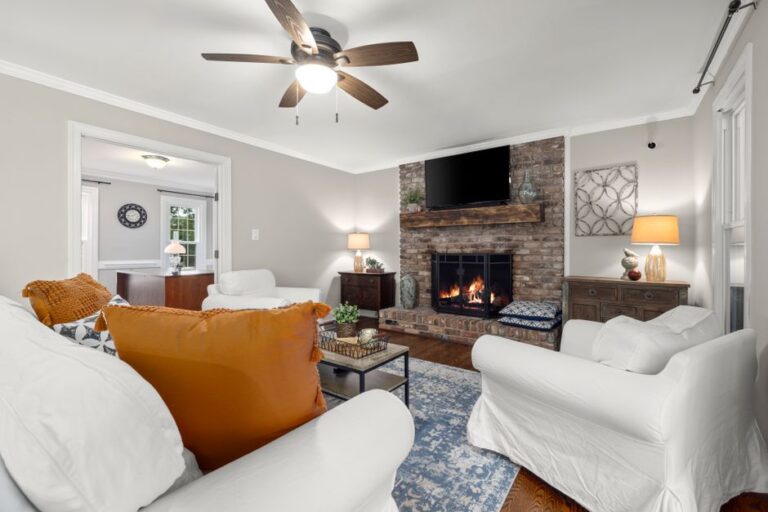
Every well-arranged room has a focal point — the natural center of attention that the furniture orients around. Identify yours first, because everything else flows from it.
Common focal points include a fireplace, a large window with a view, a television, or a striking piece of art. If your room has an obvious architectural feature like a fireplace or picture window, that's usually your focal point. If not, you create one with the TV, a media console styled with art, or a gallery wall.
Once you know the focal point, the basic rule is simple: arrange your main seating to face or angle toward it. A sofa staring at a blank wall while the fireplace sits off to the side will always feel off.
Dealing with two focal points (the TV-and-fireplace problem): Many rooms have both a fireplace and a TV. The cleanest solution is to stack them — TV mounted above the fireplace — so they share one focal wall. If that's not possible, angle your seating to address both, or place the TV on a perpendicular wall and let the seating split its attention.
Create a conversation area
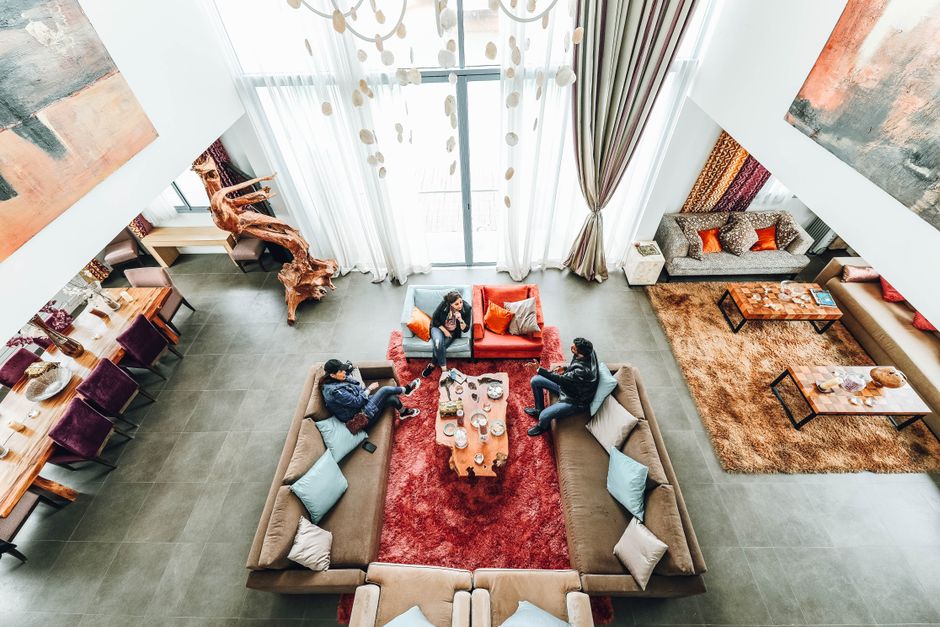
The heart of a living room is a "conversation area" — a grouping of seats close enough that people can talk without raising their voices. This is the most important arrangement principle and the one most often ignored.
Pull furniture off the walls. The instinct to line every piece against the walls (called "perimeter syndrome") leaves a cold, empty middle and seating too far apart for conversation. Floating your sofa and chairs inward, even a few inches, creates intimacy and makes the room feel intentional.
Keep seats within about 8 feet of each other. Conversation feels natural when people are roughly 8 feet apart or less. Arrange your sofa and chairs to form a loose U-shape, L-shape, or face-to-face grouping within that range.
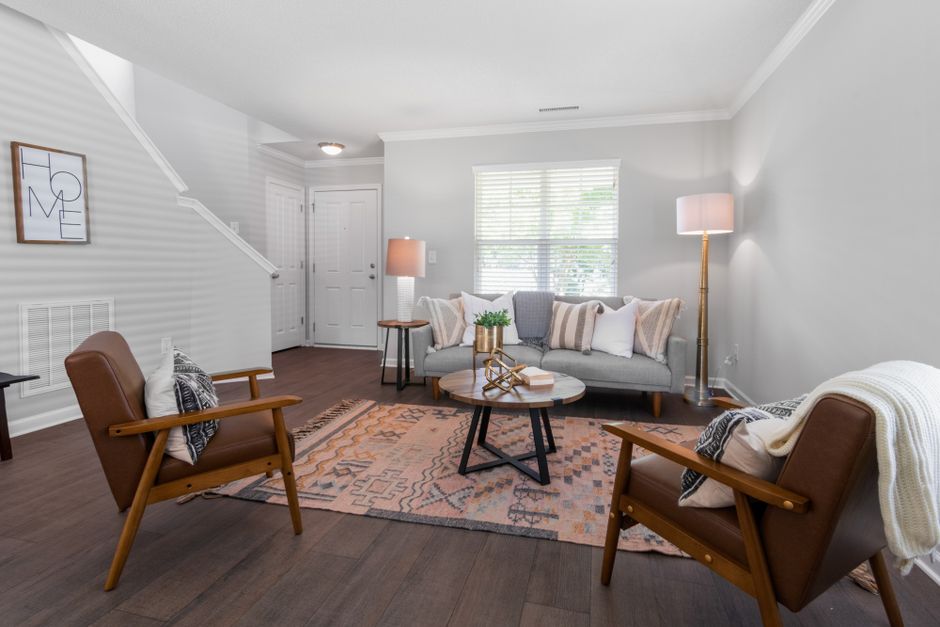
Angle chairs for warmth. Two chairs angled slightly toward the sofa (rather than squared off) create a welcoming, gathered feel and improve the flow of conversation.
Get the rug size right
A too-small rug is one of the most common — and most fixable — layout mistakes. It makes furniture look like it's floating on islands and shrinks the whole room.
The golden rule: at minimum, the front legs of every major seating piece should sit on the rug. Better still, the entire seating group sits on a rug large enough to unify it. For most living rooms that means an 8×10 or 9×12 rug, not the 5×7 that looks marooned in the middle.
If your rug is too small, layer it over a larger neutral jute rug to extend the footprint affordably.
Mind the traffic flow
A room can be beautiful and still be miserable to walk through. Plan clear pathways before you commit.
- Leave 30–36 inches for main walkways (the routes people take to cross the room or reach a door).
- Leave about 14–18 inches between the sofa and the coffee table — close enough to set a drink down, far enough to walk past and stretch your legs.
- Make sure no one has to squeeze sideways or climb over furniture to reach a seat or exit. If they do, the layout needs adjusting.
Balance the visual weight
A well-arranged room feels balanced — no corner crammed while another sits empty. Think of distributing visual "weight" around the space.
Mix heights and masses. If you have a big, heavy sectional on one side, balance it with something tall on the other — a bookcase, a large plant, a floor lamp, or framed art — so the room doesn't feel like it's tipping.
Vary the furniture. A room of all low, boxy pieces feels flat. Introduce height with a tall lamp, a plant, or shelving, and vary shapes (a round table softens a room full of rectangles).
Don't push everything to one wall. Spread your pieces so each zone of the room has something to anchor it.
Layout templates for common rooms
The square room
Square rooms are the easiest. Center a conversation group on the main focal point: a sofa flanked by two chairs around a coffee table, all on a generous rug. Add a console or bookshelf against one wall for balance and storage.
The long, narrow room
Resist lining both long walls with furniture (it creates a "bowling alley"). Instead, create one or even two distinct zones — a main seating group at one end, and a reading nook, desk, or small dining spot at the other. Use rugs to define each zone, and place a sofa or console perpendicular to break up the length.
The open-plan room
Use your furniture to define the living zone within the larger space. Float the sofa with its back to the dining or kitchen area (a console table behind it bridges the two zones nicely), and anchor the seating on a rug so it reads as its own "room."
The small living room
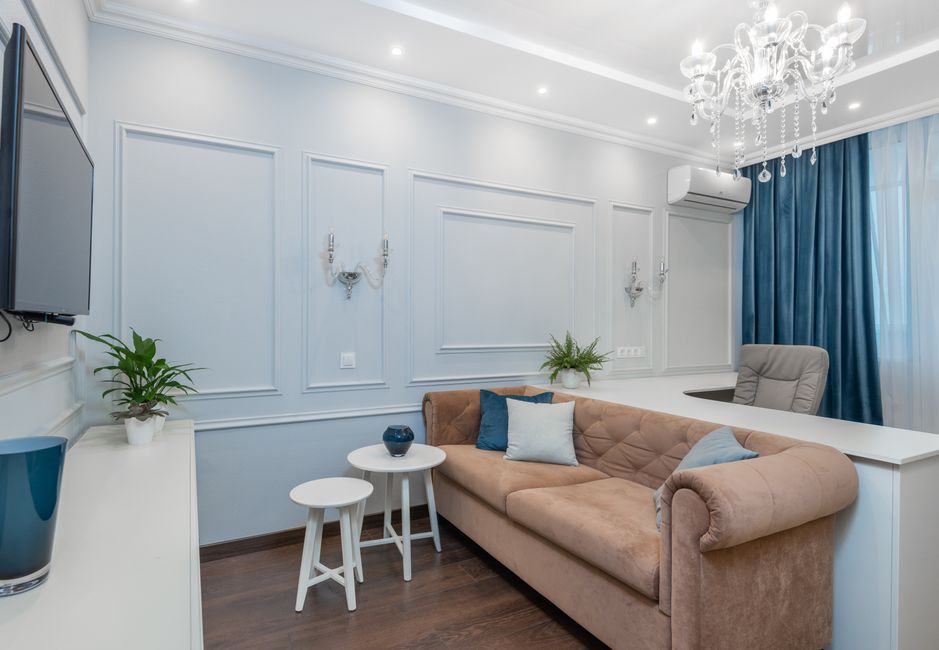
Choose appropriately scaled furniture — a loveseat or apartment sofa rather than a giant sectional — and lean on pieces that earn their keep: a storage ottoman instead of a coffee table, nesting tables, and a couple of light, movable chairs. Float the sofa just slightly off the wall and keep sightlines open.
The supporting pieces
Once your main seating and rug are placed, layer in the supporting cast:
- Coffee table: roughly two-thirds the length of your sofa, and a similar height to the seat cushions. Leave that 14–18 inch gap for legroom.
- Side tables: at least one within easy reach of every main seat, roughly the height of the chair or sofa arm, for drinks and a lamp.
- Lighting: layer a floor lamp, table lamps, and accent lighting so you're never relying on a single overhead fixture (and the room feels cozy at night).
- Storage: a console, bookshelf, or media unit to keep clutter contained and give the eye something to land on.
Common mistakes to avoid
- Everything against the walls. Float your seating inward.
- A rug that's too small. Front legs on the rug, minimum.
- No clear focal point. Decide what the room orients around.
- Blocked walkways. Keep 30–36 inches for main paths.
- All one height. Add a tall element to balance low furniture.
- Seats too far apart. Keep the conversation group within about 8 feet.
- Ignoring scale. A massive sectional drowns a small room; tiny pieces look lost in a big one.
A simple step-by-step process
- Measure the room and note doors, windows, outlets, and the focal point.
- Place the largest piece first (usually the sofa), oriented toward the focal point.
- Add the rug large enough to anchor the seating group.
- Position the secondary seating (chairs, loveseat) to form a conversation area.
- Add the coffee table centered in the group with proper clearance.
- Place side tables and lighting within reach of each seat.
- Add storage and a balancing tall element, then live with it for a few days and adjust.
Tip: before you move heavy furniture, sketch the layout on paper or tape the footprints onto the floor with painter's tape. It saves your back and reveals problems before they happen.
The takeaway
Great furniture arrangement comes down to a handful of principles: orient everything around a clear focal point, float your seating into a snug conversation area, use a rug big enough to anchor the group, keep walkways clear, and balance the visual weight with varied heights. Work from the biggest piece outward, mind the clearances, and don't be afraid to pull furniture away from the walls. Nail the layout and your living room will feel balanced, welcoming, and effortless — before you've added a single cushion.
Frequently asked questions
Should a sofa go against the wall?
Not necessarily. In small rooms, placing the sofa against the wall can save space, but in most rooms floating it even a few inches inward — and angling chairs toward it — creates a cozier, more intentional conversation area. Avoid pushing every piece to the perimeter, which leaves an empty, awkward middle.
How far should a coffee table be from the sofa?
About 14 to 18 inches. That's close enough to comfortably set down a drink or rest your feet, but far enough to walk past and stretch your legs. The table itself should be roughly two-thirds the length of the sofa.
What size rug do I need for a living room?
Large enough that at least the front legs of all your main seating rest on it — for most living rooms that's 8×10 or 9×12. A rug that only sits under the coffee table looks marooned and makes the room feel smaller. Layer over a jute rug if yours is too small.
How do I arrange furniture in a long, narrow living room?
Avoid lining both long walls with furniture. Instead, create two zones — a main seating group at one end and a secondary area (reading nook, desk, or dining spot) at the other — and use rugs to define each. Placing a sofa or console perpendicular to the length helps break up the "bowling alley" effect.
How much space do I need for walkways?
Leave 30 to 36 inches for main walkways and any path to a doorway, and ensure no one has to climb over or squeeze past furniture to reach a seat. Comfortable circulation is just as important as the seating itself.
Where should the TV go in a living room?
Place it on or against your focal wall, ideally at seated eye level and out of direct glare from windows. If you also have a fireplace, mounting the TV above it keeps a single focal point; otherwise put the TV on a perpendicular wall and angle seating to address both.
Read next

Related articles
- How to Make Any Room Feel Cozy: 25 Designer Tricks
- Living Room Lighting Ideas for a Cozy, Inviting Glow
- “Small Living Room Layout Ideas That Actually Maximize Space”
- Renter-Friendly Apartment Decorating Ideas
- How to Make a Small Room Look Bigger
- Cozy Reading Nook Ideas You’ll Want to Curl Up In Right Now
Further reading & trusted sources
The detail most people miss
The most common error is pushing everything flat against the walls, which makes a room feel emptier, not bigger. Floating the sofa even a few inches inward, with a rug anchoring the group, instantly makes the space feel intentional.
Sofia is happiest hunting down the high-end look for a fraction of the price; she’s convinced a beautiful room comes from restraint and clever styling far more than from budget. She shapes Dreamy Dwell’s room-by-room guides around ideas you can actually copy in a rental or on a tight budget — no staged ‘this is my mansion’ fantasy. AI tools help with the research and first drafts, and a human edits every piece before it goes live. We never fake reviews or pass off a styled photo as a real before-and-after.