 By Sofia Bennett, Home & Decor Editor
Reviewed & updated September 2026
Throw pillows are the fastest, most affordable way to refresh a sofa — and one of the most commonly bungled. We've all seen the two sad, flat, mismatched cushions doing nothing in the corners of an otherwise nice couch. The truth is that a designer-looking pillow arrangement follows a simple, repeatable formula: the right number, the right sizes, the right mix of textures and patterns, and good inserts. Get those right and your sofa goes from flat to inviting in five minutes, for far less than reupholstering or buying new furniture.
Here's the complete guide to choosing and styling throw pillows. As an Amazon Associate we may earn from qualifying purchases at no extra cost to you; we focus on principles rather than specific prices.
 Quick navigationCurated by Sofia · 7 min read
- How many pillows do you need?
- Get the sizes right (mix them)
- Mix textures and patterns like a designer
- Choose a color approach
- Buy covers, not whole pillows (the budget secret)
- Inserts make or break the look
- A simple styling formula
- Common mistakes to avoid
- The takeaway
- Related articles
- Further reading & trusted sources
How many pillows do you need?
A good starting point:
- Standard 3-seat sofa: 5 pillows (or a balanced odd-leaning mix) usually looks full without crowding.
- Loveseat or small sofa: 2–3 pillows.
- Large sectional: 6–9, grouped in clusters at the corners and along the back.
The most common mistake is too few. Two lonely pillows look sparse; a fuller, layered arrangement looks intentional and cozy. That said, leave enough room to actually sit — pillows should invite you in, not bury you.
Get the sizes right (mix them)
Layering different sizes is the secret to a designer look. A typical winning combination:
- Larger pillows (20–22") at the back/outer corners as the base layer.
- Medium pillows (18–20") layered in front of them.
- A lumbar pillow (a long rectangle) in the center or front to finish and add a different shape.
Mixing sizes creates depth; all-identical pillows look flat and uniform. Bigger pillows (20"+) generally read more luxurious than small 16" ones, which can look skimpy on a full-size sofa.
Mix textures and patterns like a designer
This is where pillows go from "fine" to "wow." The formula designers use:
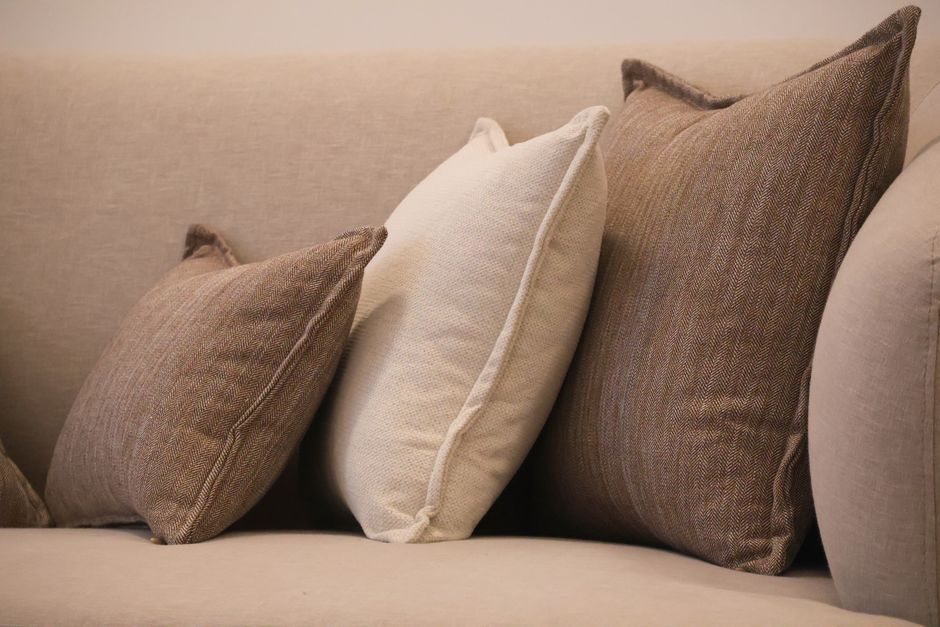
- Vary the textures: combine smooth (linen, cotton), plush (velvet, boucle), and chunky (knit, woven) covers. Texture adds richness even in an all-neutral scheme.
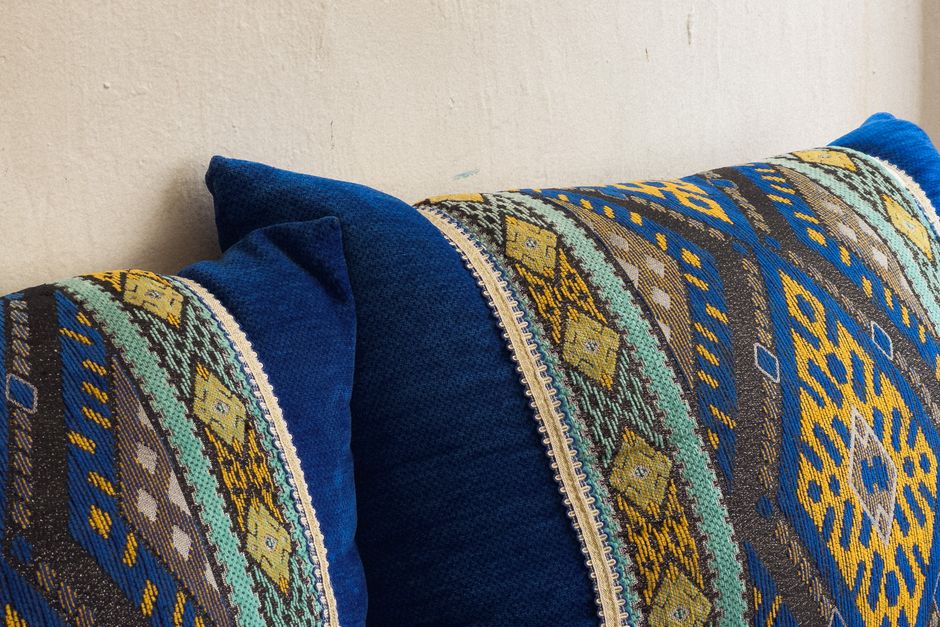
- Mix patterns carefully: a reliable approach is to combine patterns of different scales — one larger pattern, one smaller/geometric, and solids or textures to rest the eye. Tie them together with a shared color.
- Use the rule of one common thread: every pillow should share at least one color or tone with the others so the group feels cohesive, not random.
- Balance, don't match exactly: matchy sets look flat; a curated mix looks collected. You don't need symmetry — aim for visual balance instead.
Choose a color approach
- Tonal/neutral: different textures in the same neutral family (creams, taupes, warm greys) — calm, timeless, and easy.
- Neutral base + accent: mostly neutral pillows with one or two in an accent color pulled from your rug, art, or room palette.
- Seasonal swaps: keep neutral inserts and just swap covers for warm tones in fall/winter and lighter ones in spring/summer.
Buy covers, not whole pillows (the budget secret)
This is the single best money-saving tip: buy pillow covers and good-quality inserts separately.
- You reuse the same inserts and just swap covers to change your look or season.
- Covers store flat and cheaply.
- You can mix and match far more affordably than buying complete pillows.
Inserts make or break the look
The most overlooked factor. Sad, flat pillows are almost always an insert problem.
- Size up your insert. Use an insert one size larger than the cover (a 22" insert in a 20" cover, for example) so the pillow looks plump and full, not limp.
- Choose feather/down or down-alternative inserts for that soft, karate-choppable fullness. Cheap polyester forms go flat and lumpy quickly.
- Fluff and "chop" your pillows — a gentle karate chop to the top edge gives that styled, magazine look.
A simple styling formula
For a standard sofa, try this five-pillow recipe:
- Two larger solid or textured pillows (20–22") at the outer back corners.
- Two medium patterned or contrasting-texture pillows (18–20") layered in front.
- One lumbar pillow in the center for shape and a finishing accent.
Keep one color thread running through all five, vary the textures, and use plump, sized-up inserts. That's the whole trick.
Common mistakes to avoid
- Too few pillows (looks sparse) or too many (nowhere to sit).
- All the same size (looks flat) — mix sizes.
- All matching set (looks like a showroom) — curate a mix instead.
- Cheap flat inserts — size up and choose down or down-alternative.
- No common color — tie the group together with a shared tone.
- Tiny 16" pillows on a big sofa — go larger for a fuller look.
The takeaway
Beautiful sofa styling comes from a simple formula: the right number (around five on a standard sofa), mixed sizes layered front to back, a curated mix of textures and patterns unified by one shared color, and — crucially — plump, sized-up down or down-alternative inserts. Buy covers and inserts separately to save money and swap looks by season. Follow that recipe and your sofa will look fuller, cozier, and far more expensive than the small spend it took.
Frequently asked questions
How many throw pillows should I put on a sofa?
Around five on a standard three-seat sofa usually looks full without crowding; two to three suit a loveseat, and six to nine work on a large sectional. Too few looks sparse, so err toward a fuller, layered arrangement while leaving enough room to comfortably sit.
What size throw pillows are best for a sofa?
Mix sizes for a designer look: larger 20–22" pillows at the back and outer corners, medium 18–20" pillows layered in front, and a long lumbar pillow to finish. Bigger pillows generally look more luxurious than small 16" ones, which can appear skimpy on a full-size sofa.
How do I mix throw pillow patterns and textures?
Combine patterns of different scales (one larger, one smaller or geometric) with solids and textures to rest the eye, and vary textures like linen, velvet, and knit. Tie everything together by making sure every pillow shares at least one color — aim for a balanced, curated mix rather than an exact match.
Why do my throw pillows look flat?
Almost always the inserts. Use an insert one size larger than the cover so the pillow looks plump, and choose feather/down or down-alternative fills, which hold their shape far better than cheap polyester forms that go flat and lumpy. Fluff and "karate chop" them for a styled finish.
Should I buy pillow covers or whole pillows?
Buy covers and quality inserts separately. You reuse the inserts and simply swap covers to change your look or refresh for the season, which is cheaper, easier to store, and far more flexible than buying complete pillows each time.
Read next

Related articles
- 12 Amazon Home Finds Under $30 That Look Expensive
- 20 Cozy Living Room Ideas on a Budget
- How to Style a Console Table (5 Easy Layouts)
- How to Mix Metals in Home Decor (Without It Looking Off)
- How to Choose the Right Curtains for Any Room
- Small Entryway Decorating Ideas That Still Feel Welcoming
Further reading & trusted sources
Where most people go wrong
The mistake is buying an insert the same size as the cover. Go one size up — a 20-inch insert in an 18-inch cover — for that plump, full look. Flat, karate-chopped corners are the fastest tell of a budget sofa.
Sofia is happiest hunting down the high-end look for a fraction of the price; she’s convinced a beautiful room comes from restraint and clever styling far more than from budget. She shapes Dreamy Dwell’s room-by-room guides around ideas you can actually copy in a rental or on a tight budget — no staged ‘this is my mansion’ fantasy. AI tools help with the research and first drafts, and a human edits every piece before it goes live. We never fake reviews or pass off a styled photo as a real before-and-after.